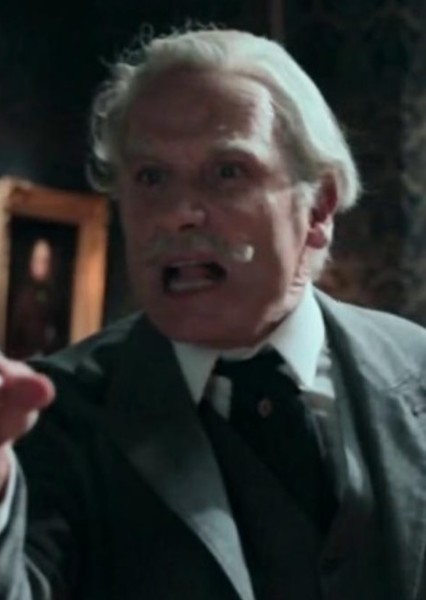
Age: 71
male
Hippolyte Girardot (born Frédéric Girardot; 10 October 1955) is a French actor, film director and screenwriter. A loner, Hippolyte Girardot set out to be an illustrator. He dreamt of working as production designer on the film set and tempted his chance at the entrance exam to the Arts Déco. While there, he was offered the project of a series of shorts working with a group of adolescents from the suburbs in a workshop setting. Even if he made his first appearance on the silver screen as the son of actor Claude Rich in "John's Wife" by Yannick Bellon, who was a friend of his mother's, he still had no intention of becoming an actor and continued to take on the various jobs proposed. Hippolyte Girardot developed a taste for acting while filming "The Destiny of Juliette" (1983) by Aline Issermann, and again with the same director for "L'Amant magnifique". He got his first nods from the profession when he was nominated for Most Promising Young Actor in 1985 for "Le Bon Plaisir", continuing his career with Godard ("First Name: Carmen") and other A film projects, notably in "Fort Saganne" and "Jean de Florette II" in which he plays a school teacher in love with Emmanuelle Beart. His film acclaim arrived in 1990 with "A World Without Pity", a disenchanted observation of society by Eric Rochant; his character Hippo resonated with an entire generation: ironically aimless yet charming. The following year, Girardot landed the lead role playing a photographer taken hostage in Lebanon in "Out of Life" by Maroun Bagdadi. He incarnated the mysterious seducer ("After Love", "The Scent of Yvonne"), but more often found himself performing in comedies: completely crazy in "Barjo" and unemployed in "Long Live the Republic" (1997) by close collaborator, Eric Rochant. After working for the television for a few years, his return to film was acclaimed in "Rashevski's Tango" in 2003. Joining the Desplechin film universe, Hippolyte Girardot gave notable performances as a business man in "Playing 'In the Company of Men'", a crooked lawyer involved in drugs in "Kings and Queen" (2004) and Anne Consigny's husband in "A Christmas Tale". Other renowned directors with whom he has collaborated include Pascal Bonitzer and Pascale Ferran ("Lady Chatterley"), and in 2006, he juggled a formidable acting career, appearing in no less than six films. After his role as a shaddy doctor in "Crime Is Our Business", his roles began to become more and more original: the alter ego of Jerome Clement in "Later" by Amos Gitai and Nanni Moretti's partner in "Quiet Chaos". He had a spell at co-directing with Nobuhiro Suwa for the film "Yuki & Nina", a touchy look at childhood that was presented at the Directors' Fortnight in 2009. Continuing to accept roles in films with a political message, he will appear in "Les Mains en l'air", which denounces Italian fascism in the year 2067, and take the lead in the dark comedy "Dernier étage gauche gauche" in which he plays a bailiff taken hostage in a housing projects building, both films to be released in 2010.
Hippolyte Girardot
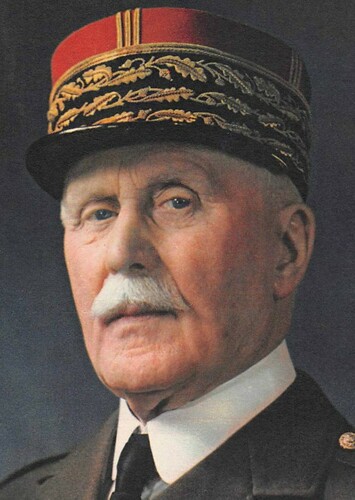
Maréchal Pétain
for Maréchal Pétain in World War II: The War in the Europe
Suggested by darksith

World War II was the most devastating and bloody military conflict in human history. It ran from 1939 to 1945 and was attended by most of the world's countries. In total, the this conflict has claimed more than 70 million victims on lives. 2025 marks 80 years since the end of this devastating war. Let us therefore recall the events that took place during it. The heroism of the allies who fought on all fronts for freedom against the Axis countries. It all began on 1 September 1939, when Nazi Germany invaded Poland. The fall of France followed. The Battle of Britain and the invasion of the Soviet Union in 1941. For Europe, everything looked hopeless because the Nazis occupied almost all of Europe. But then the Battle of Staligrad came and the war turned. The Soviets had defended Moscow, and after the Battle of Kursk it was clear that the eastern front was lost to the for Germans. In 1944, the Western Front was open. Allied forces made a successful landing in Normandy. The Americans, Soviets, British, and other allies gradually liberated Europe from the German occupiers, revealing their heinous crimes. In the end, the last decisive battle for Berlin took place, and Nazi Germany was defeated, ending World War II in Europe. These historical events included a number of personal stories of ordinary soldiers and civilians who were fully experiencing the horrors of World War II.


