
Age: 52
female
Sarah Caroline Sinclair CBE (born January 30, 1974), known professionally as Olivia Colman, is an English actress. Known for her comedic and dramatic roles in film and television, she has received various accolades, including an Academy Award, a British Academy Film Award, two Emmy Awards, three British Academy Television Awards and three Golden Globe Awards. She was acclaimed for her performance in the ITV crime-drama series Broadchurch (2013–2017), for which she received a British Academy Television Award for Best Actress. She played Queen Elizabeth II from 2019 to 2020 in the Netflix period-drama series The Crown, for which she received a Golden Globe Award and a Primetime Emmy Award for Outstanding Lead Actress in a Drama Series. For her portrayal of Anne, Queen of Great Britain in the period black-comedy film The Favourite (2018), Colman received the Academy Award for Best Actress. She received additional Academy Award nominations for her performances in The Father (2020) and The Lost Daughter (2021). Other notable film and television credits include Hot Fuzz (2007), Tyrannosaur (2011), The Iron Lady (2011), Hyde Park on Hudson (2012), Locke (2013), The Lobster (2015), Fleabag (2016-2019), Murder on the Orient Express (2017), The Mitchells vs. the Machines (2021), Landscapers (2021), Empire of Light (2022), Puss in Boots: The Last Wish (2022), Secret Invasion (2023), Wonka (2023), Wicked Little Letters (2023) and Paddington in Peru (2024).
Olivia Colman
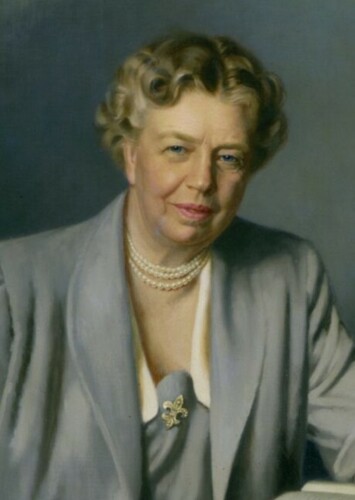
Eleanor Roosevelt
for Eleanor Roosevelt in World War II: The War in the Europe
Suggested by user_26273

World War II was the most devastating and bloody military conflict in human history. It ran from 1939 to 1945 and was attended by most of the world's countries. In total, the this conflict has claimed more than 70 million victims on lives. 2025 marks 80 years since the end of this devastating war. Let us therefore recall the events that took place during it. The heroism of the allies who fought on all fronts for freedom against the Axis countries. It all began on 1 September 1939, when Nazi Germany invaded Poland. The fall of France followed. The Battle of Britain and the invasion of the Soviet Union in 1941. For Europe, everything looked hopeless because the Nazis occupied almost all of Europe. But then the Battle of Staligrad came and the war turned. The Soviets had defended Moscow, and after the Battle of Kursk it was clear that the eastern front was lost to the for Germans. In 1944, the Western Front was open. Allied forces made a successful landing in Normandy. The Americans, Soviets, British, and other allies gradually liberated Europe from the German occupiers, revealing their heinous crimes. In the end, the last decisive battle for Berlin took place, and Nazi Germany was defeated, ending World War II in Europe. These historical events included a number of personal stories of ordinary soldiers and civilians who were fully experiencing the horrors of World War II.


