Age: 61
male
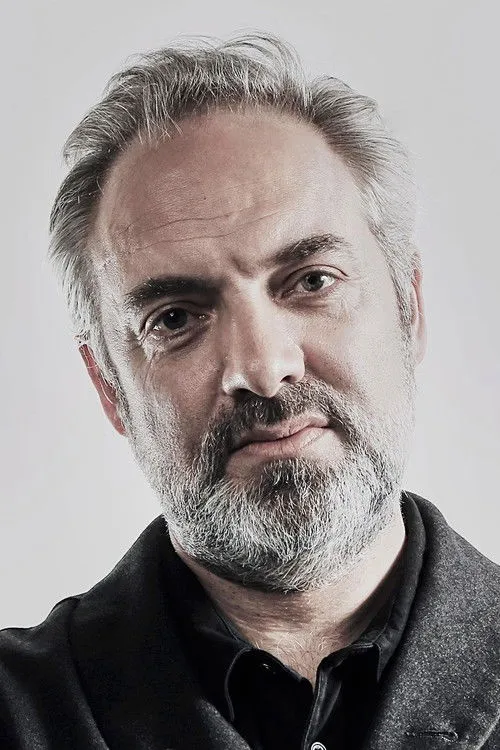
Sir Samuel Alexander Mendes CBE (born 1 August 1965) is a British film and stage director, producer, and screenwriter. In 2000, Mendes was appointed a CBE for his services to drama, and he was knighted in the 2020 New Year Honours List. In 2000, Mendes was awarded the Shakespeare Prize by the Alfred Toepfer Foundation in Hamburg, Germany. In 2005, he received a lifetime achievement award from the Directors Guild of Great Britain. In 2008, The Daily Telegraph ranked him number 15 in their list of the "100 most powerful people in British culture". Born in Berkshire to a Trinidadian Catholic father and an English Jewish mother, Mendes grew up in North London. He read English at Peterhouse at Cambridge University. He began directing plays there before joining Donmar Warehouse, a centre of 1990s London theatre culture. In theatre, he is known for his dark re-inventions of the stage musicals Cabaret (1993), Oliver! (1994), Company (1995), and Gypsy (2003). For the first time, he directed an original West End stage musical with Charlie and the Chocolate Factory (2013). For his work on the London stage, Mendes has received three Laurence Olivier Awards for Company, Twelfth Night, and The Ferryman. On Broadway, he earned two Tony Awards for Best Direction of a Play for The Ferryman in 2019 and The Lehman Trilogy in 2022. In film, he made his directorial debut with the drama American Beauty (1999), which earned him the Academy Award and Golden Globe Award for Best Director. He has since directed the films Road to Perdition (2002), Jarhead (2005), Revolutionary Road (2008), and the James Bond films Skyfall (2012) and Spectre (2015). For the war film 1917 (2019), he received the BAFTA Award and Golden Globe Award for Best Director, as well as his second Academy Award nomination for Best Director, Best Picture and Best Original Screenplay. Description above from the Wikipedia article Sam Mendes, licensed under CC-BY-SA, full list of contributors on Wikipedia.
Sam Mendes

Director
for Director in World War II: The War in the Europe
Suggested by eclipsestarling

World War II was the most devastating and bloody military conflict in human history. It ran from 1939 to 1945 and was attended by most of the world's countries. In total, the this conflict has claimed more than 70 million victims on lives. 2025 marks 80 years since the end of this devastating war. Let us therefore recall the events that took place during it. The heroism of the allies who fought on all fronts for freedom against the Axis countries. It all began on 1 September 1939, when Nazi Germany invaded Poland. The fall of France followed. The Battle of Britain and the invasion of the Soviet Union in 1941. For Europe, everything looked hopeless because the Nazis occupied almost all of Europe. But then the Battle of Staligrad came and the war turned. The Soviets had defended Moscow, and after the Battle of Kursk it was clear that the eastern front was lost to the for Germans. In 1944, the Western Front was open. Allied forces made a successful landing in Normandy. The Americans, Soviets, British, and other allies gradually liberated Europe from the German occupiers, revealing their heinous crimes. In the end, the last decisive battle for Berlin took place, and Nazi Germany was defeated, ending World War II in Europe. These historical events included a number of personal stories of ordinary soldiers and civilians who were fully experiencing the horrors of World War II.