
Died at 126
male
Humphrey DeForest Bogart (December 25, 1899 – January 14, 1957), nicknamed Bogie, was an American actor. His performances in Classical Hollywood films made him an American cultural icon. In 1999, the American Film Institute selected Bogart as the greatest male star of classic American cinema. Bogart began acting in Broadway shows, beginning his career in motion pictures with Up the River (1930) for Fox and appeared in supporting roles for the next decade, regularly portraying gangsters. He was praised for his work as Duke Mantee in The Petrified Forest (1936), but remained cast secondary to other actors at Warner Bros. who received leading roles. Bogart also received positive reviews for his performance as gangster Hugh "Baby Face" Martin, in Dead End (1937), directed by William Wyler. His breakthrough from supporting roles to stardom was set in motion with High Sierra (1941) and catapulted in The Maltese Falcon (1941), considered one of the first great noir films. Bogart's private detectives, Sam Spade (in The Maltese Falcon) and Philip Marlowe (in 1946's The Big Sleep), became the models for detectives in other noir films. His most significant romantic lead role was with Ingrid Bergman in Casablanca (1942), which earned him his first nomination for the Academy Award for Best Actor. 44-year-old Bogart and 19-year-old Lauren Bacall fell in love during filming of To Have and Have Not (1944). In 1945, a few months after principal photography for The Big Sleep, their second film together, he divorced his third wife and married Bacall. After their marriage, they played each other's love interest in the mystery thrillers Dark Passage (1947) and Key Largo (1948). Bogart's performances in The Treasure of the Sierra Madre (1948) and In a Lonely Place (1950) are now considered among his best, although they were not recognized as such when the films were released. He reprised those unsettled, unstable characters as a World War II naval-vessel commander in The Caine Mutiny (1954), which was a critical and commercial hit and earned him another Best Actor nomination. He won the Academy Award for Best Actor for his portrayal of a cantankerous river steam launch skipper opposite Katharine Hepburn's missionary in the World War I African adventure The African Queen (1951). Other significant roles in his later years included The Barefoot Contessa (1954) with Ava Gardner and his on-screen competition with William Holden for Audrey Hepburn in Sabrina (1954). A heavy smoker and drinker, Bogart died from esophageal cancer in January 1957.
Humphrey Bogart

Terence Fletcher
for Terence Fletcher in Whiplash (1954)
Suggested by user_71637
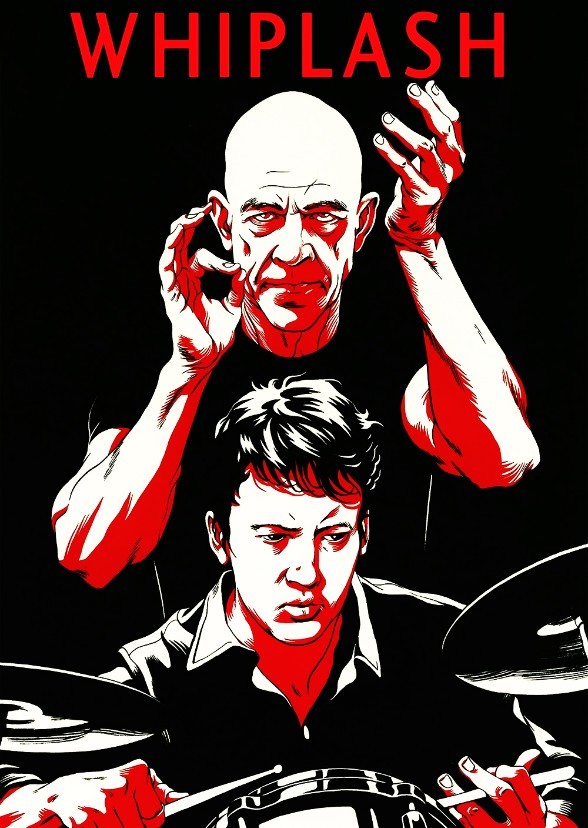
Nineteen year old Andrew Niemann wants to be the greatest jazz drummer in the world, in a league with Buddy Rich. This goal is despite not coming from a pedigree of greatest, musical or otherwise, with Jim, his high school teacher father, being a failed writer. Andrew is starting his first year at Shaffer Conservatory of Music, the best music school in the United States. At Shaffer, being the best means being accepted to study under Terence Fletcher and being asked to play in his studio band, which represents the school at jazz competitions. Based on their less than positive first meeting, Andrew is surprised that Fletcher asks him to join the band, albeit in the alternate drummer position which he is more than happy to do initially. Andrew quickly learns that Fletcher operates on fear and intimidation, never settling for what he considers less than the best each and every time. Being the best in Fletcher's mind does not only entail playing well, but knowing that you're playing well and if not what you're doing wrong. His modus operandi creates an atmosphere of fear and of every man or woman for him/herself within the band. Regardless, Andrew works hard to be the best. He has to figure out his life priorities and what he is willing to sacrifice to be the best. The other question becomes how much emotional abuse he will endure by Fletcher to reach that greatness,


