
South America is a continent entirely in the Western Hemisphere[note 6] and mostly in the Southern Hemisphere, with a relatively small portion in the Northern Hemisphere. It can also be described as the southern subcontinent of the Americas. The reference to South America instead of other regions (like Latin America or the Southern Cone) has increased in recent decades due to changing geopolitical dynamics (in particular, the rise of Brazil).[6][additional citation(s) needed] South America is bordered on the west by the Pacific Ocean and on the north and east by the Atlantic Ocean, North America and the Caribbean Sea lie to the northwest. The continent generally includes twelve sovereign states: Argentina, Bolivia, Brazil, Chile, Colombia, Ecuador, Guyana, Paraguay, Peru, Suriname, Uruguay, and Venezuela; two dependent territories: the Falkland Islands and South Georgia and the South Sandwich Islands;[note 7] and one internal territory: French Guiana.[note 8] In addition, the ABC islands of the Kingdom of the Netherlands, Ascension Island (dependency of Saint Helena, Ascension and Tristan da Cunha, a British Overseas Territory), Bouvet Island (dependency of Norway), Panama, and Trinidad and Tobago may also be considered parts of South America. South America has an area of 17,840,000 square kilometers (6,890,000 sq mi). Its population as of 2018 has been estimated at more than 423 million.[1][2] South America ranks fourth in area (after Asia, Africa, and North America) and fifth in population (after Asia, Africa, Europe, and North America). Brazil is by far the most populous South American country, with more than half of the continent's population, followed by Colombia, Argentina, Venezuela and Peru. In recent decades, Brazil has also generated half of the continent's GDP and has become the continent's first regional power.[6] Most of the population lives near the continent's western or eastern coasts while the interior and the far south are sparsely populated. The geography of western South America is dominated by the Andes mountains; in contrast, the eastern part contains both highland regions and vast lowlands where rivers such as the Amazon, Orinoco, and Paraná flow. Most of the continent lies in the tropics, except for a large part of the Southern Cone located in the middle latitudes. The continent's cultural and ethnic outlook has its origin with the interaction of indigenous peoples with European conquerors and immigrants and, more locally, with African slaves. Given a long history of colonialism, the overwhelming majority of South Americans speak Portuguese or Spanish, and societies and states reflect Western traditions. Relative to Europe, Asia and Africa, 20th-century South America has been a peaceful continent with few wars.[7]
South America

Location Setting(s)
for Location Setting(s) in Voltes V: The Movie
Suggested by user_177985
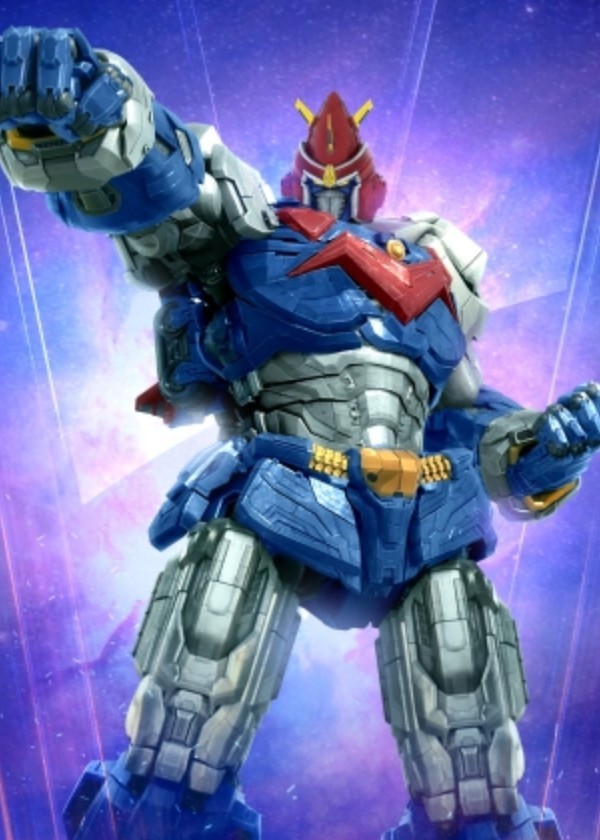
IDEA: A Disney+ live adaptation film based on an anime by Sunrise & Toei Animation. | FUN FACT: This is Fanmade! | PLOT: From out of nowhere, a mysterious alien race known as Boazan conquered the Earth. A group of individuals specially trained to handle this situation has been unleashed. Steve, Mark, Big Bert, Little Jon and Jamie are the pilots of the Voltes Team, the Earth's defense against the Boazanian Empire and their terrible beast fighters. The plot thickens as the Armstrong Brothers discover their true heritage and the truth behind the disappearance of their father, Ned Armstrong. Conflicts and mixed emotions hinder the Armstrong Brothers at times but due to their unwavering desire to find their father, they must go to a place where it all started. With the help of the rebels based on Earth and on the aliens' homeworld, the Voltes Team has two missions: remove the tyrant Zanzibal and liberate the people of Boazan.



