
Age: 80
male
Brian Denis Cox (born June 1, 1946) is a Scottish actor. A classically trained Shakespearean actor, he is known for his work on stage and screen. His numerous accolades include two Laurence Olivier Awards, a Primetime Emmy Award, and a Golden Globe Award, as well as a nomination for a British Academy Television Award. In 2003, he was appointed to the Order of the British Empire at the rank of Commander. Cox trained at the Dundee Repertory Theatre before becoming a founding member of the Royal Lyceum Theatre. He went on to train as a Shakespearean actor, starring in numerous productions with the Royal National Theatre and the Royal Shakespeare Company, where he gained recognition for his portrayal of King Lear. Cox received two Laurence Olivier Awards for Best Actor for his roles in Rat in the Skull (1984), for Royal Court, and Titus Andronicus (1988). He received two more Olivier Award nominations for Misalliance (1986) and Fashion (1988). Known as a character actor in film, he played Robert McKee in Spike Jonze's Adaptation (2002) and William Stryker in X2 (2003). For his starring role in L.I.E. (2001), he received an Independent Spirit Award nomination. His other notable films include Manhunter (1986), Iron Will (1994), Braveheart (1995), The Boxer (1997), The Rookie (2002), Troy (2004), Match Point (2005), The Water Horse: Legend of the Deep (2007), Coriolanus (2011), Pixels (2015), and Churchill (2017). Cox won the Primetime Emmy Award for Best Supporting Actor in a Limited Series for his portrayal of Hermann Göring in the television film Nuremberg (2001). The following year, he guest starred on the NBC sitcom Frasier, earning his second Emmy nomination in 2002. He portrayed Jack Langrishe in the HBO series Deadwood. He starred as Logan Roy on the HBO series Succession (2018-2023), for which he won the Golden Globe Award for Best Actor in a Drama Series and was nominated for three Primetime Emmy Awards for Best Actor in a Drama Series.
Brian Cox

Jacques Charmolue
for Jacques Charmolue in Victor Hugo's The Hunchback of Notre-Dame (1991)
Suggested by fionnoconnor402
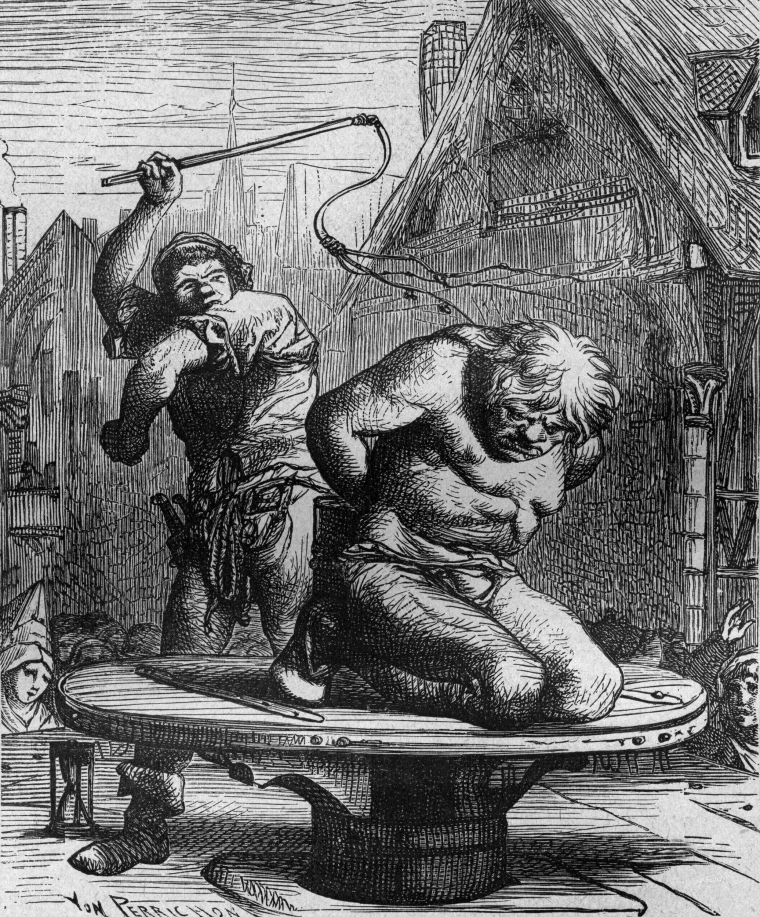
Set in 15th century Paris, this narrative revolves around Quasimodo, a misshapen bell-ringer at Notre Dame Cathedral, and his unreciprocated affection for the lovely Roma street dancer, Esmeralda. Quasimodo was brought up by the archdeacon Claude Frollo, who harbors lustful feelings for Esmeralda. When Frollo commands Quasimodo to abduct her, the hunchback is apprehended and subjected to public humiliation. Esmeralda, feeling compassion for him, offers him water while he is bound to the pillory. She captures the attention of Captain Phoebus, with whom she falls in love. Frollo, consumed by jealousy, stabs Phoebus and frames Esmeralda for the act. Consequently, she is arrested and sentenced to death. Quasimodo rescues her from the gallows and provides her refuge in the cathedral. Frollo attempts to claim her, but upon her rejection, he delivers her to face execution. As Esmeralda is escorted to the gallows, Quasimodo descends from Notre Dame and carries her back to the cathedral, temporarily shielding her under the law of sanctuary. However, a band of vagabonds led by Clopin Trouillefou assaults Notre Dame, prompting Quasimodo to defend it by hurling stones and timber at the attackers. The king's men arrive to quell the disturbance, and amidst the turmoil, Frollo manages to sneak Esmeralda out of the cathedral. Frollo makes one final effort to win Esmeralda's affection, but she spurns him once more. In a fit of rage, he turns her over to the authorities. As Esmeralda is hanged, Quasimodo retaliates by pushing Frollo from the cathedral tower to his demise. Quasimodo then vanishes, never to be seen again. Years later, when Esmeralda's tomb is opened, two intertwined skeletons are discovered—one belonging to a hunchback embracing the other.

