
Died at 90
male
Robert Dean Stockwell (March 5, 1936 – November 7, 2021) was an American film, television and stage actor with a career spanning over 70 years. As a child actor under contract to Metro-Goldwyn-Mayer, he first came to the public's attention in films including Anchors Aweigh (1945), The Green Years (1946), Gentleman's Agreement (1947), The Boy with Green Hair (1948), and Kim (1950). As a young adult, he had a lead role in the 1957 Broadway and 1959 screen adaptation of Compulsion; and in 1962 he played Edmund Tyrone in the film version of Long Day's Journey into Night, for which he won two Best Actor Awards at the Cannes Film Festival. He was nominated for a Golden Globe Award for Best Actor – Motion Picture Drama for his starring role in the 1960 film version of D. H. Lawrence's Sons and Lovers. He appeared in supporting roles in such films as Dune (1984), Paris, Texas (1984), To Live and Die in L.A. (1985), Blue Velvet (1986), Beverly Hills Cop II (1987), and Tucker: The Man and His Dream (1988). He received further critical acclaim for his performance in Married to the Mob (1988), for which he was nominated for the Academy Award for Best Supporting Actor. He subsequently had roles in The Player (1992), Air Force One (1997), The Rainmaker (1997) and The Manchurian Candidate (2004). His television roles include Rear Admiral Albert "Al" Calavicci in Quantum Leap (1989–1993), Navy Secretary Edward Sheffield on JAG (2002–2004), and Brother Cavil on Battlestar Galactica (2004–2009). Following his roles on Quantum Leap and Battlestar Galactica, he appeared at numerous science fiction conventions. He retired from acting in 2015 following health issues and focused his later life on sculpture and other visual art.
Dean Stockwell

Florian Barbedienne
for Florian Barbedienne in Victor Hugo's The Hunchback of Notre-Dame (1991)
Suggested by fionnoconnor402
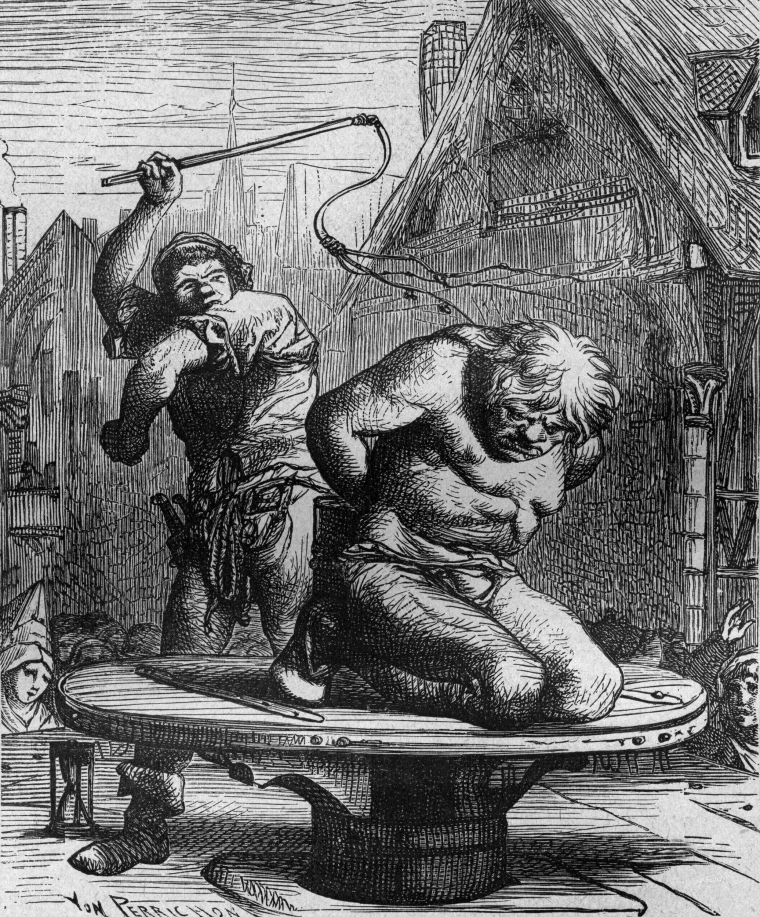
Set in 15th century Paris, this narrative revolves around Quasimodo, a misshapen bell-ringer at Notre Dame Cathedral, and his unreciprocated affection for the lovely Roma street dancer, Esmeralda. Quasimodo was brought up by the archdeacon Claude Frollo, who harbors lustful feelings for Esmeralda. When Frollo commands Quasimodo to abduct her, the hunchback is apprehended and subjected to public humiliation. Esmeralda, feeling compassion for him, offers him water while he is bound to the pillory. She captures the attention of Captain Phoebus, with whom she falls in love. Frollo, consumed by jealousy, stabs Phoebus and frames Esmeralda for the act. Consequently, she is arrested and sentenced to death. Quasimodo rescues her from the gallows and provides her refuge in the cathedral. Frollo attempts to claim her, but upon her rejection, he delivers her to face execution. As Esmeralda is escorted to the gallows, Quasimodo descends from Notre Dame and carries her back to the cathedral, temporarily shielding her under the law of sanctuary. However, a band of vagabonds led by Clopin Trouillefou assaults Notre Dame, prompting Quasimodo to defend it by hurling stones and timber at the attackers. The king's men arrive to quell the disturbance, and amidst the turmoil, Frollo manages to sneak Esmeralda out of the cathedral. Frollo makes one final effort to win Esmeralda's affection, but she spurns him once more. In a fit of rage, he turns her over to the authorities. As Esmeralda is hanged, Quasimodo retaliates by pushing Frollo from the cathedral tower to his demise. Quasimodo then vanishes, never to be seen again. Years later, when Esmeralda's tomb is opened, two intertwined skeletons are discovered—one belonging to a hunchback embracing the other.

