
Died at 95
male
He has that same genuine likability factor, owns that same trademark lantern jaw and is just as appealing and gifted as his older brother, Dick Van Dyke, but, for decades, Jerry Van Dyke had to bear the brunt of his brother's overwhelming shadow. The comic actor was born six years younger than Dick on July 27, 1931, in Danville, Illinois. Raised there, the crew cut blond showed an aptitude for clowning in high school. His stand-up comedy venues first took the form of dives and strip clubs throughout the Deep South in which his banjo-playing became an intricate part of the routine. At one point, Jerry was a regular on the Playboy club circuit. He then set his sights on the top showrooms in Las Vegas, Lake Tahoe and Atlantic City and became a dependable opening act. Jerry's early career should have been rightfully interrupted when he joined the Air Force in 1952. He, instead, kept the troops laughing by performing in Special Services shows. Winning a military talent contest actually earned him a couple of appearances on The Ed Sullivan Show (1948) (aka "The Ed Sullivan Show") and resulting TV exposure. Following his tour of duty, he nabbed variety appearances and a regular comic relief role on The Judy Garland Show (1963). He found comic acting parts as well on TV. Like brother Dick, who was a huge TV star by this time, Jerry also did a stint emceeing a game show. In Jerry's case, it was Picture This (1963).
Jerry Van Dyke

Morrie Schwartz
for Morrie Schwartz in Tuesdays with Morrie
Suggested by elliesanderson
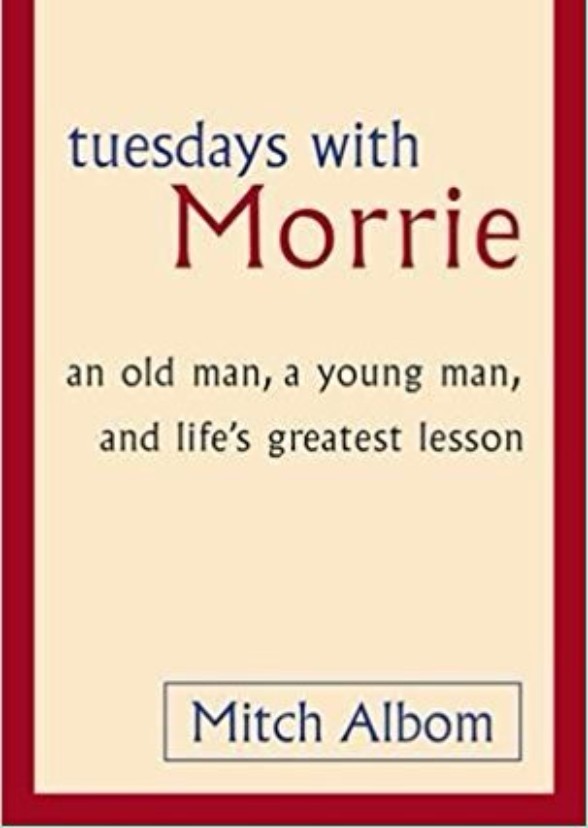
Newspaper sports columnist Mitch Albom recounts the time spent with his 78-year-old sociology professor, Morrie Schwartz, at Brandeis University, who was dying from amyotrophic lateral sclerosis (ALS). Albom, a former student of Schwartz, had not corresponded with him since attending his college classes 16 years earlier. The first three chapters incorporate an ambiguous introduction to the final conversation between Albom and Schwartz, a brief flashback to Albom's graduation, and an account of the events Albom experienced between graduation and the reunion with his professor. The name Morrie comes from its meaning in Hebrew (mori מורי), which means "my teacher." Albom is a successful sports columnist for the Detroit Free Press despite his childhood dream of being a pianist. After seeing Schwartz on Nightline, Albom called Schwartz, who remembered his former pupil despite the lapse of 16 years. Albom was prompted to travel from Michigan to Massachusetts to visit Schwartz. A newspaper strike frees Albom to commute weekly, on Tuesdays, to visit with Schwartz. The resulting book is based on these fourteen Tuesdays they meet, supplemented with Schwartz's lectures and life experiences and interspersed with flashbacks and allusions to contemporary events.