Age: 78
female
Dianne Evelyn Wiest (/wiːst/; born March 28, 1948) is an American actress. She has won two Academy Awards for Best Supporting Actress for 1986's Hannah and Her Sisters and 1994's Bullets Over Broadway (both directed by Woody Allen), one Golden Globe Award for Bullets Over Broadway, the 1997 Primetime Emmy Award for Outstanding Guest Actress in a Drama Series for Road to Avonlea, and the 2008 Primetime Emmy Award for Outstanding Supporting Actress in a Drama Series for In Treatment. In addition, she was nominated for an Academy Award for 1989's Parenthood. Other film appearances by Wiest include Footloose (1984), Woody Allen's The Purple Rose of Cairo (1985), Radio Days (1987), and September (1987), The Lost Boys (1987), Bright Lights, Big City (1988), Edward Scissorhands (1990), Little Man Tate (1991), The Birdcage (1996), Practical Magic (1998), Dan in Real Life (2007), Synecdoche, New York (2008), Rabbit Hole (2010), The Mule (2018), Let Them All Talk (2020), and I Care a Lot (2020). She also appeared in the television series Law & Order (2000–2002) and the CBS comedy Life in Pieces(2015–2019). Description above from the Wikipedia article Dianne Wiest, licensed under CC-BY-SA, full list of contributors on Wikipedia.
Dianne Wiest

Charlotte Schwartz
for Charlotte Schwartz in Tuesdays with Morrie
Suggested by inigoclearwater
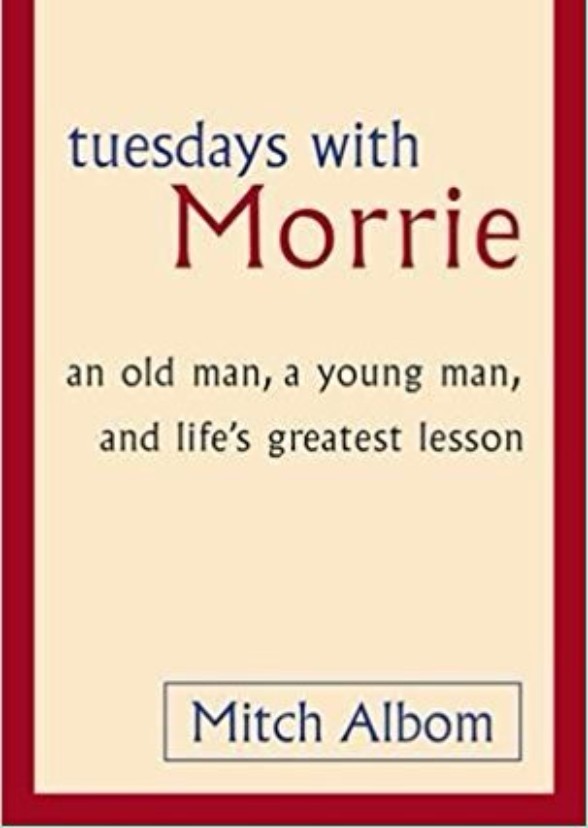
Newspaper sports columnist Mitch Albom recounts the time spent with his 78-year-old sociology professor, Morrie Schwartz, at Brandeis University, who was dying from amyotrophic lateral sclerosis (ALS). Albom, a former student of Schwartz, had not corresponded with him since attending his college classes 16 years earlier. The first three chapters incorporate an ambiguous introduction to the final conversation between Albom and Schwartz, a brief flashback to Albom's graduation, and an account of the events Albom experienced between graduation and the reunion with his professor. The name Morrie comes from its meaning in Hebrew (mori מורי), which means "my teacher." Albom is a successful sports columnist for the Detroit Free Press despite his childhood dream of being a pianist. After seeing Schwartz on Nightline, Albom called Schwartz, who remembered his former pupil despite the lapse of 16 years. Albom was prompted to travel from Michigan to Massachusetts to visit Schwartz. A newspaper strike frees Albom to commute weekly, on Tuesdays, to visit with Schwartz. The resulting book is based on these fourteen Tuesdays they meet, supplemented with Schwartz's lectures and life experiences and interspersed with flashbacks and allusions to contemporary events.