
Age: 59
male
David Nykl (born 7 February 1967 in Prague, Czechoslovakia) is a Czech Canadian actor of film, television, commercials and theater. After the Soviet invasion in 1968, he and his family left then-Communist Czechoslovakia for Canada. Upon arriving at Victoria, British Columbia, his father found work as a structural engineer and his mother found work as a nurse. Nykl attended the University of British Columbia, where he majored in liberal arts. Nykl has appeared heavily in Vancouver and Prague in dozens of theater, film and television productions. Known for his versatility and depth as an actor, he has also produced theatre and film projects, and in 1994 he co-founded Prague's Misery Loves Company Theatre with Richard Toth and Ewan McLaren. He is known to science fiction fans as the recurring Stargate Atlantis character of Dr. Radek Zelenka, a Czech scientist on Earth's expedition to the "lost city" of Atlantis. His character often provides a foil to the main scientists, who forget the limits of their situation. He is fluent in Czech, English, French and Spanish. Though his character on Stargate Atlantis speaks English with a Czech accent, Nykl normally speaks with a Canadian accent. Whenever Zelenka spoke Czech in Stargate Atlantis, Nykl was given the lines in English, and he translated them. Description above from the Wikipedia article David Nykl, licensed under CC-BY-SA, full list of contributors on Wikipedia.
David Nykl

Bohumil Haňtá
for Bohumil Haňtá in Too Loud a Solitude
Suggested by sepanta_kazemi
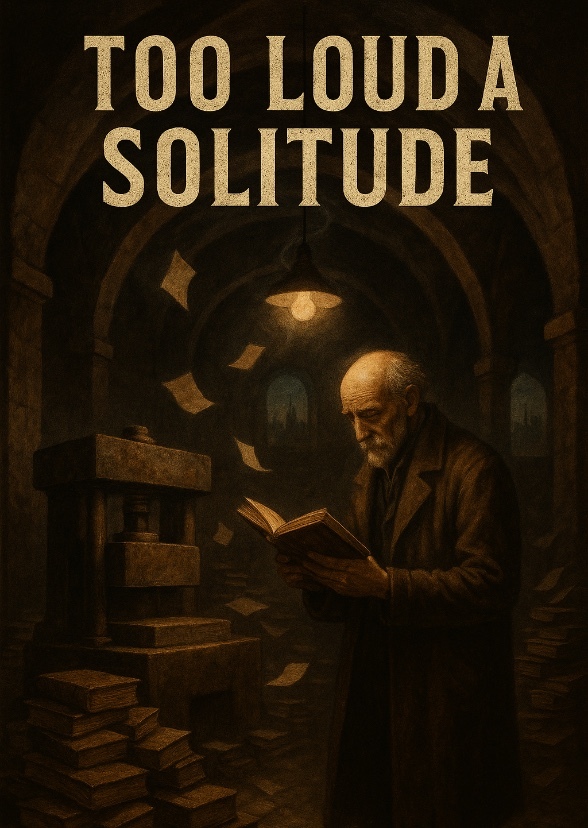
For thirty-five years, Hanta has lived in a damp underground chamber, alone with a rusty hydraulic press and mountains of discarded paper. By day he crushes banned books, forgotten manuscripts, and the quiet debris of a city that no longer cares for its own wisdom. By night he drinks, reads, thinks, and slips deeper into the strange world that only he seems to notice. Hanta is mocked by his coworkers and belittled by his boss, but none of them know the truth. Among the waves of wastepaper that flow into his basement, he finds rare volumes, sacred texts, forbidden ideas. Instead of destroying them, he hides them. He rescues them. He reads them until their words seep into his bones. He falls in love with the life inside the pages, a private romance built in the shadows. But the world above is changing. A new industrial monster arrives. A massive, efficient, modern press. A machine that crushes faster, cleaner, and without a trace of the human hesitation that still lingers in Hanta’s hands. Its arrival signals the end of small presses like his, the end of slow work, the end of accidental miracles. And with it comes the slow collapse of the only life he has ever known. Hanta watches as his intimate, fragile universe is swallowed by progress. The books he saved, the thoughts he carried, the rhythms of his lonely basement — all of them feel threatened by a future built on speed and indifference. As the world accelerates, Hanta holds tighter to the quiet beauty he discovered in the ruins. His story becomes a poetic struggle against forgetting. A fight to protect the soul of a city that is too busy to hear itself think. A final act of resistance from a man who spent his life crushing books but was shaped and saved by them.


