
Age: 56
female
Uma Karuna Thurman is an American actress, writer, producer and model. She has acted in a variety of films, from romantic comedies and dramas to science fiction and action films. Following her appearances on the December 1985 and May 1986 covers of British Vogue, Thurman's breakthrough role was Dangerous Liaisons (1988) in which she starred. She rose to international prominence with her role as Mia Wallace in Quentin Tarantino's 1994 film Pulp Fiction, for which she was nominated for the Academy Award, the BAFTA Award, and the Golden Globe Award for Best Supporting Actress. Often hailed as Tarantino's muse, she reunited with the director to play the main role of The Bride in Kill Bill: Volume 1 and 2 (2003, 2004), which brought her two additional Golden Globe Award nominations. Established as a Hollywood leading lady, her other notable films include Henry & June (1990), The Truth About Cats & Dogs (1996), Batman & Robin (1997), Gattaca (1997), Les Misérables (1998), Paycheck (2003), The Producers (2005), My Super Ex-Girlfriend (2006), Percy Jackson & the Olympians: The Lightning Thief (2010), Lars von Trier's Nymphomaniac (2013) and The House That Jack Built (2018). In 2011, Thurman was a member of the jury for the main competition at the 64th Cannes Film Festival, and in 2017, she was named president of the 70th edition's "Un Certain Regard" jury. Thurman made her Broadway debut in The Parisian Woman (2017–2018). For her performance in the made-for-HBO film Hysterical Blindness (2002), Thurman won the Golden Globe Award for Best Actress in a Television Film, and for her five-episode role in the NBC musical series Smash (2012), she received a Primetime Emmy Award nomination for Outstanding Guest Actress in a Drama Series. Thurman has starred in the miniseries The Slap (2015) and the series Imposters (2017–2018). Description above from the Wikipedia article Uma Thurman, licensed under CC-BY-SA, full list of contributors on Wikipedia.
Uma Thurman

Francine Langstrom
for Francine Langstrom in Tim Burton's Batman 3: Man-Bat
Suggested by kaueoliveira
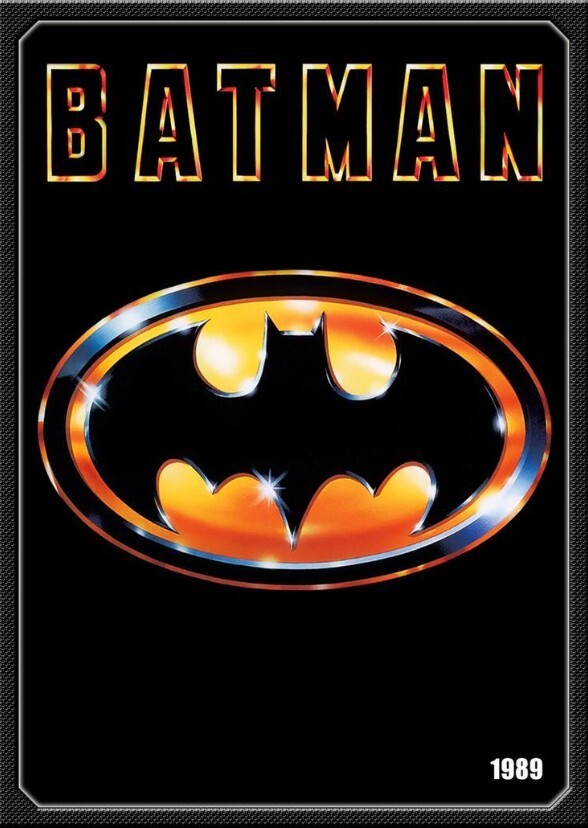
"Batman 3: Man-Bat" is conceived as a gothic horror tragedy in the signature style of Tim Burton, focusing on the dark, psychological duality between man and beast, much like the treatment of Catwoman and Penguin in Returns. The film introduces Dr. Kirk Langstrom, a brilliant but socially awkward zoologist at the crumbling Gotham Museum of Natural History. Obsessed with the science of echolocation and determined to find a cure for his own impending hearing loss, Kirk secretly develops an unstable serum derived from bat-glandular extract. When he tests it on himself, the result is a catastrophic, grotesque transformation: he becomes a hulking, chiropteran monster—Man-Bat. The creature’s emergence terrorizes Gotham not as a criminal, but as a tragic, primal force of nature, driven by the serum's bestial rage and a distorted need to "cure" the world's perceived sickness. Batman is forced into a morally complex hunt for the creature. This film forces Bruce Wayne to confront the literal monstrous nature of his own self-chosen bat symbol. The climax is an agonizing, expressionistic fight atop the Gotham Museum, where Batman must choose between destroying the monster or finding the antidote to save the tormented man beneath the wings, ultimately exploring the thin, terrifying line between Bruce's carefully controlled symbol and Langstrom's uncontrolled biological horror.

