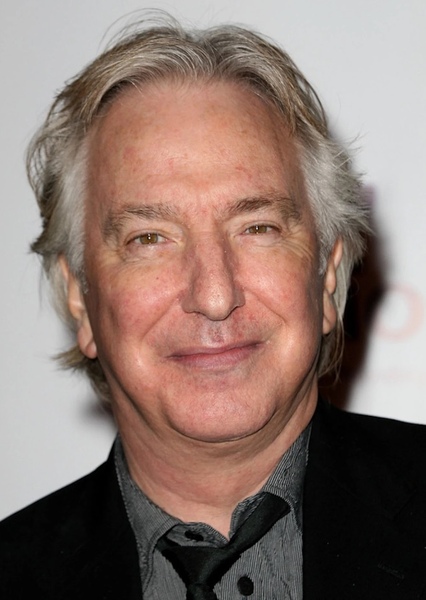
Died at 80
male
Alan Sidney Patrick Rickman (February 21, 1946 – January 14, 2016) was an English actor and director. Known for his deep, languid voice, he trained at the Royal Academy of Dramatic Art in London and became a member of the Royal Shakespeare Company (RSC), performing in modern and classical theatre productions. He played the Vicomte de Valmont in the RSC stage production of Les Liaisons Dangereuses in 1985, and after the production transferred to the West End in 1986 and Broadway in 1987, he was nominated for a Tony Award. Rickman's first cinema role came when he was cast as the German terrorist leader Hans Gruber in Die Hard (1988). He also appeared as the Sheriff of Nottingham in Robin Hood: Prince of Thieves (1991), for which he received the BAFTA Award for Best Actor in a Supporting Role; Elliott Marston in Quigley Down Under (1990); Jamie in Truly, Madly, Deeply (1991); Colonel Brandon in Sense and Sensibility (1995); Eamon DeValera in Michael Collins (1997); Alexander Dane in Galaxy Quest (1999); Metatron in Dogma (1999); Severus Snape in the Harry Potter series (2001–2011); Harry in Love Actually (2003); Marvin the Paranoid Android in The Hitchhiker's Guide to the Galaxy (2005); and Judge Turpin in Sweeney Todd: The Demon Barber of Fleet Street (2007). Rickman made his television acting debut playing Tybalt in Romeo and Juliet (1978) as part of the BBC's Shakespeare series. His breakthrough role was in the BBC television adaptation of The Barchester Chronicles (1982). He later starred in television films, playing the title character in Rasputin: Dark Servant of Destiny (1996), which won him a Golden Globe Award, an Emmy Award and a Screen Actors Guild Award, and Alfred Blalock in Something the Lord Made (2004). Rickman died of pancreatic cancer on 14 January 2016 at age 69. His final film roles were as Lieutenant General Frank Benson in the thriller Eye in the Sky (2015), and reprising his role as the voice of the caterpillar from Alice in Wonderland (2010) in Alice Through the Looking Glass (2016).
Alan Rickman

Dr. March
for Dr. March in Tim Burton's Batman 3: Man-Bat
Suggested by kaueoliveira
"Batman 3: Man-Bat" is conceived as a gothic horror tragedy in the signature style of Tim Burton, focusing on the dark, psychological duality between man and beast, much like the treatment of Catwoman and Penguin in Returns. The film introduces Dr. Kirk Langstrom, a brilliant but socially awkward zoologist at the crumbling Gotham Museum of Natural History. Obsessed with the science of echolocation and determined to find a cure for his own impending hearing loss, Kirk secretly develops an unstable serum derived from bat-glandular extract. When he tests it on himself, the result is a catastrophic, grotesque transformation: he becomes a hulking, chiropteran monster—Man-Bat. The creature’s emergence terrorizes Gotham not as a criminal, but as a tragic, primal force of nature, driven by the serum's bestial rage and a distorted need to "cure" the world's perceived sickness. Batman is forced into a morally complex hunt for the creature. This film forces Bruce Wayne to confront the literal monstrous nature of his own self-chosen bat symbol. The climax is an agonizing, expressionistic fight atop the Gotham Museum, where Batman must choose between destroying the monster or finding the antidote to save the tormented man beneath the wings, ultimately exploring the thin, terrifying line between Bruce's carefully controlled symbol and Langstrom's uncontrolled biological horror.

