
Age: 62
male
John Powell is an English composer best known for his film scores. He has been based in Los Angeles since 1997 and has composed the scores to over 70 feature films. He is best known for composing scores for films, including Just Visiting, Face/Off, the Bourne film series, the Happy Feet films, United 93, X-Men: The Last Stand, Wicked and its sequel, Evolution, Dr. Seuss' The Lorax, Migration, Drumline, Hancock, The Call of the Wild, Bolt, eight Blue Sky Studios films, and nine DreamWorks Animation films. His work on Happy Feet, Ferdinand, and Solo: A Star Wars Story has earned him three Grammy nominations. He was nominated for an Academy Award for How to Train Your Dragon. Powell was a member of Hans Zimmer's music studio, Remote Control Productions, and has collaborated frequently with other composers from the studio, including Harry Gregson-Williams on Antz, Chicken Run, and Shrek and Zimmer himself on Chill Factor, The Road to El Dorado, and the first two Kung Fu Panda films. He has also collaborated with film directors such as Carlos Saldanha, Dean DeBlois, Chris Sanders, Benjamin Renner, Chris Renaud, George Miller, John Woo, Ron Underwood, Doug Liman, Charles Stone III, Simon Otto, Jared Hess, and Paul Greengrass. Description above from the Wikipedia article John Powell (film composer), licensed under CC-BY-SA, full list of contributors on Wikipedia.
John Powell

Composer
for Composer in Thidwick the Big-Hearted Moose
Suggested by milanthaitlach902392012
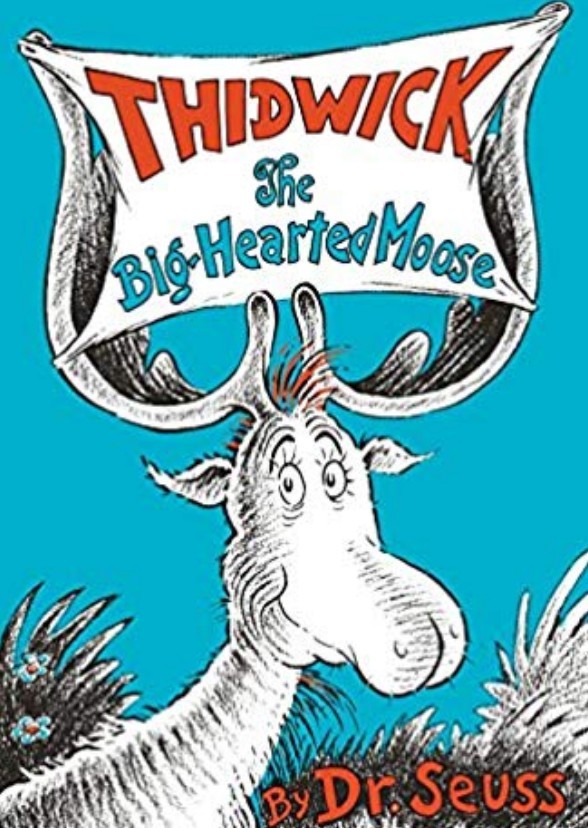
Thidwick, a moose in a herd numbering approximately sixty who subsist mainly on moose-moss and live on the northern shore of Lake Winna-Bango, grants a small bug's request to ride on his antlers free of charge. The bug takes advantage of the moose's kindness and settles in as a permanent resident, inviting various other animals to live on and in the moose's antlers. The moose kind-heartedly acquiesces to the unexpected living arrangements, treating the animals as 'guests' even though he never told them explicitly that they were allowed to live there. Unfortunately, his passengers are thoughtless and selfish, and the situation quickly gets out of control. When one of the guests, a woodpecker, begins drilling holes in Thidwick's horns, the other moose give Thidwick an ultimatum: either get rid of his guests or leave the herd. When Thidwick's sense of decency drives him to forgo the comforts of herd life in favor of indulging his guests, his herd leaves him behind. Winter comes, and the herd swims across the lake to find fresh supplies of moose-moss. But though Thidwick wants to do the same, his guests object, and insist that Thidwick not take "their home to the far distant side of the lake." Even as he faces starvation, Thidwick refuses to go against his guests' wishes, and he remains on the cold, northern shore of the lake where his guests prefer to reside. Meanwhile, the heartless residents of Thidwick's antlers, paying no regard to the increasing physical or psychological load that the moose has to endure, continue inviting other animals to live with them. The situation comes to a head when hunters spot Thidwick and pursue him, with the goal of shooting him and mounting his head on the wall of the Harvard Club in New York City - a building well-known in the 1930s and 1940s for its hunting trophies. Thidwick attempts to outrun the hunters, but the heavy load - and his passengers' refusal to permit him to travel across the lake - prevent him from escaping. Just before his capture, however, Thidwick remembers that it is time for him to shed his antlers. At the last moment he drops his antlers, makes a snide comment to his former guests, and escapes by swimming across the lake to rejoin his herd. His former guests are captured by the hunters and are stuffed and mounted, still perched on his antlers, on the Harvard Club wall.


