
Age: 86
male
Sir Patrick Stewart (born July 13, 1940) is an British film, television and stage actor. He has had a distinguished career in theatre and television for around half a century. He is most widely known for his television and film roles, as Captain Jean-Luc Picard in Star Trek: The Next Generation and as Professor Charles Xavier in the X-Men films. Stewart was born in Mirfield near Dewsbury in the West Riding of Yorkshire, England, the son of Gladys, a weaver and textile worker, and Alfred Stewart, a Regimental Sergeant Major in the British Army who served with the King's Own Yorkshire Light Infantry and previously worked as a general labourer and as a postman. Stewart and his first wife, Sheila Falconer, have two children: Daniel Freedom and Sophie Alexandra. Stewart and Falconer divorced in 1990. In 1997, he became engaged to Wendy Neuss, one of the producers of Star Trek: The Next Generation, and they married on 25 August 2000, divorcing three years later. Four months prior to his divorce from Neuss, Stewart played opposite actress Lisa Dillon in a production of The Master Builder. The two dated for four years, but are no longer together. He is now seeing Sunny Ozell; at 31, she is younger than his daughter. "I just don't meet women of my age," he explains. Stewart has been a prolific actor in performances by the Royal Shakespeare Company, appearing in over 60 productions.
Patrick Stewart

Vincent Gilmore
for Vincent Gilmore in The Woman in White
Suggested by tvbookcasts
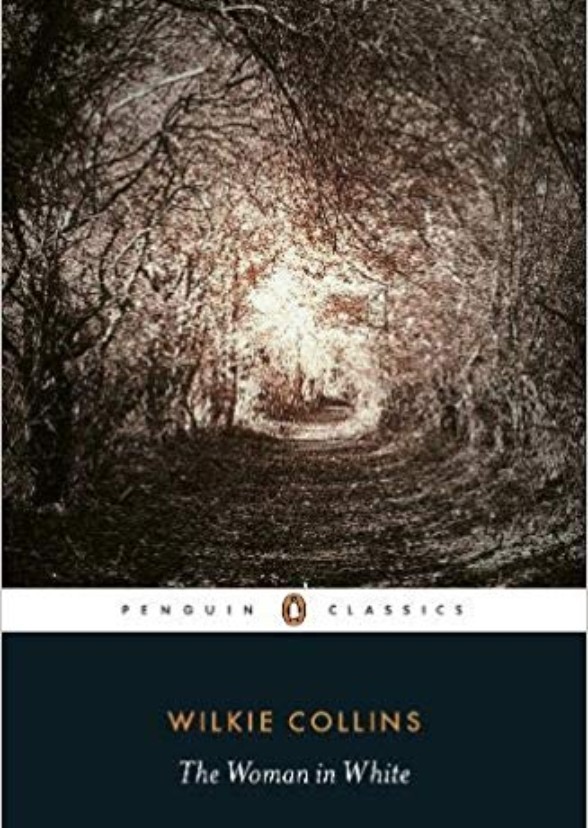
'In one moment, every drop of blood in my body was brought to a stop... There, as if it had that moment sprung out of the earth, stood the figure of a solitary Woman, dressed from head to foot in white' The Woman in White famously opens with Walter Hartright's eerie encounter on a moonlit London road. Engaged as a drawing master to the beautiful Laura Fairlie, Walter becomes embroiled in the sinister intrigues of Sir Percival Glyde and his 'charming' friend Count Fosco, who has a taste for white mice, vanilla bonbons, and poison. Pursuing questions of identity and insanity along the paths and corridors of English country houses and the madhouse, The Woman in White is the first and most influential of the Victorian genre that combined Gothic horror with psychological realism.

