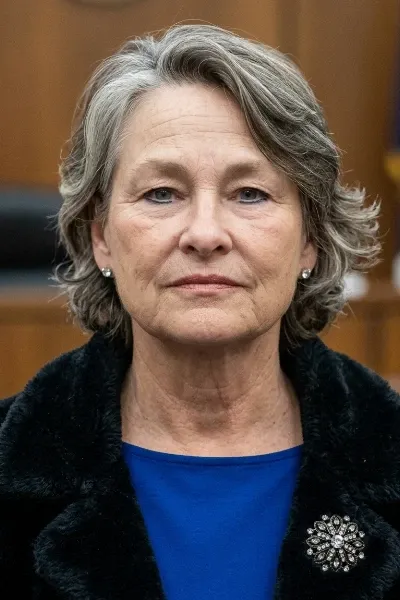
Age: 69
female
Cherry Jones (born November 21, 1956) is an American actress. Having started her career in theatre as a founding member of the American Repertory Theatre in 1980, she then transitioned into film and television. Celebrated for her dynamic roles on stage and screen, she has received various accolades, including three Primetime Emmy Awards and two Tony Awards, as well as nominations for an Olivier Award and a Screen Actors Guild Award. Jones made her Broadway debut in the 1987 play Stepping Out. She went on to receive two Tony Awards for Best Actress in a Play for The Heiress in 1995 and Doubt in 2005. Her other Tony-nominated roles were in Our Country's Good in 1991, A Moon for the Misbegotten in 2000, and The Glass Menagerie in 2014. Her most recent Broadway performance was in The Lifespan of a Fact in 2018. She is also known for her work on television with breakthrough roles as Barbara Layton in The West Wing and President Allison Taylor in 24 the latter of which won her the Primetime Emmy Award for Outstanding Supporting Actress in a Drama Series in 2009. She received a Screen Actors Guild Award nomination for Transparent in 2015 and earned two Primetime Emmy Awards Outstanding Guest Actress in a Drama Series for her roles in the Hulu drama series The Handmaid's Tale in 2019 and the HBO drama series Succession in 2020. Her film appearances include The Horse Whisperer (1998), Erin Brockovich (2000), Signs (2002), The Village (2004), Amelia (2009), The Beaver (2011), A Rainy Day in New York (2019), and The Eyes of Tammy Faye (2021).
Cherry Jones

Judge Reva Goetz
for Judge Reva Goetz in The Woman in Me
Suggested by nickienicks

The Woman in Me unfolds as an intimate, unfiltered portrait of a young girl from Louisiana who becomes one of the most recognizable figures in the world - and the cost of that transformation. The story traces her rise from ambitious child performer to global pop phenomenon, while quietly threading in a legacy of generational trauma that shadows her family history. At the height of her early fame, she is carefully packaged as America’s “innocent” sweetheart, even as her real life tells a far more complicated story. Behind the image are secrets, pressures, and a loss of control that begins early - intensified by a high-profile relationship that ends abruptly and painfully. The fallout reshapes her public identity, turning admiration into scrutiny almost overnight. As fame escalates, so does exhaustion. The narrative captures a young woman navigating heartbreak, betrayal, and impossible expectations while attempting to maintain her career. Moments that tabloids once sensationalized - impulsive decisions, brief relationships, and chaotic nights - are reframed here as symptoms of burnout, isolation, and a desperate search for autonomy. Motherhood brings both love and new challenges, including struggles with postpartum depression, all while the spotlight grows harsher. The story revisits infamous public incidents not as spectacle, but as breaking points - At its core, the adaptation centers on control: who has it, who takes it, and what it means to reclaim it. The conservatorship emerges as the defining conflict, transforming her life into something tightly managed and deeply restrictive. The final act shifts toward resilience and awakening, as she begins to find her voice again and fight for independence. Ultimately, this is not just a story about fame - it’s about identity, survival, and the long, difficult path toward freedom.cracks in a system that offered little protection and even less understanding.

