Age: 63
male
Robert John Odenkirk (born October 22, 1962) is an American actor, comedian, and filmmaker best known for his role as Saul Goodman on Breaking Bad (2008–2013) and its spin-off Better Call Saul (2015–2022). For the latter, he has received five nominations for Primetime Emmy Award for Outstanding Lead Actor in a Drama Series. As a producer on Better Call Saul since its premiere, he has also received six nominations for Primetime Emmy Award for Outstanding Drama Series. He is also known for the HBO sketch comedy series Mr. Show with Bob and David (1995–1998), which he co-created and co-starred in with fellow comic David Cross. In 2015, he and Cross reunited, along with the rest of the Mr. Show cast, for W/ Bob & David on Netflix. Odenkirk wrote for television series Saturday Night Live (1987–1991) and The Ben Stiller Show (1992), winning Emmy Award for Outstanding Writing for a Variety Series in 1989 and 1993. He also wrote for Late Night with Conan O'Brien (1993–1994) and acted in a recurring role as Agent Stevie Grant in The Larry Sanders Show (1993–1998). In the early 2000s, Odenkirk discovered the comedy duo Tim & Eric. He produced their television series Tom Goes to the Mayor (2004–2006) and Tim and Eric Awesome Show, Great Job! (2007–2010). His feature directorial credits include the films Melvin Goes to Dinner (2003), Let's Go to Prison (2006), and The Brothers Solomon (2007). The success of Breaking Bad and Better Call Saul led to acting work in high-profile projects such as Nebraska (2013), the first season of Fargo (2014), Steven Spielberg's The Post (2017), Pixar's Incredibles 2 (2018), Little Women (2019) and, as the lead, the action film Nobody (2021), which he also produced. Description above from the Wikipedia article Bob Odenkirk, licensed under CC-BY-SA, full list of contributors on Wikipedia.
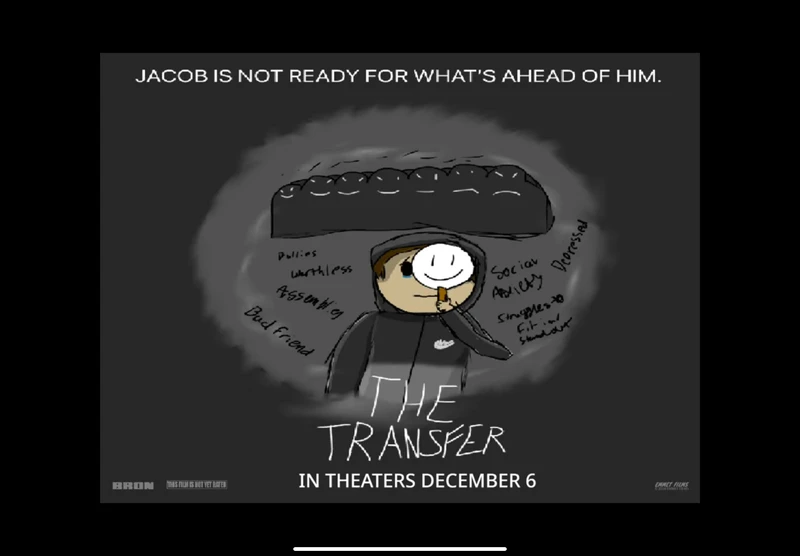
Jacob is the ultimate outcast after transferring into an School. The school environment is a living nightmare where he struggles to fit in and feels entirely worthless. Things hit a horrific boiling point when Jacob—pushed into deep social poverty by his lower-income background—brings his lunch to school packed inside a literal trash bag.Seeing this, the wealthy, elitist student body targets him relentlessly, the students ambush Jacob in front of the entire assembly, filming him, mocking his family's poverty, and throwing cafeteria garbage at him. But Jacob's trauma doesn't end at the school gates. He returns home to a house ruled by his tyrannical, broken father, who beats down whatever spirit Jacob has left. Caught between physical abuse at home and weaponized psychological trauma at school, Jacob finally snaps. The "smiley face" mask he holds up isn't just to hide his tears anymore—it becomes the calling card for a terrifying, bloody psychological breakdown as he decides to make the school pay and get revenge