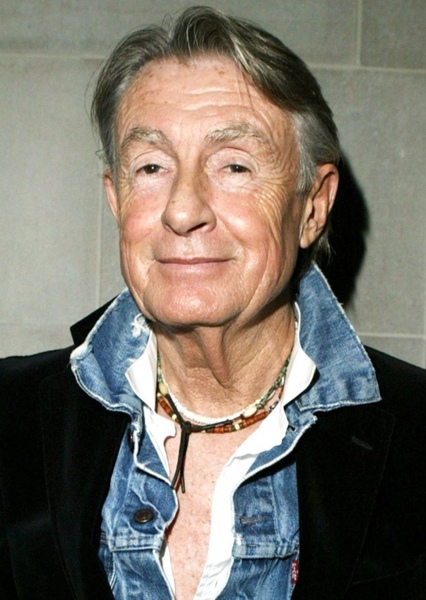
Age: 79
male
Steven Allan Spielberg KBE (born December 18, 1946) is an American filmmaker. A major figure of the New Hollywood era and pioneer of the modern blockbuster, Spielberg is widely regarded as one of the greatest and most influential filmmakers in the history of cinema and is the highest-grossing film director of all time. Among other accolades, he has received three Academy Awards, four Golden Globe Awards and three BAFTA Awards, as well as the AFI Life Achievement Award in 1995, an honorary knighthood in 2001, the Kennedy Center Honors in 2006, the Cecil B. DeMille Award in 2009, the Presidential Medal of Freedom in 2015, and the National Medal of Arts in 2023. According to Forbes, he is the wealthiest celebrity. Spielberg was born in Cincinnati, Ohio, and grew up in Phoenix, Arizona. He moved to California and studied film in college. After directing several episodes for television, including Night Gallery and Columbo, he directed the television film Duel (1971), which Barry Diller approved. He made his theatrical debut with The Sugarland Express (1974), also beginning his decades-long collaboration with composer John Williams, with whom he has worked for all but five of his theatrical releases. He became a household name with the summer blockbuster Jaws (1975). He continued directing acclaimed escapist box-office hits with Close Encounters of the Third Kind (1977), E.T. the Extra-Terrestrial (1982), and the original Indiana Jones trilogy (1981–1989). He also explored drama in The Color Purple (1985) and Empire of the Sun (1987). In 1993, Spielberg directed back-to-back hits with the science fiction thriller Jurassic Park, the highest-grossing film at the time, and the epic historical drama Schindler's List, which has often been ranked among the greatest films ever made. He won the Academy Award for Best Director for the latter as well as for the World War II epic Saving Private Ryan (1998). Spielberg has since directed the science fiction films A.I. Artificial Intelligence (2001), Minority Report (2002), War of the Worlds (2005) and Ready Player One (2018); the historical dramas Amistad (1997), Munich (2005), War Horse (2011), Lincoln (2012), Bridge of Spies (2015) and The Post (2017); the comedies Catch Me If You Can (2002) and The Terminal (2004); the animated film The Adventures of Tintin (2011); the musical West Side Story (2021); and the family drama The Fabelmans (2022). Spielberg co-founded Amblin Entertainment and DreamWorks Pictures, and he has served as a producer for many successful films and television series, among them Poltergeist (1982), Gremlins (1984), Back to the Future (1985), An American Tail (1986), Who Framed Roger Rabbit (1988), Animaniacs (1993), Freakazoid! (1995), Twister (1996), Band of Brothers (2001) and Transformers (2007). Several of Spielberg's works are considered among the greatest films in history, and some are among the highest-grossing films of all time. Seven of his films have been inducted into the National Film Registry by the Library of Congress as being "culturally, historically or aesthetically significant". In 2013, Time listed him among the 100 most influential people. In 2023, Spielberg was the recipient of the first-ever Time 100 Impact Award in the US. Description above from the Wikipedia article Steven Spielberg, licensed under CC-BY-SA, full list of contributors on Wikipedia.

Pharaoh Rameses I of Egypt orders the death of all newborn Hebrew males. Yoshebel saves her infant son by setting him adrift in a basket on the Nile. Bithiah, the Pharaoh's daughter, finds the basket and decides to adopt the boy even though her servant, Memnet, recognizes the child is Hebrew. Bithiah names the baby Moses. Prince Moses grows up to become a successful general, winning a war with Ethiopia and establishing an alliance. Moses and princess Nefretiri fall in love, but she must marry the next Pharaoh. While working on the building of a city for Pharaoh Sethi's jubilee, Moses meets the stonecutter Joshua, who tells him of the Hebrew God. Moses saves an elderly woman from being crushed not knowing that she is his biological mother, Yoshebel, and he reprimands the taskmaster and overseer Baka. Moses reforms the treatment of slaves on the project, but Prince Rameses, Moses's adoptive brother, charges him with planning an insurrection. Moses says he is making his workers more productive, making Rameses wonder if Moses is the man the Hebrews are calling the Deliverer. Nefretiri learns from Memnet that Moses is the son of Hebrew slaves. She kills Memnet but reveals the story to Moses only after he finds the piece of Levite cloth he was wrapped in as a baby, which Memnet had kept. Moses follows Bithiah to Yoshebel's house where he meets his biological mother, Brother Aaron, and Sister Miriam. Moses learns more about the slaves by working with them. Nefretiri urges him to return to the palace so he may help his people when he becomes pharaoh, to which he agrees after he completes a final task. Moses saves Joshua from death by killing Baka, telling Joshua that he too is Hebrew. The confession is witnessed by the overseer Dathan, who then reports to Rameses. After being arrested, Moses explains that he is not the Deliverer, but would free the slaves if he could. Rameses is declared the next Pharaoh and banishes Moses to the desert. Yoshebel dies sometime later. Moses makes his way across the desert to a well in Midian. After defending seven sisters from Amalekites, Moses is housed with the girls' father Jethro, a Bedouin sheik, who worships the God of Abraham. Moses marries Jethro's eldest daughter Sephora. Later, he finds Joshua, who has escaped hard labor. While farming, Moses sees the burning bush on the summit of Mount Sinai and hears the voice of God. Moses returns to Egypt to free the Hebrews. Moses comes before Rameses, now pharaoh, to win the slaves' freedom, turning his staff into a cobra. Jannes performs the same trick with his staves, but Moses's snake shows superiority. Rameses prohibits straw from being provided to the Hebrews to make their bricks. Nefretiri rescues Moses from being stoned to death by the Hebrews wherein he reveals that he is married. Egypt is visited by plagues. Moses turns the river Nile to blood at a festival of Khnum and brings burning hail down upon Pharaoh's palace. Moses warns him the next plague to fall upon Egypt will be summoned by Pharaoh himself. Enraged at the plagues, Rameses orders all first-born Hebrews to die but a cloud of death instead kills all the firstborn of Egypt, including the child of Rameses and Nefretiri. Angrily, Pharaoh exiles the Hebrews, which begins the Exodus from Egypt. Rameses takes his army and pursues the Hebrews to the Red Sea. Moses uses God's help to stop the Egyptians with a pillar of fire and parts the Red Sea. After the Hebrews make it to safety, Moses releases the walls of water, drowning the Egyptian army. A devastated Rameses returns empty-handed to Nefretiri, stating that he now acknowledges Moses's god as God. Moses again ascends the mountain with Joshua. Impatiently, Dathan urges a reluctant Aaron to construct a golden calf idol as a gift for Rameses. A wild and decadent orgy is held by most of the Hebrews. Moses sees the Ten Commandments created by God in two stone tablets. Moses descends from the mountain to the sight of decadence. Enraged, he throws the tablets at the golden calf, which explodes, killing the wicked revelers, and causing the others to wander in the wilderness for 40 years. Forty years later, an elderly Moses leads the Hebrews towards Canaan. However, he could not enter the Promised land due to his disobedience to the Lord at the Waters of Strife. He instead names Joshua as leader, and spends the rest of his life at Mount Nebo until his death.