
Age: 74
male
Liam Neeson (born 7 June 1952) is an Irish and American actor. He was born in Ballymena, County Antrim, Northern Ireland and educated at Saint Patrick's College, Ballymena Technical College and Queen's University Belfast. He moved to Dublin after university to further his acting career, joining the renowned Abbey Theatre. In the early 1990s, he moved again to the United States, where the wide acclaim for his performance in Schindler's List led to more high-profile work. He is widowed and lives in New York with his two sons. He has been nominated for an Oscar, a BAFTA and three Golden Globe Awards. He has starred in a number of notable roles including Oskar Schindler in Schindler's List, Michael Collins in Michael Collins, Peyton Westlake in Darkman, Jean Valjean in Les Misérables, Qui-Gon Jinn in Star Wars Episode I: The Phantom Menace, Alfred Kinsey in Kinsey, Ras Al Ghul in Batman Begins and the voice of Aslan in The Chronicles of Narnia film series. He has also starred in several other notable films, from major Hollywood studio releases (ie. Excalibur, The Dead Pool, Nell, Rob Roy, The Haunting, Love Actually, Kingdom of Heaven, Taken, Clash of the Titans, The A-Team, Unknown) to smaller arthouse films (ie. Deception, Breakfast on Pluto, Chloe).
Liam Neeson

Quintus Metellus Macedonicus
for Quintus Metellus Macedonicus in The Storm Before the Storm
Suggested by thomasron
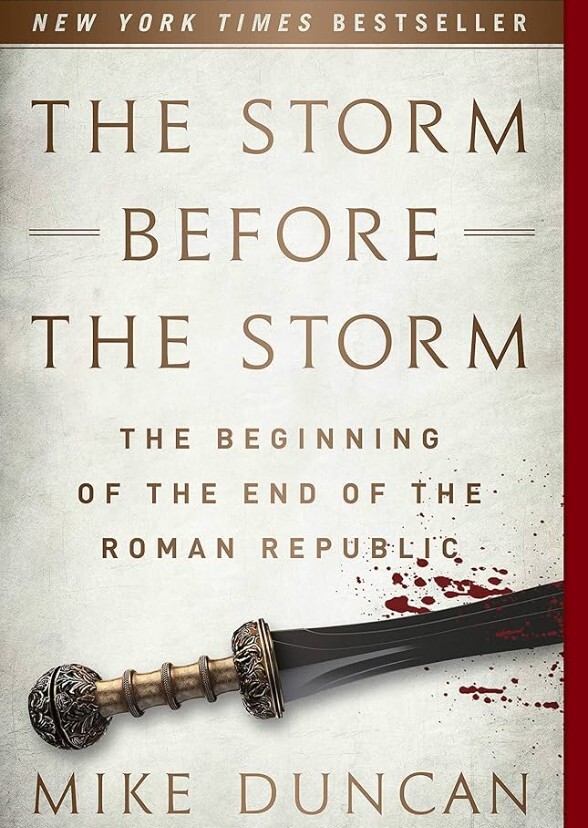
Based on the book by historian and podcaster Mike Duncan, published in 2017. It explores the turbulent period of Roman history between 146 and 78 BCE, preceding the fall of the Roman Republic and setting the stage for the rise of the Roman Empire. This era includes conflicts, political corruption, economic inequality, and social upheaval that eroded the foundations of the Roman Republic. The show emphasizes that the problems facing Rome in this period weren’t only due to external threats but also stemmed from internal struggles, including the ambitions of powerful men like the Gracchi brothers, Marius, and Sulla. These figures pushed Rome toward violence, class division, and unprecedented concentration of power—signaling a breakdown of political norms that eventually led to civil wars and the fall of the Republic. Duncan’s work draws parallels to modern issues of political instability, economic inequality, and the erosion of democratic norms. This historical analysis provides insights into how unchecked ambition and divisive politics can destabilize a society, making it a timely reminder of the importance of political resilience and integrity.

