
Age: 59
male
Isaac Liev Schreiber (/ˈliːɛv ˈʃraɪbər/ LEE-ev SHRY-bər; born October 4, 1967) is an American actor. He has received numerous accolades, including a Tony Award and nominations for nine Primetime Emmy Awards and five Golden Globe Awards. Schreiber's early film roles include Mixed Nuts (1994), Party Girl (1995), The Daytrippers (1996), and Big Night (1996). He appeared in the first three Scream horror films (1996–2000), Ransom (1996), The Hurricane (1999), Hamlet (2000), Kate & Leopold (2001), The Manchurian Candidate (2004), The Painted Veil (2006), X-Men Origins: Wolverine (2009), Pawn Sacrifice (2014), and Spotlight (2015). He acted in the Wes Anderson films Isle of Dogs (2018), The French Dispatch (2021), and Asteroid City (2023). He made his directorial film debut with Everything Is Illuminated (2005). He made his Broadway debut in In the Summer House (1992). He earned the Tony Award for Best Featured Actor in a Play for playing Richard Roma in the David Mamet play Glengarry Glen Ross (2005). He was Tony-nominated for his roles in the Eric Bogosian play Talk Radio (2007), the Arthur Miller revival A View from the Bridge (2010) and the John Patrick Shanley revival Doubt (2024). He also acted in Les Liaisons Dangereuses (2016). For his television roles, he most notably portrayed the titular character in the Showtime drama series Ray Donovan (2013–2020). He reprised the role in the television film Ray Donovan: The Movie (2022). The role has earned him nominations for three Primetime Emmy Awards and four Golden Globe Awards. He also portrayed Orson Welles in the HBO film RKO 281 (1999) and Otto Frank in the Nat Geo miniseries A Small Light (2023). Description above from the Wikipedia article Liev Schreiber, licensed under CC-BY-SA, full list of contributors on Wikipedia.
Liev Schreiber

Licinius Crassus
for Licinius Crassus in The Storm Before the Storm
Suggested by thomasron
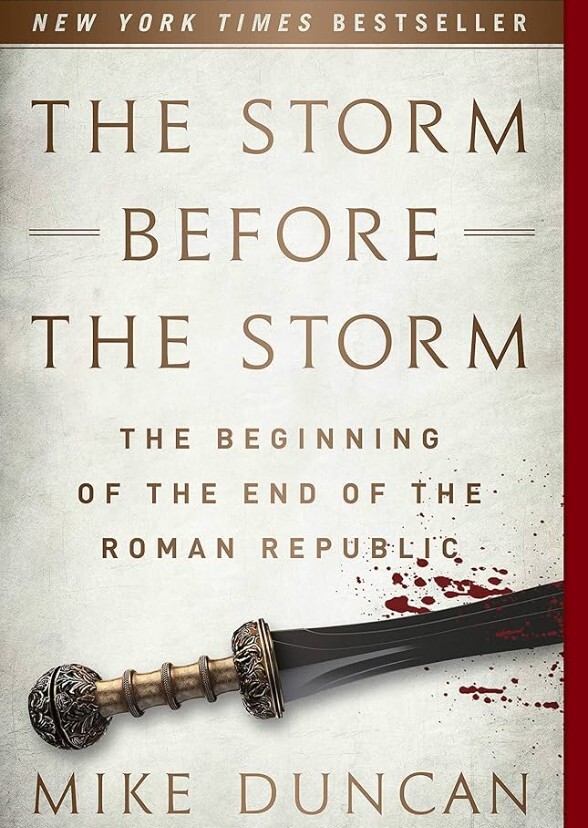
Based on the book by historian and podcaster Mike Duncan, published in 2017. It explores the turbulent period of Roman history between 146 and 78 BCE, preceding the fall of the Roman Republic and setting the stage for the rise of the Roman Empire. This era includes conflicts, political corruption, economic inequality, and social upheaval that eroded the foundations of the Roman Republic. The show emphasizes that the problems facing Rome in this period weren’t only due to external threats but also stemmed from internal struggles, including the ambitions of powerful men like the Gracchi brothers, Marius, and Sulla. These figures pushed Rome toward violence, class division, and unprecedented concentration of power—signaling a breakdown of political norms that eventually led to civil wars and the fall of the Republic. Duncan’s work draws parallels to modern issues of political instability, economic inequality, and the erosion of democratic norms. This historical analysis provides insights into how unchecked ambition and divisive politics can destabilize a society, making it a timely reminder of the importance of political resilience and integrity.

