Died at 149
male
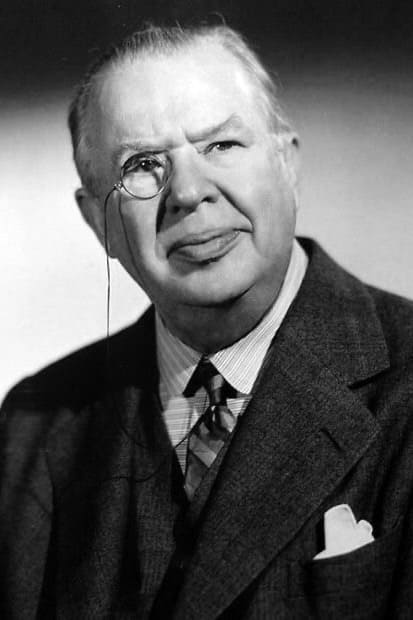
Charles Douville Coburn (June 19, 1877 – August 30, 1961) was an American film and theatre actor. Best known for his work in comedies, Coburn received the Academy Award for Best Supporting Actor for 1943's The More the Merrier. Coburn was born in Macon, Georgia, the son of Scotch-Irish Americans Emma Louise Sprigman (May 11, 1838 Springfield, Ohio – November 12, 1896 Savannah, Georgia) and Moses Douville Coburn (April 27, 1834 Savannah, Georgia – December 27, 1902 Savannah, Georgia). Growing up in Savannah, he started out at age 14 doing odd jobs at the local Savannah Theater, handing out programs, ushering, or being the doorman. By age 17 or 18, he was the theater manager. He later became an actor, making his debut on Broadway in 1901. Coburn formed an acting company with actress Ivah Wills in 1905. They married in 1906. In addition to managing the company, the couple performed frequently on Broadway. After his wife's death in 1937, Coburn relocated to Los Angeles, California and began film work. He won an Academy Award for Best Supporting Actor for his role as a retired millionaire playing Cupid in The More the Merrier in 1943. He was also nominated for The Devil and Miss Jones in 1941 and The Green Years in 1946. Other notable film credits include Of Human Hearts (1938), The Lady Eve (1941), Kings Row (1942), The Constant Nymph (1943), Heaven Can Wait (1943), Wilson (1944), Impact (1949), The Paradine Case (1947), Everybody Does It (1950), Has Anybody Seen My Gal? (1952), Monkey Business (1952), Gentlemen Prefer Blondes (1953), and John Paul Jones (1959). He usually played comedic parts, but Kings Row and Wilson were dramatic parts, showing his versatility. For his contributions to motion pictures, in 1960, Coburn was honored with a star on the Hollywood Walk of Fame at 6268 Hollywood Boulevard.
Charles Coburn

Max Detweiler
for Max Detweiler in The Sound of Music (1945)
Suggested by teeyutes

In 1930s Austria, a young woman named Maria is failing miserably in her attempts to become a nun. When Navy Captain Georg Von Trapp writes to the abbey asking for a governess that can handle his seven mischievous children, Maria is given the job. His wife is dead, he is often away, and he runs the household as strictly as he did the ships on which he sailed in his glory days. The children are unhappy and resentful of the governesses their father keeps hiring and have managed to run each of them off one by one. When Maria arrives, she is initially met with the same hostility, but her kindness, understanding, and sense of fun soon draws the children to her and brings some much-needed joy into all their lives, and eventually, even the Captain is touched by her. Eventually he and Maria find themselves falling in love, even though he is already engaged to a Baroness named Elsa and Maria is still a postulant. The romance makes them both start questioning the decisions they have made. However, their personal conflicts soon become overshadowed by current events. Austria is about to be seized by Nazi Germany, and the Captain may soon find himself drafted into the German Navy and forced to fight against his own country. —Paraphrased from LOTUS73 on IMDb

