
Age: 67
male
Ulrich Matthes was born in Berlin. He studied acting in the early 1980's in Berlin under Else Bongers. Ulrich Matthes studied German and English, because he really wanted to become a teacher, so he also took private acting lessons during his studies. His first engagement brought him to the Vereinigte Bühnen in Krefeld, where he played the title role in "Prinz Friedrich von Homburg". Later he came to Düsseldorf Schauspielhaus, the Bavarian State Theatre, the Munich Studio Theater and the Schaubühne place. Since the 2004/2005 season, he is member of the ensemble at Deutsches Theater in Berlin. In the 2004 movieThe Ninth Day, he plays Fr. Henri Kremer, a Catholic priest imprisoned at Dachau. In 2005 he was voted "Actor of the Year" by 'Theater heute' magazine for his performance in Edward Albees' "Who's Afraid of Virginia Woolf?". Ulrich Matthes has also dubbed many American actors such as Kenneth Braga, Malcom McDowell, Charlie Sheen, Ralph Fiennes, and Richard Thomas. Description above from the Wikia site Hitler Parody, licensed under CC-BY-SA, full list of contributors on Wikia.
Ulrich Matthes

Karl Hartendorf
for Karl Hartendorf in The Sorrows of Young Werther
Suggested by sepanta_kazemi
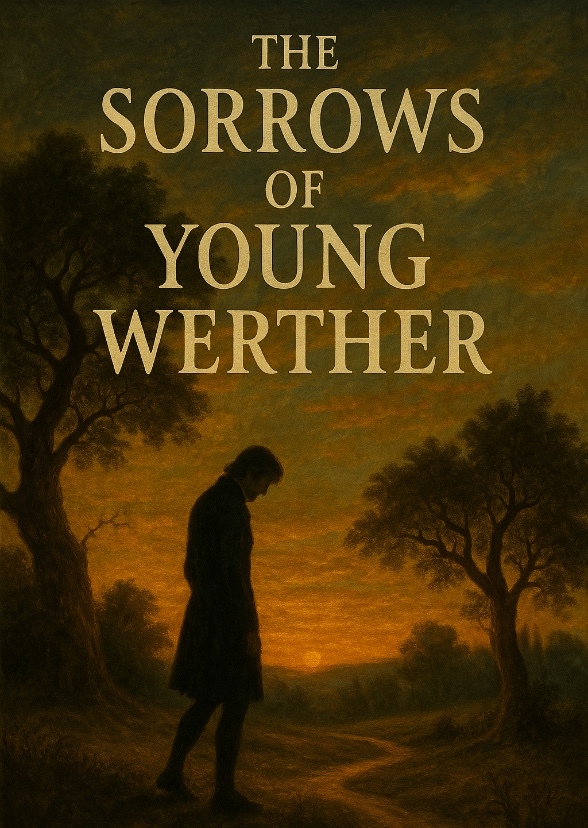
The story follows Werther, a sensitive young artist who leaves behind everything familiar, hoping to escape the weight of his past. In his letters to his friend Wilhelm, he tries to understand his own heart, a heart that pulls him toward joy and despair with equal force. He settles in a quiet village in the spring of 1771, seeking rest, beauty, and a return to himself. But at a local gathering he meets Charlotte. She is kind, graceful, grounded — and already engaged to Albert. In that moment, Werther’s fate is sealed. What begins as admiration becomes an overwhelming love. Charlotte’s gentle presence becomes the center of his inner world. He spends long days speaking with her, walking with her, memorizing every gesture. She cares for him with warmth and honesty, yet always within the boundaries of loyalty to her fiancé. For Werther, this half-light becomes torture. He knows he cannot have her, yet cannot leave her. The conflict consumes him. His letters capture every shift of emotion — tenderness, jealousy, hope, guilt. The villagers around him seem cold, dull, hostile. He feels misunderstood, misplaced, trapped in a world that cannot hold the intensity of his feelings. Even his art dries up. Nature itself becomes an echo of his sorrow. Werther tries to leave the village, to free himself from the longing that is destroying him. But he returns, drawn back by a love that has already defined him. What he finds upon returning only deepens his despair. His guilt grows. His loneliness sharpens. His sense of shame and fear of public judgment haunt him. Werther sees no escape from the impossible triangle he is trapped in — Charlotte, Albert, and himself. To him, love becomes both a sanctuary and a prison, something sacred and yet unbearable. His final act emerges from a soul torn between passion, idealism, and the unbearable truth that the life he longs for will never exist. Werther’s name itself carries two meanings — “island” and “more precious” — perfectly capturing the essence of his character: isolated, idealistic, and set apart from the ordinary world by the sheer intensity of his heart.


