Age: 65
male
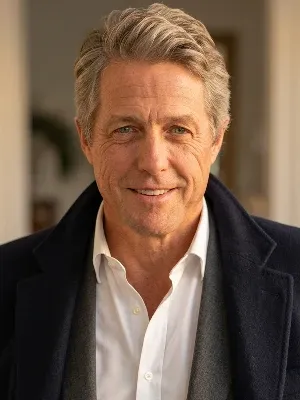
Hugh John Mungo Grant (born 9 September 1960) is an English actor and film producer. He has received a Golden Globe Award, a BAFTA, and an Honorary César. His movies have also earned more than $2.4 billion from 25 theatrical releases worldwide. Grant achieved international stardom after appearing in Richard Curtis's sleeper hit Four Weddings and a Funeral (1994). He used this breakthrough role as a frequent cinematic persona during the 1990s to deliver comic performances in mainstream films like Mickey Blue Eyes (1999) and Notting Hill (1999). By the turn of the century, he had established himself as a leading man skilled with a satirical comic talent. Since the 2000s, Grant has expanded his oeuvre with critically acclaimed turns as a cad in Bridget Jones's Diary (2001), About A Boy (2002), Love Actually (2003), and American Dreamz (2006). Within the film industry, Grant is cited as an anti-movie star who approaches his roles like a character actor, with the ability to make acting look effortless. Hallmarks of his comic skills include a nonchalant touch of irony/sarcasm and studied physical mannerisms as well as his precisely-timed dialogue delivery and facial expressions. The entertainment media's coverage of Grant's life off the big screen has often overshadowed his work as a thespian. He has been vocal about his disrespect for the profession of acting, his disdain towards the culture of celebrity, and hostility towards the media. In a career spanning 20 years, Grant has repeatedly claimed that acting is not a true calling but just a job he fell into.
Hugh Grant

Robert Jamison
for Robert Jamison in The Seven Husbands of Evelyn Hugo
Suggested by nickienicks

Reclusive Hollywood icon Evelyn Hugo, who, in her old age, hires unknown reporter Monique Grant to write her biography. Evelyn narrates her ruthless rise to fame from the 1950s to the 1980s, revealing that her scandalous seven marriages were mostly strategic moves designed to manipulate the studio system, protect her career, and hide her true bisexual identity. While her public persona was defined by her husbands - including Don Adler, Rex North, and Mick Riva - Evelyn reveals that the love of her life was Celia St. James, a female actress with whom she maintained a tumultuous, decades-long relationship. The novel culminates in a shocking connection between Evelyn and Monique, exploring themes of forbidden love, sacrifice, and the high cost of fame, ultimately revealing that Evelyn's public life was merely a facade for a private, complex story of devotion.

