
Age: 42
male
Donald McKinley Glover Jr. (/ˈɡlʌvər/; born September 25, 1983), also known by his musical name Childish Gambino (/ɡæmˈbiːnoʊ/), is an American actor, comedian, musician, and filmmaker. While he studied at New York University and after working in Derrick Comedy, a comedy group, Glover was hired by Tina Fey to write for the NBC sitcom 30 Rock at age 23. He gained fame for portraying college student Troy Barnes on the NBC sitcom Community from 2009 to 2014. From 2016 to 2022, he starred in the FX series Atlanta, which he created and occasionally directed. For his work on Atlanta, he won various accolades, including two Primetime Emmy Awards, as well as two Golden Globe Awards. Glover has appeared in several films, including the supernatural horror The Lazarus Effect (2015), the comedy-drama Magic Mike XXL (2015), and the science fiction film The Martian (2015). He played Aaron Davis in the superhero film Spider-Man: Homecoming (2017), as well as Lando Calrissian in the space western Solo: A Star Wars Story (2018). He provided the voice of adult Simba in The Lion King (2019) and produced the short film Guava Island (2019), in which he starred. He co-created the comedy thriller television series Swarm (2023). Glover is also credited as a principal inspiration for the creation of the Marvel Comics superhero Miles Morales/Spider-Man, whom Glover himself briefly voiced in the animated series Ultimate Spider-Man. In 2024, he created and starred in the Prime Video series Mr. & Mrs. Smith. After a number of independently released projects, Glover signed with Glassnote Records in 2011 and released his debut studio album, Camp, in November of that year to critical and commercial success. His second album, Because the Internet (2013), was supported by the single "3005," which became his first Billboard Hot 100 entry. His psychedelic funk-inspired 2016 single, "Redbone," peaked at number 12 on the chart, won a Grammy Award for Best Traditional R&B Performance, and preceded the release of his third album, "Awaken, My Love!" (2016), which saw continued success. Glover's 2018 single, "This Is America," debuted atop the Billboard Hot 100 and won in all of the categories for which it was nominated at the 61st Annual Grammy Awards: Record of the Year, Song of the Year, Best Rap/Sung Performance, and Best Music Video; it won a Guinness World Record as the first hip hop song to win in the former two categories. His fourth album, 3.15.20, was released in 2020.[17]In 2024, he released Atavista, a reworking of 3.15.20, and later his fifth album, Bando Stone & the New World. Description above from the Wikipedia article Donald Glover, licensed under CC-BY-SA, full list of contributors on Wikipedia.
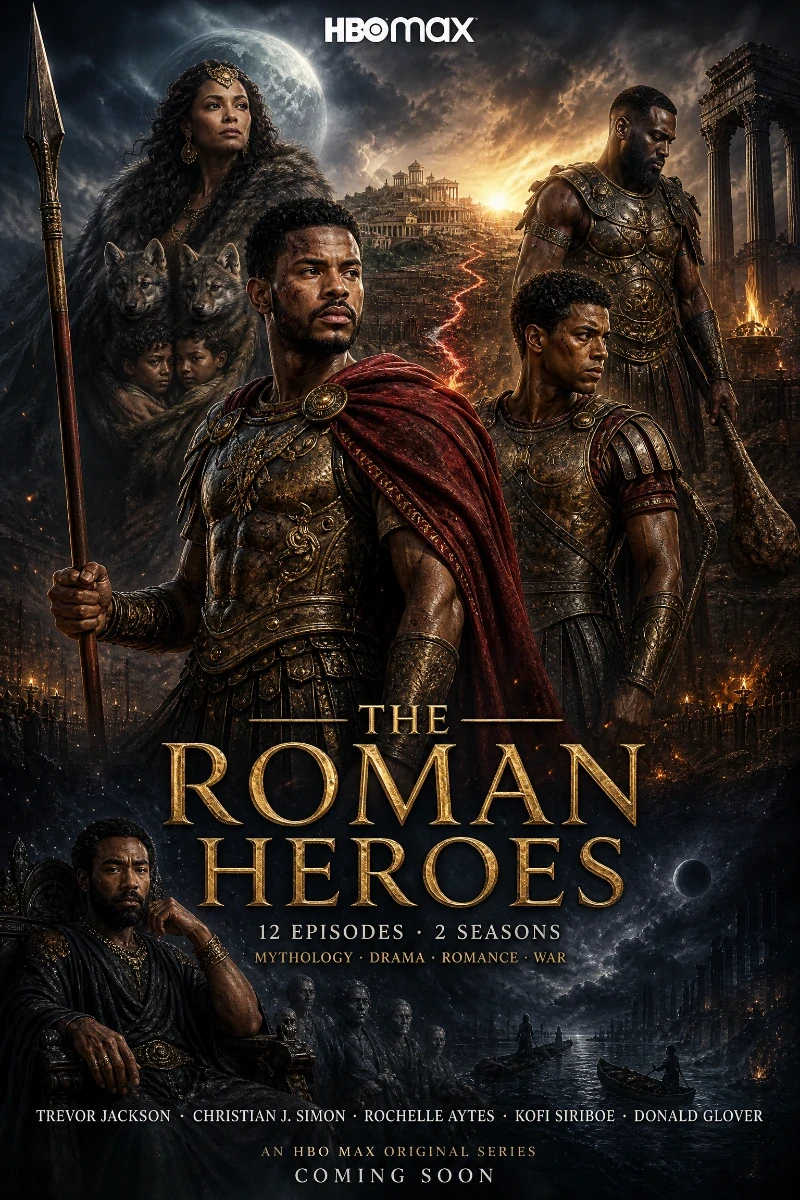
Romulus founded a city. Hercules held the sky. The heroes of Rome were mortal and divine and the difference was never as clear as either side believed. An anthology-style series following the great heroes of Roman mythology across two seasons, with each season's episodes forming a connected arc. Season 1 follows Romulus and Remus — from their birth to Rhea Silvia, their abandonment on the Tiber, their raising by the wolf Lupa, their founding conflict, and the tragedy of Remus's death at Romulus's hand (treated with full moral weight rather than mythological dismissal). Season 2 follows Hercules in his specifically Roman context — Hercules Romanus, whose twelve labors are reframed as the labors of a man trying to prove to himself, not the gods, that he deserves to exist after the crime of his madness. The Underworld sequences across both seasons feature Pluto and Proserpina, with Pluto's administration of judgment — for both Romulus and Hercules at different points — the series' most formally precise divine representation. S1E1 — The River Romulus and Remus abandoned on the Tiber. Lupa's arrival — not accidental but chosen. The series' foundational act of divine care. S1E10 — The Wall Remus's death. The full moral weight carried without deflection. Romulus knowing what he has done for the rest of his life. S2E12 — Olympus Series finale: Hercules's apotheosis — his ascension to divine status. The series ends not on triumph but on the question he spent ten years asking: whether atonement can be complete. The answer, the series suggests, is that the asking was itself the answer.


