Died at 79
male
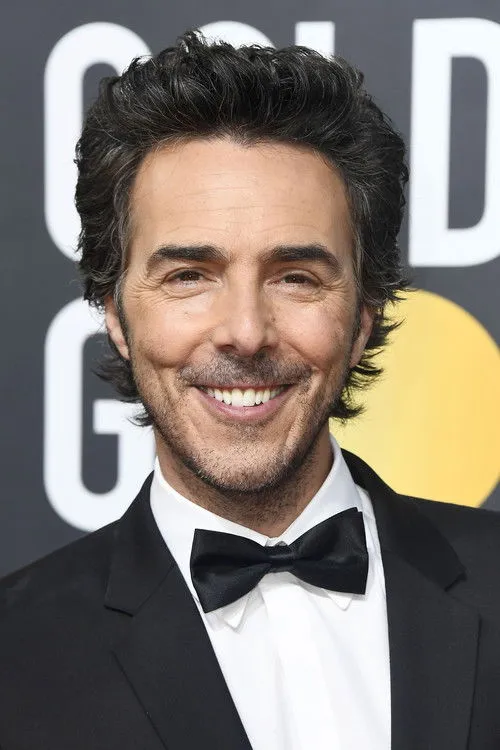
Robert Reiner (/ˈraɪnər/; March 6, 1947 – December 14, 2025) was an American filmmaker and actor. He directed a series of acclaimed studio films in a career that spanned comedy, drama, romance, and documentary. Reiner received numerous accolades, including winning two Primetime Emmy Awards and a Hugo Award, as well as nominations for an Academy Award, a BAFTA Award, and nine Golden Globe Awards. He was honored with a star on the Hollywood Walk of Fame in 1999 and received the Chaplin Gala Tribute at the Film at Lincoln Center in 2014. Three of his films have been inducted into the National Film Registry. Reiner was born in New York City to Estelle and Carl Reiner, who were themselves actors. Reiner began his career as an actor before transitioning to filmmaking. He rose to prominence with his portrayal of Michael "Meathead" Stivic on the CBS television sitcom All in the Family (1971–1979), a role that earned him two Primetime Emmy Awards for Outstanding Supporting Actor in a Comedy Series. He directed a string of critically acclaimed films starting with the heavy metal mockumentary This Is Spinal Tap (1984), followed by the romantic road comedy The Sure Thing (1985), the coming-of age drama Stand by Me (1986), the adventure romance The Princess Bride (1987), the romantic comedy When Harry Met Sally... (1989), the psychological thriller Misery (1990), the legal drama A Few Good Men (1992), which was nominated for the Academy Award for Best Picture, and the political romance The American President (1995). He acted in films such as Sleepless in Seattle (1993), Bullets Over Broadway (1994), The First Wives Club (1996), Primary Colors (1998), EDtv (1999), and The Wolf of Wall Street (2013). He also co-founded the production company Castle Rock Entertainment in 1987. Reiner was also a liberal political activist who advocated for causes such as LGBTQ rights, early childhood education, and environmental protection, and who campaigned for a variety of Democratic candidates. Reiner chaired the 1998 campaign to pass California's First 5 childhood education initiative, and in 2008 he and his wife, Michele, co-founded the American Foundation for Equal Rights, which initiated the court challenge against California's same-sex marriage ban. On December 14, 2025, Reiner and his wife were found stabbed to death in their Los Angeles home. Their son, Nick Reiner, has been charged with two counts of first-degree murder. Description above from the Wikipedia article Rob Reiner, licensed under CC-BY-SA, full list of contributors on Wikipedia.

An elderly man reads the book "The Princess Bride" to his sick and thus currently bedridden adolescent grandson, the reading of the book which has been passed down within the family for generations. The grandson is sure he won't like the story, with a romance at its core, he preferring something with lots of action and "no kissing". But the grandson is powerless to stop his grandfather, whose feelings he doesn't want to hurt. The story centers on Buttercup, a former farm girl who has been chosen as the princess bride to Prince Humperdinck of Florian. Buttercup does not love him, she who still laments the death of her one true love, Westley, five years ago. Westley was a hired hand on the farm, his stock answer of "as you wish" to any request she made of him which she came to understand was his way of saying that he loved her. But Westley went away to sea, only to be killed by the Dread Pirate Roberts. On a horse ride to clear her mind of her upcoming predicament of marriage, Buttercup is kidnapped by a band of bandits: Vizzini who works on his wits, and his two associates, a giant named Fezzik who works on his brawn, and a Spaniard named Inigo Montoya, who has trained himself his entire life to be an expert swordsman. They in turn are chased by the Dread Pirate Roberts himself. But chasing them all is the Prince, and his men led by Count Tyrone Rugen. What happens to these collectives is dependent partly on Buttercup, who does not want to marry the Prince, and may see other options as lesser evils, and partly on the other motives of individuals within the groups. But a larger question is what the grandson will think of the story as it proceeds and at its end, especially as he sees justice as high a priority as action.