Age: 36
female
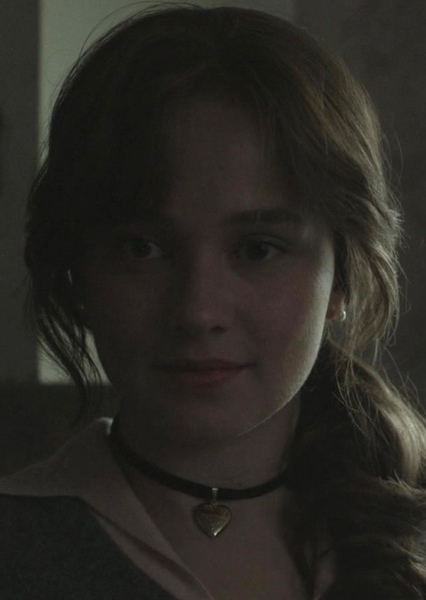
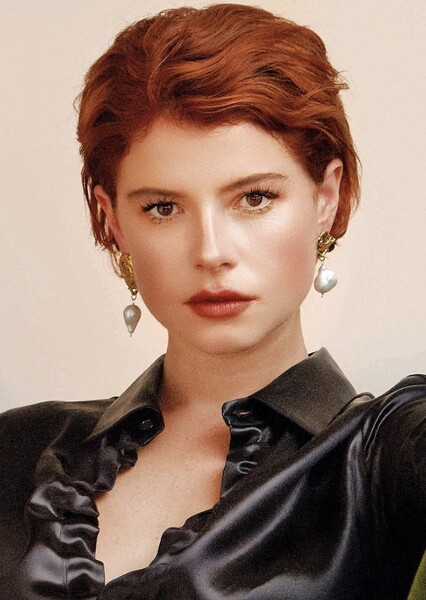
Jessie Buckley (born 28 December 1989) is an Irish actress and singer. Her accolades include Best Actress at the Oscar Academy Awards 2026 (becoming the first Irish woman to win it), a British Academy Film Award, an Actor Award, a Golden Globe Award, and a Scottish BAFTA, in addition to nominations for two Academy Awards. Buckley began her career in 2008 as a contestant on the BBC talent show I'd Do Anything, in which she came second. A RADA graduate, her early onscreen appearances were in BBC television series such as War & Peace (2016) and Taboo (2017). Buckley made her film debut with the lead role in Beast (2017), followed by her breakout role as an aspiring country music singer in the musical film Wild Rose (2018); the latter earned her a nomination for the BAFTA Award for Best Actress in a Leading Role. Buckley's career progressed with starring roles in films such as I'm Thinking of Ending Things (2020), Men (2022), Women Talking (2022) and Wicked Little Letters (2023). For her performance as a troubled mother in the psychological drama The Lost Daughter (2021), she received nominations for the BAFTA Award for Best Actress in a Supporting Role and the Academy Award for Best Supporting Actress. She gained further recognition for her portrayal of Agnes Shakespeare in the period drama Hamnet (2025), receiving a Golden Globe, a BAFTA Award, an Actor Award and an Academy Award for Best Actress. On television, Buckley has starred in the HBO miniseries Chernobyl (2019) and season four of Fargo (2020). On stage, Buckley's portrayal of Sally Bowles in a 2021 West End theatre revival of Cabaret won her the Laurence Olivier Award for Best Actress in a Musical. In 2022, she released the collaborative album For All Our Days That Tear the Heart with Bernard Butler, which was shortlisted for the 2022 Mercury Prize. Description above from the Wikipedia article Jessie Buckley, licensed under CC-BY-SA, full list of contributors on Wikipedia.
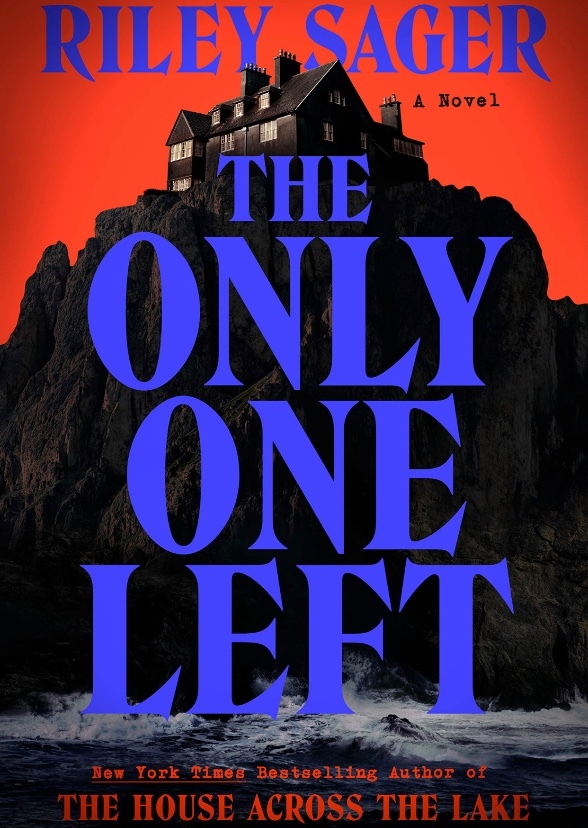
At seventeen, Lenora Hope Hung her sister with a rope Now reduced to a schoolyard chant, the Hope family murders shocked the Maine coast one bloody night in 1929. While most people assume seventeen-year-old Lenora was responsible, the police were never able to prove it. Other than her denial after the killings, she has never spoken publicly about that night, nor has she set foot outside Hope’s End, the cliffside mansion where the massacre occurred. Stabbed her father with a knife Took her mother’s happy life It’s now 1983, and home-health aide Kit McDeere arrives at a decaying Hope’s End to care for Lenora after her previous nurse fled in the middle of the night. In her seventies and confined to a wheelchair, Lenora was rendered mute by a series of strokes and can only communicate with Kit by tapping out sentences on an old typewriter. One night, Lenora uses it to make a tantalizing offer—I want to tell you everything. “It wasn’t me,” Lenora said But she’s the only one not dead As Kit helps Lenora write about the events leading to the Hope family massacre, it becomes clear there’s more to the tale than people know. But when new details about her predecessor’s departure come to light, Kit starts to suspect Lenora might not be telling the complete truth—and that the seemingly harmless woman in her care could be far more dangerous than she first thought.