
Age: 65
male
Jared Francis Harris (born August 24, 1961) is a British actor who has appeared in film, television, and theater. He is the son of the late Irish actor Richard Harris and the Welsh actress Elizabeth Rees-Williams. Harris was born in Hammersmith, London, in 1961. He studied drama and literature at Duke University in North Carolina, and then went on to train at the Royal Central School of Speech and Drama in London. Harris made his film debut in 1989 with a small role in the film The Rachel Papers. He went on to appear in a number of films, including The Last of the Mohicans (1992), Natural Born Killers (1994), Smoke (1995), Happiness (1998), and How to Kill Your Neighbor's Dog (2000). In 2007, Harris began a recurring role as Lane Pryce in the 2007 AMC television series Mad Men and was received a Primetime Emmy Award for Outstanding Supporting Actor for his performance. In 2019, he won the British Academy Television Award for Best Actor for his performance as Valery Legasov in the HBO miniseries Chernobyl. Harris has also had notable roles in television series such as Fringe (2008), The Crown (2016), The Expanse (2015) and Foundation (2021). On stage, Harris has appeared in productions of The Crucible, The Cherry Orchard, and The Homecoming. He has also directed several stage productions, including The Glass Menagerie and The Birthday Party.
Jared Harris

Jim Jarrett
for Jim Jarrett in The Museum Mysteries
Suggested by devahutiraichaliha
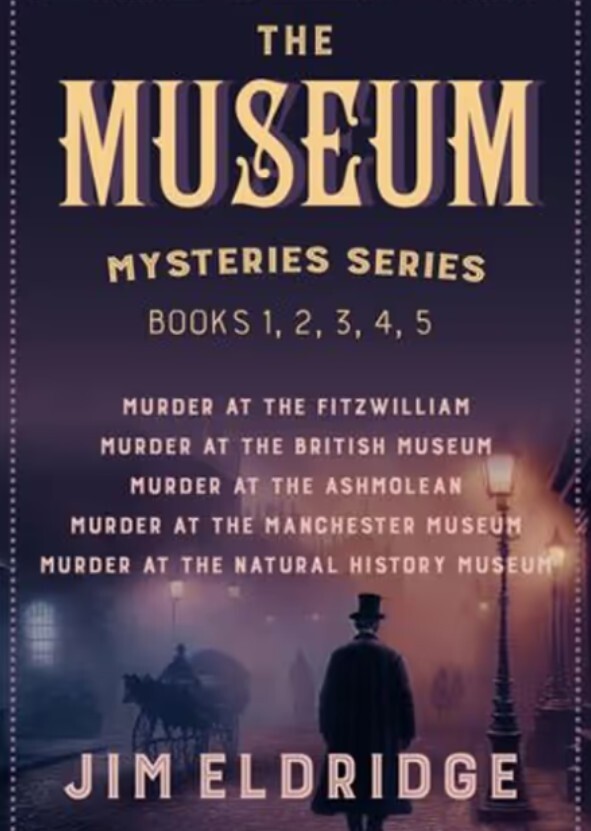
Jim Eldridge’s Museum (Murder) Mysteries is an historical crime-fiction series set in late-Victorian London, featuring Daniel Wilson, a former detective from the Metropolitan Police, and his partner, archaeologist Abigail Fenton. Each novel centres on a murder tied to a famous British museum or institution—such as the British Museum, the Natural History Museum, or the National Gallery—where the pair are called in as private inquiry agents to solve crimes that baffle the authorities. The series blends classic whodunnit structure with richly researched historical settings, highlighting scientific rivalries, class tensions, and the early professionalisation of museum culture. Across the series, the cases often expose the hidden politics of Victorian scholarship, including disputes over archaeological finds, forgeries, colonial acquisitions, and the ambitions of curators eager to protect their reputations. Wilson brings methodical investigative skills and quiet moral conviction, while Fenton offers academic expertise, courage, and a knack for noticing overlooked details—making them equal partners in unpicking the murders. Their developing relationship threads through the books, adding warmth and emotional continuity amid the atmosphere of intrigue.

