
Age: 77
male
Jim Broadbent (born May 24, 1949) is an English actor. He won an Academy Award and a Golden Globe Award for his supporting role as John Bayley in the feature film Iris (2001), as well as winning a BAFTA TV Award and a Golden Globe for his leading role as Lord Longford in the television film Longford (2006). Broadbent received four BAFTA Film Award nominations and won for his performance in Moulin Rouge! (2001). He was also nominated for two Primetime Emmy Awards and four Screen Actors Guild Awards. A graduate of the London Academy of Music and Dramatic Art in 1972, Broadbent first came to prominence in the 1980s, chiefly appearing in television comedy including playing Roy Slater in the BBC sitcom Only Fools and Horses. He appeared in the Terry Gilliam films Time Bandits (1981) and Brazil (1985) before a breakthrough role in Mike Leigh's independent comedy drama Life Is Sweet (1990). His notable film roles since include The Borrowers (1997), Bridget Jones's Diary (2001), The Gathering Storm (2002), Hot Fuzz (2007), Another Year (2010), The Iron Lady (2011), Arthur Christmas (2011), Cloud Atlas (2012) and Brooklyn (2015). He played Horace Slughorn in the Harry Potter film series, Archmaester Ebrose in the seventh season of the television series Game of Thrones and Samuel Gruber in the Paddington film series.
Jim Broadbent

Gladstone Marriott
for Gladstone Marriott in The Museum Mysteries
Suggested by devahutiraichaliha
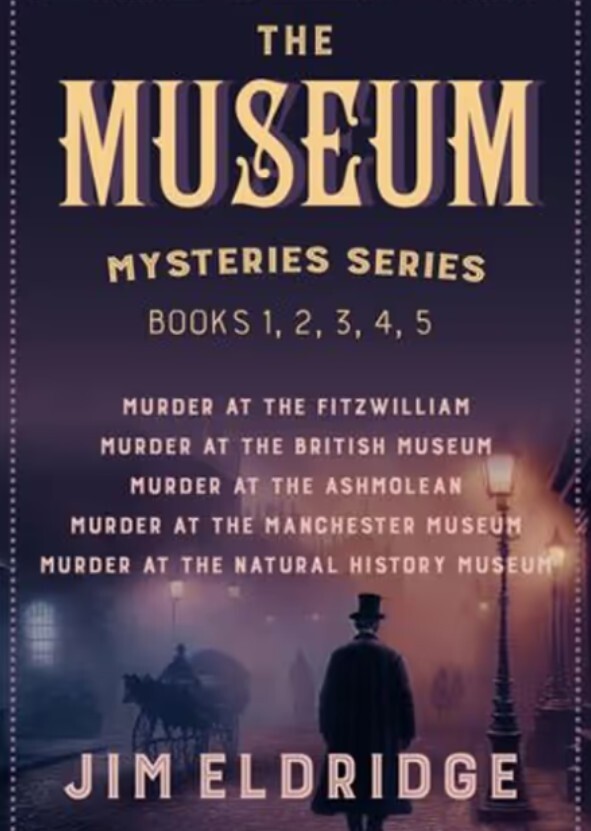
Jim Eldridge’s Museum (Murder) Mysteries is an historical crime-fiction series set in late-Victorian London, featuring Daniel Wilson, a former detective from the Metropolitan Police, and his partner, archaeologist Abigail Fenton. Each novel centres on a murder tied to a famous British museum or institution—such as the British Museum, the Natural History Museum, or the National Gallery—where the pair are called in as private inquiry agents to solve crimes that baffle the authorities. The series blends classic whodunnit structure with richly researched historical settings, highlighting scientific rivalries, class tensions, and the early professionalisation of museum culture. Across the series, the cases often expose the hidden politics of Victorian scholarship, including disputes over archaeological finds, forgeries, colonial acquisitions, and the ambitions of curators eager to protect their reputations. Wilson brings methodical investigative skills and quiet moral conviction, while Fenton offers academic expertise, courage, and a knack for noticing overlooked details—making them equal partners in unpicking the murders. Their developing relationship threads through the books, adding warmth and emotional continuity amid the atmosphere of intrigue.

