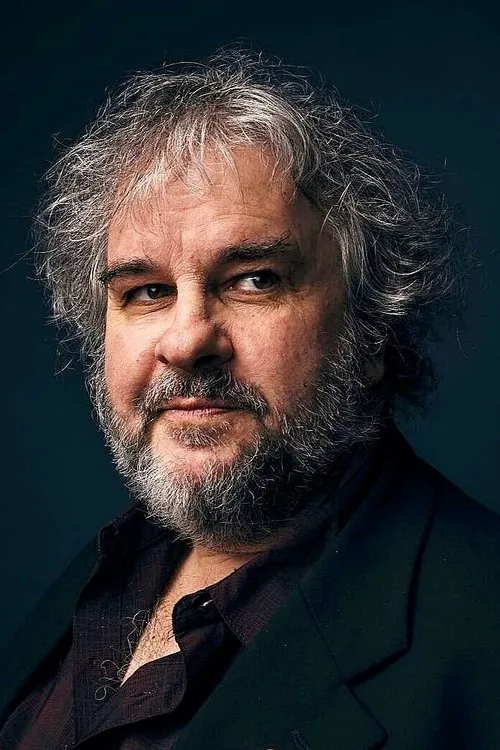
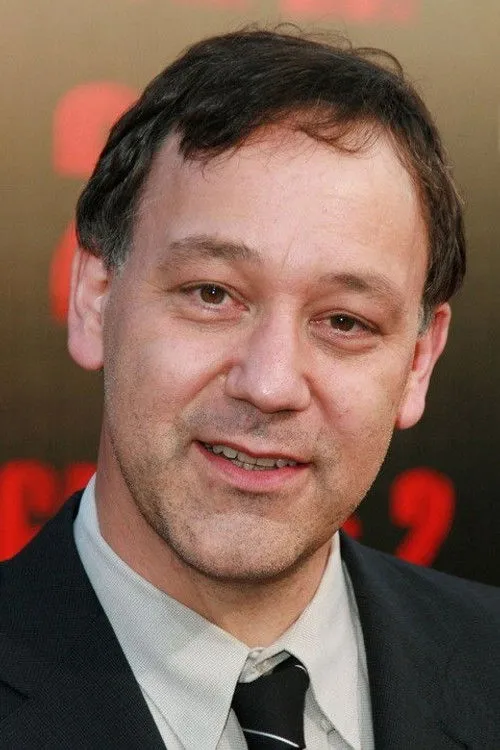
Age: 60
male
David Samuel Goyer (born December 22, 1965) is an American filmmaker, novelist, and comic book writer. He is best known for writing the screenplays and stories for several superhero films, including Nick Fury: Agent of S.H.I.E.L.D. (1998), the Blade trilogy (1998–2004), Christopher Nolan's Dark Knight trilogy (2005–2012), Man of Steel (2013), and Batman v Superman: Dawn of Justice (2016). He has also directed four films: Zig Zag (2002), Blade: Trinity (2004), The Invisible (2007), and The Unborn (2009). He is the creator of the science fiction television series Foundation, which is loosely based on the Foundation series written by Isaac Asimov. Goyer was co-writer of the video games Call of Duty: Black Ops, Call of Duty: Black Ops II, and Call of Duty: Black Ops Cold War. He won a Saturn Award for Best Writing for Batman Begins (2005), received another nomination for Dark City, and was nominated for four Hugo Awards. Description above from the Wikipedia article David S. Goyer, licensed under CC-BY-SA, full list of contributors on Wikipedia.

Mortal Kombat Chapter I is a 2024 American fantasy film based on the video game series Mortal Kombat. It is the first installment in the Mortal Kombat Cinematic Universe. Directed by James Wan, produced by Ed Boon, and written by Guillermo del Toro, the film stars Keanu Reeves in the lead role, alongside Mila Kunis, Jimmy Wong, Donnie Yen, Zachary Quinto, Margot Robbie, Scott Adkins, Chris Evans, Yahya Abdul-Mateen II, Jackie Chan, Donald Glover, Ken Watanabe, Hulk Hogan, and Dave Bautista. It is set during the present time, where Raiden and his team are invited to a tournament known as Mortal Kombat, and Raiden is convinced that Liu Kang is the chosen one and must defeat Shang Tsung. Raiden is very furious once he realizes that he is wrong as his amulet becomes increasingly damaged. Mortal Kombat Chapter I was released on March 19th 2024; it was a box-office success, grossing $716 million worldwide. The film was met with largely positive reviews, with praise for the tone, Reeves's performance, action sequences, visual effects, score, direction, screenplay, and the emotional weight compared to previous Mortal Kombat films. Its respect to the source material was also well-received. The film was nominated for an Academy Award for Best Cinematography, and has been cited as one of the greatest and most influential game adaptions of the 2020s. A sequel entitled Mortal Kombat Chapter II: The Rise of Shinnok is in development.