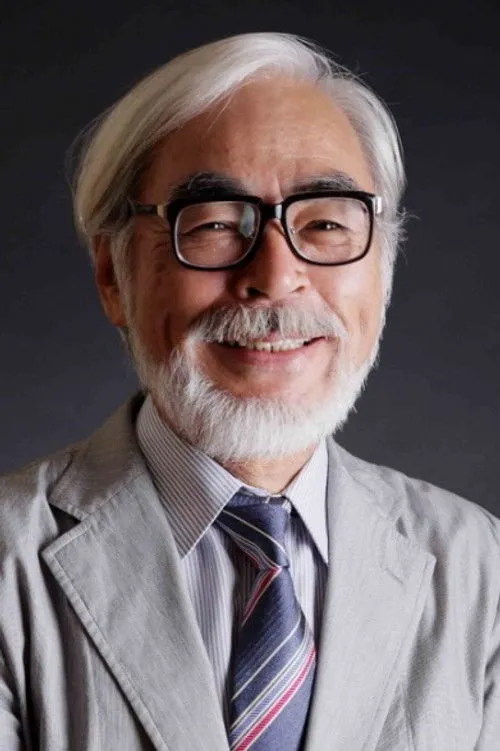
Age: 85
male
Hayao Miyazaki (Miyazaki Hayao, born January 5, 1941) is a Japanese manga artist and prominent film director and animator of many popular anime feature films. Through a career that has spanned nearly five decades, Miyazaki has attained international acclaim as a maker of animated feature films and, along with Isao Takahata, co-founded Studio Ghibli, an animation studio and production company. The success of Miyazaki's films has invited comparisons with American animator Walt Disney, British animator Nick Park as well as Robert Zemeckis, who pioneered Motion Capture animation, and he has been named one of the most influential people by Time Magazine. Miyazaki began his career at Toei Animation as an in-between artist for Gulliver's Travels Beyond the Moon where he pitched his own ideas that eventually became the movie's ending. He continued to work in various roles in the animation industry over the decade until he was able to direct his first feature film Lupin III: The Castle of Cagliostro which was published in 1979. After the success of his next film, Nausicaä of the Valley of the Wind, he co-founded Studio Ghibli where he continued to produce many feature films until Princess Mononoke whereafter he temporarily retired. While Miyazaki's films have long enjoyed both commercial and critical success in Japan, he remained largely unknown to the West until Miramax released his 1997 film, Princess Mononoke. Princess Mononoke was the highest-grossing film in Japan—until it was eclipsed by another 1997 film, Titanic—and the first animated film to win Picture of the Year at the Japanese Academy Awards. Miyazaki returned to animation with Spirited Away. The film topped Titanic's sales at the Japanese box office, also won Picture of the Year at the Japanese Academy Awards and was the first anime film to win an American Academy Award. Miyazaki's films often incorporate recurrent themes, such as humanity's relationship to nature and technology, and the difficulty of maintaining a pacifist ethic. Reflecting Miyazaki's feminism, the protagonists of his films are often strong, independent girls or young women. Miyazaki is a vocal critic of capitalism and globalization. While two of his films, The Castle of Cagliostro and Castle in the Sky, involve traditional villains, his other films such as Nausicaa or Princess Mononoke present morally ambiguous antagonists with redeeming qualities.
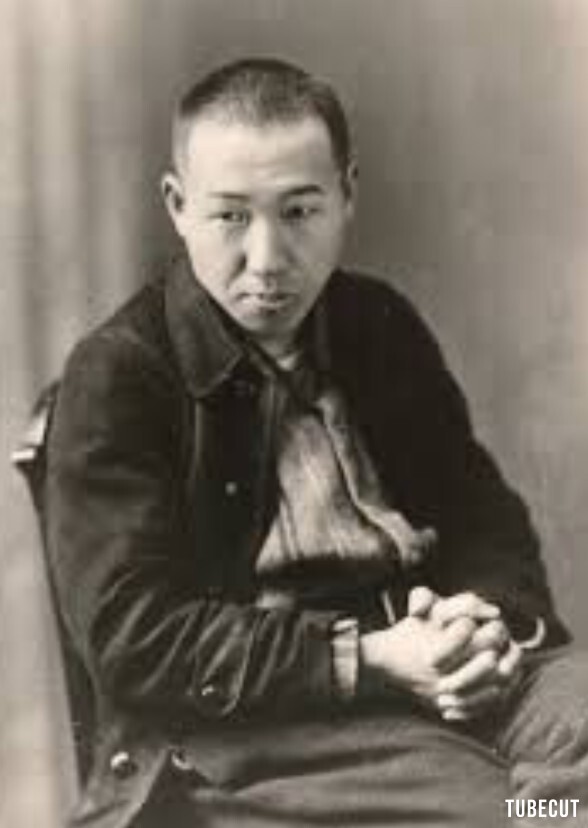
In the serene yet harsh landscapes of rural Japan, during the late Taishō and early Shōwa periods, a man of boundless imagination and compassion emerges—Kenji Miyazawa, a visionary poet, educator, and idealist. "The Milky Way Poet" is a sweeping, heartfelt biopic that traces Miyazawa’s life journey, from his idyllic yet challenging childhood in Hanamaki to his transformative years as a writer and social activist, culminating in his quiet but profound legacy. The film opens with a young Kenji, captivated by the mysteries of the natural world and inspired by the shimmering stars above the rugged Iwate countryside. Guided by his devout Buddhist faith and his father’s call to carry on the family business, Kenji struggles to balance tradition with his restless pursuit of artistic and spiritual truth. When tragedy strikes, he turns to literature and science as a means of healing and hope. We witness his passion for teaching farmers modern agricultural techniques, his advocacy for social equity, and his deep empathy for both people and the planet. His poetry—vivid, otherworldly, and suffused with cosmic wonder—becomes a mirror of his inner conflicts, loneliness, and yearning for a utopian society. Interspersed with dreamlike sequences, the film draws from Kenji’s poetic imagination, including animated depictions of his iconic works like Night on the Galactic Railroad and Ginga Tetsudō no Yoru (Night of the Milky Way Railway).