Died at 101
male
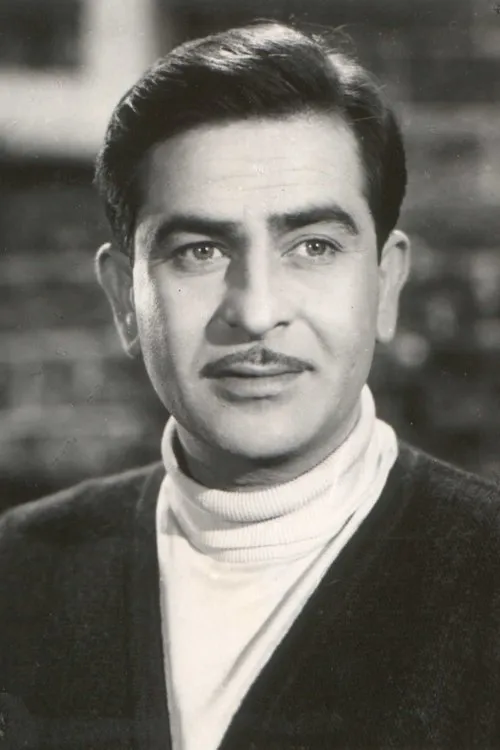
Raj Kapoor was an Indian film actor, producer and director of Hindi cinema widely considered to be one of the greatest and most influential actors and filmmakers in the history of Indian cinema. Often referred to as "The Greatest Showman of Indian Cinema" and the "Charlie Chaplin of Indian Cinema", his work enjoyed immense popularity and widespread acclaim not only within India but in parts of Eastern Asia, the Middle East, the Caribbean, Africa and the Soviet bloc. Among Kapoor's numerous accolades are three National Film Awards and 11 Filmfare Awards in India, the Padma Bhushan (India's third-highest civilian honor) in 1971 for his contributions to the arts, and the Dadasaheb Phalke Award, India's highest award in cinema, in 1987. Kapoor's acting style was inspired by Charlie Chaplin and he played characters based on The Tramp in films such as Awaara (1951) and Shree 420 (1955). His performance in Awaara was ranked as one of the "Top-Ten Greatest Performances of All Time in World Cinema" by Time magazine in 2005; Awaara (1951) and Boot Polish (1954), which he produced, competed for the Palme d'Or prize at the Cannes Film Festival in 1951 and 1955 respectively.
Raj Kapoor

Samuel Marx
for Samuel Marx in The Life and Times of the Marx Brothers
Suggested by jaymorningstar
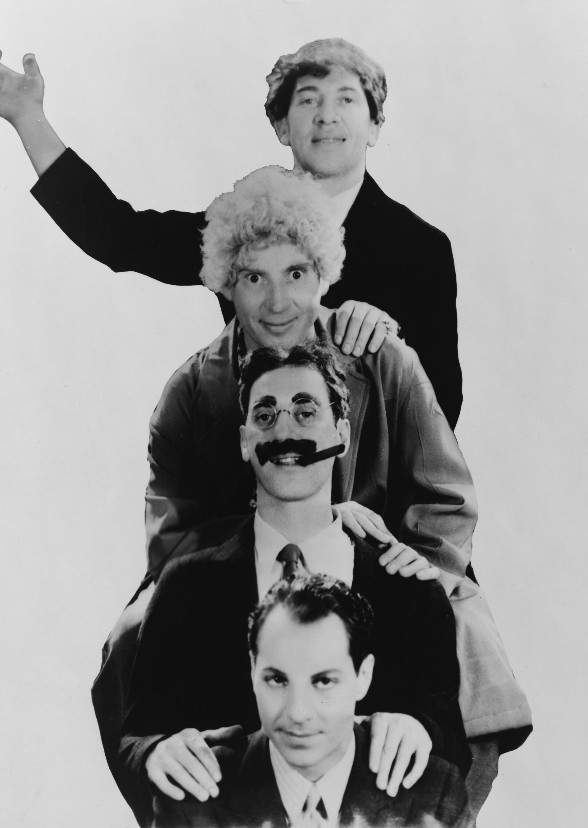
The Marx Brothers were an American family comedy act that was successful in vaudeville, on Broadway, and in motion pictures from 1905 to 1949. Five of the Marx Brothers' thirteen feature films were selected by the American Film Institute (AFI) as among the top 100 comedy films, with two of them (Duck Soup and A Night at the Opera) in the top twelve. They are widely considered by critics, scholars, and fans to be among the greatest and most influential comedians of the 20th century. The brothers were included in AFI's 100 Years...100 Stars list of the 25 greatest male stars of Classic Hollywood cinema, the only performers to be inducted collectively. The group are almost universally known today by their stage names: Chico, Harpo, Groucho, Gummo, and Zeppo. The core of the act was the three elder brothers: Chico, Harpo, and Groucho, each of whom developed a highly distinctive stage persona. After the group essentially disbanded in 1950, Groucho went on to begin a significant second career in television, while Harpo and Chico appeared less prominently. The two younger brothers, Gummo and Zeppo, did not develop their stage characters to the same extent. They each left the act to pursue business careers at which they were successful, as well as a large theatrical agency for a time, through which they represented their brothers and others. Gummo was not in any of the movies; Zeppo appeared in the first five films in relatively straight (non-comedic) roles. The performing lives of the brothers were brought about by their mother Minnie Marx, who also acted as their manager.