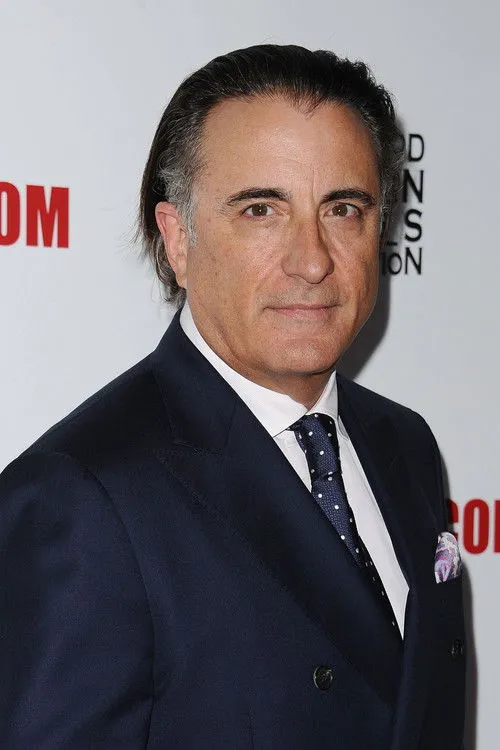
Age: 70
male
Andrés Arturo García Menéndez (born April 12, 1956) is an American actor, director, producer, and musician. He first rose to prominence acting in Brian De Palma's The Untouchables (1987) alongside Kevin Costner, Sean Connery, and Robert De Niro. He continued to act in films such as Stand and Deliver (1988), and Internal Affairs (1990). He then co-starred in Francis Ford Coppola's The Godfather Part III (1990) as Vincent Mancini, for which he was nominated for the Academy Award for Best Supporting Actor. He continued to act in Hollywood films such as Stephen Frears' Hero (1992), the romantic drama When a Man Loves a Woman (1994), and the action thriller Desperate Measures (1998). In 2000, he produced and acted in the HBO television film, For Love or Country: The Arturo Sandoval Story (2000), where he received a Primetime Emmy Award and a Golden Globe Award nominations. He also starred in Steven Soderbergh's Ocean's Eleven (2001) and its sequels, Ocean's Twelve (2004) and Ocean's Thirteen (2007). In 2005, García directed and starred in the film The Lost City alongside Dustin Hoffman and Bill Murray. He also starred in New York, I Love You (2008), the dramedy City Island (2009), the romantic comedy At Middleton (2013), and the crime thriller Kill the Messenger (2014). He has had supporting roles in Mamma Mia! Here We Go Again, Book Club, The Mule, the HBO television movie My Dinner with Hervé (all 2018), and the title role in the Father of the Bride remake (2022). In 2005, he won both a Grammy and a Latin Grammy Award for producing Cuban musician Cachao's record ¡Ahora Sí!. Description above from the Wikipedia article Andy Garcia, licensed under CC-BY-SA, full list of contributors on Wikipedia.
Andy Garcia

Gummo Marx
for Gummo Marx in The Life and Times of the Marx Brothers
Suggested by jaymorningstar
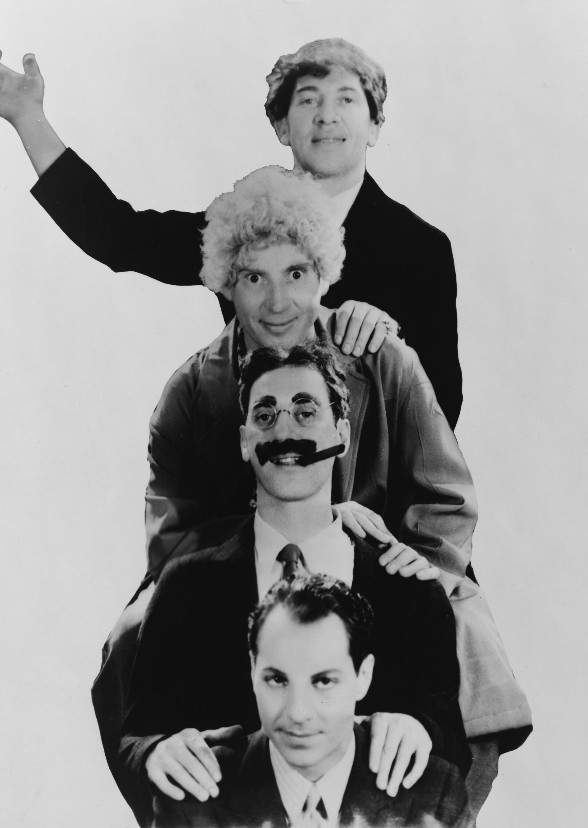
The Marx Brothers were an American family comedy act that was successful in vaudeville, on Broadway, and in motion pictures from 1905 to 1949. Five of the Marx Brothers' thirteen feature films were selected by the American Film Institute (AFI) as among the top 100 comedy films, with two of them (Duck Soup and A Night at the Opera) in the top twelve. They are widely considered by critics, scholars, and fans to be among the greatest and most influential comedians of the 20th century. The brothers were included in AFI's 100 Years...100 Stars list of the 25 greatest male stars of Classic Hollywood cinema, the only performers to be inducted collectively. The group are almost universally known today by their stage names: Chico, Harpo, Groucho, Gummo, and Zeppo. The core of the act was the three elder brothers: Chico, Harpo, and Groucho, each of whom developed a highly distinctive stage persona. After the group essentially disbanded in 1950, Groucho went on to begin a significant second career in television, while Harpo and Chico appeared less prominently. The two younger brothers, Gummo and Zeppo, did not develop their stage characters to the same extent. They each left the act to pursue business careers at which they were successful, as well as a large theatrical agency for a time, through which they represented their brothers and others. Gummo was not in any of the movies; Zeppo appeared in the first five films in relatively straight (non-comedic) roles. The performing lives of the brothers were brought about by their mother Minnie Marx, who also acted as their manager.

