
Age: 57
male
Wesley Wales Anderson (born May 1, 1969) is an American filmmaker. His films are known for their symmetry, eccentricity and distinctive visual and narrative styles, and he is cited by some critics as a modern-day example of the auteur. Three of his films, The Royal Tenenbaums (2001), Moonrise Kingdom (2012), and The Grand Budapest Hotel (2014) appeared in BBC Culture's 2016 poll of the greatest films since 2000. Anderson was nominated for the Academy Award for Best Original Screenplay for The Royal Tenenbaums (2001), Moonrise Kingdom (2012) and The Grand Budapest Hotel (2014), as well as the Academy Award for Best Animated Feature for the stop-motion films Fantastic Mr. Fox (2009) and Isle of Dogs (2018). With The Grand Budapest Hotel, he received his first Academy Award nominations for Best Director and Best Picture, and won the Golden Globe Award for Best Motion Picture – Musical or Comedy and the BAFTA Award for Best Original Screenplay. He currently runs the production company American Empirical Pictures, which he founded in 1998. He won the Silver Bear for Best Director for Isle of Dogs in 2018.
Wes Anderson

Director
for Director in The Life and Times of the Marx Brothers
Suggested by batboy1999
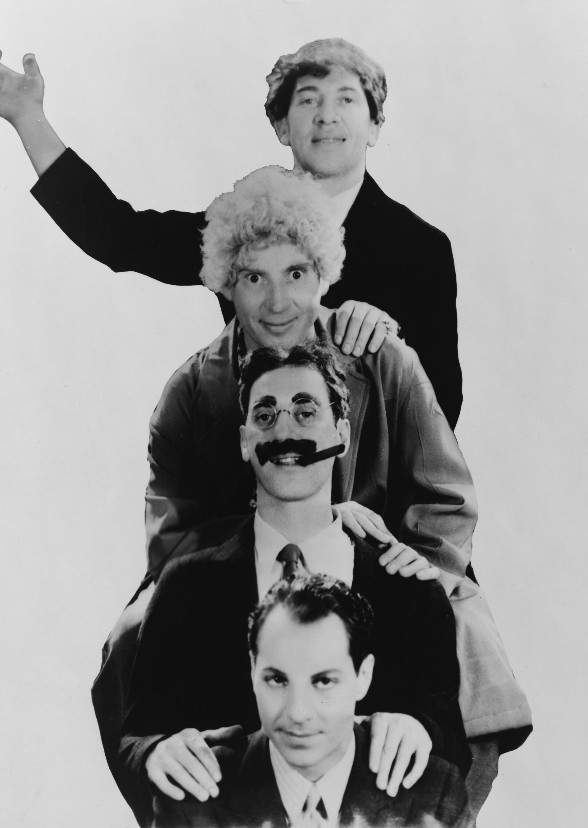
The Marx Brothers were an American family comedy act that was successful in vaudeville, on Broadway, and in motion pictures from 1905 to 1949. Five of the Marx Brothers' thirteen feature films were selected by the American Film Institute (AFI) as among the top 100 comedy films, with two of them (Duck Soup and A Night at the Opera) in the top twelve. They are widely considered by critics, scholars, and fans to be among the greatest and most influential comedians of the 20th century. The brothers were included in AFI's 100 Years...100 Stars list of the 25 greatest male stars of Classic Hollywood cinema, the only performers to be inducted collectively. The group are almost universally known today by their stage names: Chico, Harpo, Groucho, Gummo, and Zeppo. The core of the act was the three elder brothers: Chico, Harpo, and Groucho, each of whom developed a highly distinctive stage persona. After the group essentially disbanded in 1950, Groucho went on to begin a significant second career in television, while Harpo and Chico appeared less prominently. The two younger brothers, Gummo and Zeppo, did not develop their stage characters to the same extent. They each left the act to pursue business careers at which they were successful, as well as a large theatrical agency for a time, through which they represented their brothers and others. Gummo was not in any of the movies; Zeppo appeared in the first five films in relatively straight (non-comedic) roles. The performing lives of the brothers were brought about by their mother Minnie Marx, who also acted as their manager.


