The Isle of Sacred (Scottish Gaelic: Eilean Naomh; Scots: Haly) is a fictional isle in Argyll, acting as a "holy island" sanctuary in Scotland. It features a rugged north/west coast, eastern white-sand beaches, and is dominated by Caisteal nan Sgeir (a moat-encircled castle). The main hub is Drochaid-Mòr, a massive two-bridge port connecting to the Highlands. "The Monk’s Shield" (due to its long history of religious sanctuary and formidable geography) with rugged, high-cliff northern and western coastline providing refuge for sea birds, contrasted by sheltered, white-sand beaches and low machair in the south and east. The island is surrounded by numerous unnamed skerries and two larger, bird-sanctuary islands. The administrative center and largest town that connects to the mainland of Argyll/Highlands via two large suspension bridges, one of the bridges that was constructed in the 19th century was called Drochaid-Mòr (“The Grand Bridge” or “Large Bridge”). It boasts a mix of medieval stonework and bustling Victorian trading architecture. A quaint, whitewashed village on the eastern edge, where it was known for its lighthouse called Sgeir an t-Solais (“The Light Skerry” or simply “Skerry of the Light”), small harbor, and being the departure point for bird-watching boats. On the other side of the Scottish isle, a dramatic sea-arch with nearby caves and a rocky shoreline, featuring an ancient, partially sunken chapel ruin, the sea was named Cladh na Mara (“The Sea Burial” or “Graveyard of the Sea”). Caisteal nan Sgeir (Castle of the Skerries) became a vast 13th-century fortress built on a rocky, tidal promontory, surrounded by a natural, deep-water moat and accessible only by a single drawbridge. The series of Neolithic standing stones situated on the southeastern sand dunes, surrounding an ancient, hidden chambered cairn. The two larger surrounding islands in the Isle of Sacred are protected nesting grounds for puffins, gannets, and razorbills, protected under monastic decree. The Monk’s Shield country house with gardens that derives from the island’s geography and its role as a religious refuge, implying that the estate "shields" the sacred history of the Scottish isle. It was built by a fictional lordship or ladyship during the 1800s, that drew inspiration of Anglesey’s Plas Newydd and the Royal Family’s Balmoral Castle. While the manor is the primary 19th-century residence, it exists alongside the more ancient, moat-encircled Caisteal nan Sgeir, which dominates the island's landscape.
Isle of Sacred
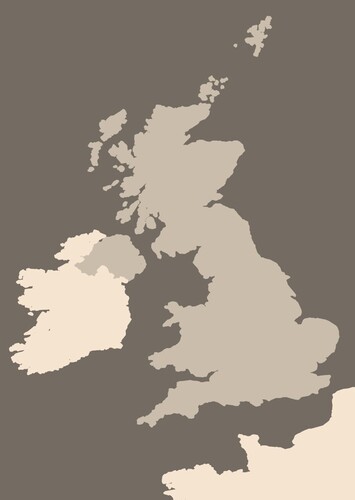
United Kingdom
for United Kingdom in The "Living World" Protocol
Suggested by benpopplewell
To create new locations of both real-life and fictional places around the world as part of geography with fictional lore is an ambitious and rewarding project that ranges from the spiritual philosophy of Sangkhara in Southeast Asia to the Furatistan in the Middle East—the best way to frame this project for a "number one" ranking and maximum fan engagement is through the lens of "Philosophical Cartography." Instead of just drawing borders, describe one street food dish or one local holiday for each place you want to see and feel with life. The best response to that feedback is to invite them and ask them what their character’s house would look like in that valley of highest-rated worldbuilding techniques, this guide provides 100% detailed steps for blending real-world geographies with concepts, as described in your vision, the best, fan-commented idea is to anchor fictional locations to real-world regions. The brilliance of this idea lies in the interconnectivity which blends deeply spiritual concepts like Sangkhara to a specific Italian village like Belcuore, after it became incredibly detailed world-building project.