
Grenada (/ɡrəˈneɪdə/ ⓘ grə-NAY-də; Grenadian Creole French: Gwenad, [ɡweˈnad]) is an island country of the West Indies in the eastern Caribbean Sea. The southernmost of the Windward Islands, Grenada is directly south of Saint Vincent and the Grenadines and about 100 miles (160 km) north of Trinidad and the South American mainland. Grenada consists of the island of Grenada itself, two smaller islands, Carriacou and Petite Martinique, and several small islands which lie to the north of the main island and are a part of the Grenadines. Its size is 348.5 square kilometres (134.6 sq mi), with an estimated population of 114,621 in 2024.[12] Its capital is St. George's.[12] Grenada is also known as the "Island of Spice" due to its production of nutmeg and mace crops.[13] Before the arrival of Europeans in the Americas, Grenada was inhabited by the indigenous peoples from South America.[14] Christopher Columbus sighted Grenada in 1498 during his third voyage to the Americas.[12] Following several unsuccessful attempts by Europeans to colonise the island due to resistance from resident Island Caribs, French settlement and colonisation began in 1649 and continued for the next century.[15] On 10 February 1763, Grenada was ceded to the British under the Treaty of Paris. British rule continued until 1974 (except for a brief French takeover between 1779 and 1783).[16] However, on 3 March 1967, it was granted full autonomy over its internal affairs as an Associated State, and from 1958 to 1962, Grenada was part of the Federation of the West Indies, a short-lived federation of British West Indian colonies. Independence was granted on 7 February 1974 under the leadership of Eric Gairy, who became the first prime minister of Grenada as a sovereign state. The new country became a member of the Commonwealth of Nations, with Queen Elizabeth II as head of state.[12] In March 1979, the Marxist–Leninist New Jewel Movement overthrew Gairy's government in a bloodless coup d'état and established the People's Revolutionary Government (PRG), headed by Maurice Bishop as prime minister.[17] Bishop was later arrested and executed by members of the People's Revolutionary Army (PRA), which was used to justify a U.S.-led invasion in October 1983. Since then, the island has returned to a parliamentary representative democracy and has remained politically stable.[12] A Governor General represents the Head of State. The country is currently headed by King Charles III, King of Grenada, and 14 other commonwealth realms.
Grenada
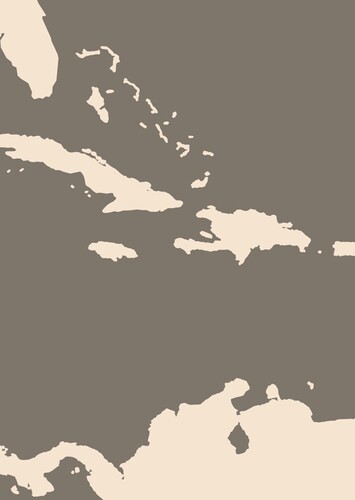
The Caribbean (West Indies)
for The Caribbean (West Indies) in The "Living World" Protocol
Suggested by benpopplewell
To create new locations of both real-life and fictional places around the world as part of geography with fictional lore is an ambitious and rewarding project that ranges from the spiritual philosophy of Sangkhara in Southeast Asia to the Furatistan in the Middle East—the best way to frame this project for a "number one" ranking and maximum fan engagement is through the lens of "Philosophical Cartography." Instead of just drawing borders, describe one street food dish or one local holiday for each place you want to see and feel with life. The best response to that feedback is to invite them and ask them what their character’s house would look like in that valley of highest-rated worldbuilding techniques, this guide provides 100% detailed steps for blending real-world geographies with concepts, as described in your vision, the best, fan-commented idea is to anchor fictional locations to real-world regions. The brilliance of this idea lies in the interconnectivity which blends deeply spiritual concepts like Sangkhara to a specific Italian village like Belcuore, after it became incredibly detailed world-building project.




