
Age: 61
male
Guillermo del Toro Gómez (Spanish: [ɡiˈʝeɾmo ðelˈtoɾo]; born 9 October 1964) is a Mexican filmmaker, author, and artist. His work has been characterized by a strong connection to fairy tales, gothicism, and horror, often blending the genres to infuse visual or poetic beauty into the grotesque. He has had a lifelong fascination with monsters, which he considers symbols of great power. He is known for pioneering dark fantasy in the film industry and using insectile and religious imagery, his themes of Catholicism, and celebrating imperfection, underworld motifs, practical special effects, and dominant amber lighting. Throughout his career, del Toro has shifted between Spanish-language films—such as Cronos (1993), The Devil's Backbone (2001), and Pan's Labyrinth (2006)—and English-language films, including Mimic (1997), Blade II (2002), Hellboy (2004) and its sequel Hellboy II: The Golden Army(2008), Pacific Rim (2013), Crimson Peak (2015), The Shape of Water (2017), Nightmare Alley (2021), and Pinocchio (2022). As a producer or writer, he worked on the films The Orphanage (2007), Don't Be Afraid of the Dark (2010), The Hobbit film series (2012–2014), Mama (2013), The Book of Life (2014), Pacific Rim: Uprising (2018), Scary Stories to Tell in the Dark (2019), and The Witches (2020). In 2022, he created the Netflix anthology horror series Guillermo del Toro's Cabinet of Curiosities, featuring a collection of classical horror stories. With Chuck Hogan, he co-authored The Strain trilogy of novels (2009–2011), which was later adapted into a comic book series (2011–15) and a live-action television series (2014–17). With DreamWorks Animation and Netflix, he created the animated franchise Tales of Arcadia, which includes the series Trollhunters (2016–18), 3Below (2018–19), and Wizards (2020) and the sequel film Trollhunters: Rise of the Titans (2021). Del Toro is close friends with fellow Mexican filmmakers Alfonso Cuarón and Alejandro G. Iñárritu, collectively known as "The Three Amigos of Mexican Cinema". He has received several awards, including three Academy Awards, three BAFTA Awards, two Golden Globe Awards, a Daytime Emmy Award, and a Golden Lion. He was included in Time magazine's list of the 100 most influential people in the world in 2018, and he received a motion picture star on the Hollywood Walk of Fame in 2019.
Guillermo del Toro

Director
for Director in The Incredible Hulk (2008)
Suggested by blockbuster53
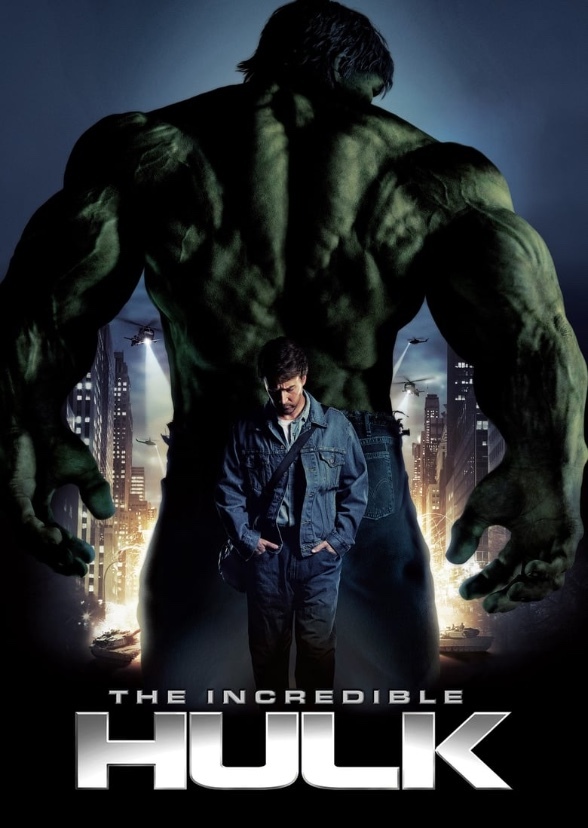
Bruce Banner, tormented by the Hulk, seeks refuge in the Arctic, attempting to end his life. As he pulls the trigger, the Hulk emerges, preventing his death. This act reveals the Hulk as a manifestation of Bruce’s repressed rage and trauma, stemming from his abusive father, Brian Banner. Now on the run, Bruce searches for a cure, haunted by his memories and the monster inside. Reconnecting with Betty Ross, his former lover and fellow scientist, he finds brief solace. However, General Ross, Betty's father, relentlessly hunts Bruce, aiming to weaponize the Hulk’s power. Emil Blonsky, a soldier working under General Ross, is injected with a flawed gamma serum in hopes of capturing Bruce. Blonsky mutates into the Abomination, a monstrous version of the Hulk. A violent battle erupts in Harlem between the Hulk and Abomination, where Bruce begins to understand that the Hulk is not a separate entity to be cured but a part of him. The fight pushes Bruce to his limits, but he ultimately defeats Blonsky, embracing the Hulk as a facet of himself. Post Credits: Natasha Romanoff approaches Bruce at a secluded cabin, offering him a place in the Avengers Initiative, signaling SHIELD’s interest in his abilities. Mid Credits: Samuel Sterns, exposed to gamma radiation, begins mutating into the Leader, foreshadowing his rise as a future supervillain.

