
Age: 39
male
Christopher Catesby Harington (born 26 December 1986), known professionally as Kit Harington, is an English actor. He is best known for his role as Jon Snow in the HBO fantasy television series Game of Thrones (2011–2019), for which he received a Golden Globe nomination and two nominations for Primetime Emmy Awards and Critics' Choice Television Awards. A graduate of the Royal Central School of Speech & Drama, Harington made his professional acting debut in 2009 with the lead role of Albert Narracott in the West End play War Horse. He has since returned to the West End, taking roles in productions of The Children's Monologues (2015), The Vote (2015), Doctor Faustus (2016), and True West (2018–2019). He portrayed the titular role in the revival of William Shakespeare's Henry V (2022). He starred in the London transfer of the Jeremy O. Harris play Slave Play (2024). He developed, produced, and starred as Robert Catesby in the 2017 BBC drama series Gunpowder. He has also acted in the Amazon Prime Video romantic comedy anthology series Modern Love (2021), the Apple TV+ anthology series Extrapolations (2023), and the HBO/BBC One drama series Industry (2024). He has acted in films such as the historical action drama Pompeii (2014), the period drama Testament of Youth (2014), and the drama The Death and Life of John F. Donovan (2018). He portrayed Dane Whitman in the Marvel Cinematic Universe film Eternals (2021). He voiced Eret, a dragon hunter in the second and third films of the How to Train Your Dragon film series (2014–2019). Description above from the Wikipedia article Kit Harington, licensed under CC-BY-SA, full list of contributors on Wikipedia.
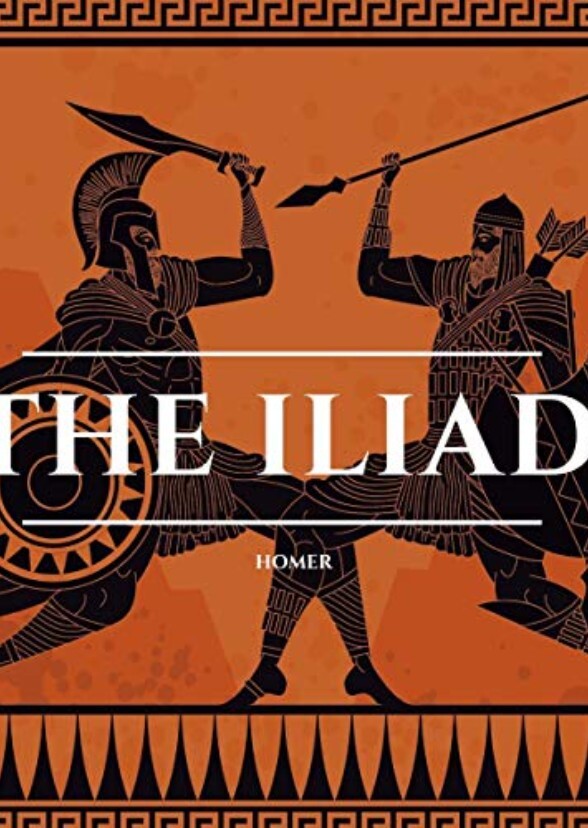
The Iliad, attributed to Homer, is an epic poem set during the Trojan War, though it focuses on just a few weeks near the end of the ten-year conflict. The story centers on the rage of Achilles, the greatest Greek warrior, after he feels dishonored by Agamemnon, the leader of the Greek forces, who seizes his war prize, the maiden Briseis. Insulted, Achilles withdraws from battle, leaving the Greeks to struggle without their strongest fighter. Meanwhile, the Trojans, led by Prince Hector, gain the upper hand, pushing the Greeks back toward their ships. The gods, constantly interfering, take sides and influence events, heightening the tension and destruction on the battlefield. As the war intensifies, Achilles’ closest companion, Patroclus, dons his armor to rally the Greeks but is slain by Hector. Overcome with grief and fury, Achilles returns to battle, killing Hector in single combat and desecrating his body. Despite his wrath, the epic concludes not with Troy’s fall but with a moment of compassion: King Priam, Hector’s father, bravely enters Achilles’ camp to beg for his son’s body. Moved by Priam’s plea and reminded of his own father, Achilles relents, returning Hector’s body for proper burial. The poem ends with Hector’s funeral, leaving the larger fate of Troy beyond the scope of the narrative.



