
Age: 59
male
Denis Villeneuve (born October 3, 1967) is a Canadian filmmaker. He has received seven Canadian Screen Awards as well as nominations for three Academy Awards, five BAFTA Awards, and two Golden Globe Awards. Villeneuve's films have grossed more than $1.8 billion worldwide. Villeneuve began his career in his home country, directing four French-language dramas: August 32nd on Earth (1998); Maelström (2000); Polytechnique (2009), a dramatisation of the 1989 École Polytechnique massacre; and Incendies (2010). The last of these gained him international prominence and earned a nomination for the Academy Award for Best International Feature Film. He expanded to English-language films by directing the thrillers Prisoners (2013), Enemy (2013), and Sicario (2015). Villeneuve gained wider recognition for directing science fiction films. His work on Arrival (2016) earned him a nomination for the Academy Award for Best Director. This was followed by Blade Runner 2049 (2017), which was critically lauded but financially unsuccessful. His next projects were Dune (2021) and Dune: Part Two (2024), a two-part adaptation of Frank Herbert's novel of the same name. Both films were critically and commercially successful, with the former earning him Academy Award nominations for Best Adapted Screenplay and Best Picture.
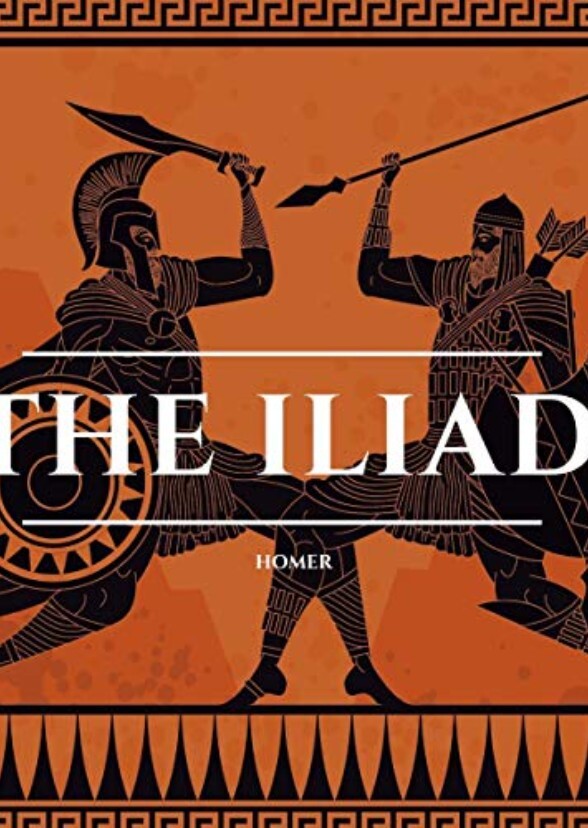
The Iliad, attributed to Homer, is an epic poem set during the Trojan War, though it focuses on just a few weeks near the end of the ten-year conflict. The story centers on the rage of Achilles, the greatest Greek warrior, after he feels dishonored by Agamemnon, the leader of the Greek forces, who seizes his war prize, the maiden Briseis. Insulted, Achilles withdraws from battle, leaving the Greeks to struggle without their strongest fighter. Meanwhile, the Trojans, led by Prince Hector, gain the upper hand, pushing the Greeks back toward their ships. The gods, constantly interfering, take sides and influence events, heightening the tension and destruction on the battlefield. As the war intensifies, Achilles’ closest companion, Patroclus, dons his armor to rally the Greeks but is slain by Hector. Overcome with grief and fury, Achilles returns to battle, killing Hector in single combat and desecrating his body. Despite his wrath, the epic concludes not with Troy’s fall but with a moment of compassion: King Priam, Hector’s father, bravely enters Achilles’ camp to beg for his son’s body. Moved by Priam’s plea and reminded of his own father, Achilles relents, returning Hector’s body for proper burial. The poem ends with Hector’s funeral, leaving the larger fate of Troy beyond the scope of the narrative.


