
Age: 63
male
Ralph Nathaniel Twisleton-Wykeham-Fiennes (born 22 December 1962) is an British-American actor, film producer, and director. He has received various accolades, including a British Academy Film Award and a Tony Award, as well as nominations for three Academy Awards, seven Golden Globe Awards, and a Primetime Emmy Award. Born in Ipswich, Suffolk, Fiennes was trained at and graduated from the Royal Academy of Dramatic Art in 1985. A Shakespeare interpreter, he excelled onstage at the Royal National Theatre before succeeding at the Royal Shakespeare Company. In 1995, Fiennes made his Broadway debut playing Prince Hamlet in the revival of the William Shakespeare play Hamlet, for which he won the Tony Award for Best Actor in a Play. He was later Tony-nominated for his role as a travelling faith healer in the Brian Friel play Faith Healer (2006). Fiennes made his film debut playing Heathcliff in Emily Brontë's Wuthering Heights (1992). He has earned three Academy Award nominations for his performances in the films Schindler's List (1993), The English Patient (1996), and Conclave (2024). He has also acted in Quiz Show (1994), Maid in Manhattan (2002), The Constant Gardener (2005), In Bruges (2008), The Reader (2008), The Duchess (2008), The Hurt Locker (2009), The Grand Budapest Hotel (2014), A Bigger Splash (2015), Hail, Caesar! (2016), and The Menu (2022). Fiennes gained wider recognition for playing Lord Voldemort in the Harry Potter film series (2005–2011) and Gareth Mallory / M in the James Bond films (2012–2021); and has voiced roles in the animated films The Prince of Egypt (1998), Wallace & Gromit: The Curse of the Were-Rabbit (2005), Kubo and the Two Strings (2016), and The Lego Batman Movie (2017). He directed and starred in the films Coriolanus (2011) and The Invisible Woman (2013). Aside from acting, Fiennes has been an ambassador for UNICEF UK since 1999.
Ralph Fiennes

Wenceslaus IV of Bohemia
for Wenceslaus IV of Bohemia in The Hussite Wars
Suggested by darksith
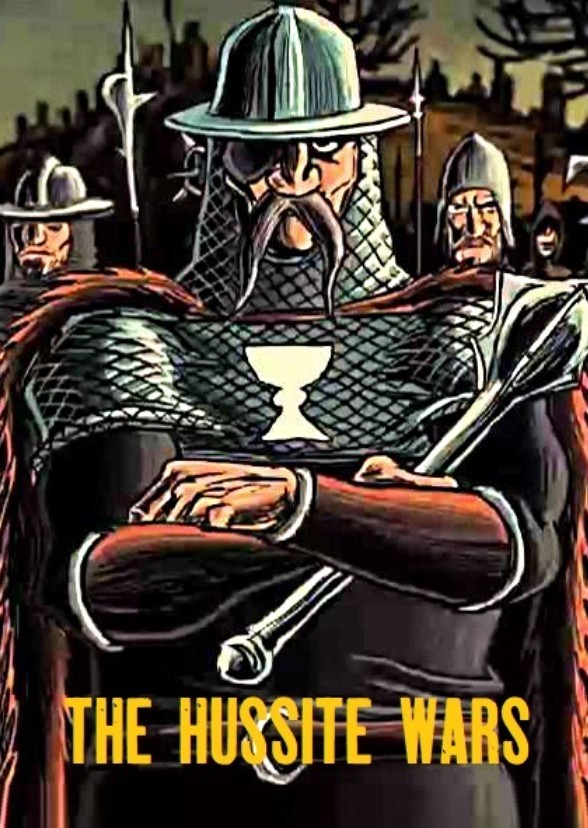
It is 1414 and the Czech priest and reformer Jan Hus goes to the Church Council in Constance to defend his revolutionary ideas. For the journey he receives a Glejt from King Sigismund of Luxembourg himself, who is to guarantee his safe journey. But upon arrival, Hus is arrested and put on trial. During this he is condemned as a heretic, and subsequently handed over to the secular authorities to be burned at the stake when he refused to recant his teachings. Jan Hus is burned at the stake on July 6, 1415. This news soon reaches the Bohemian Kingdom and causes a storm of resentment among the Bohemian nobility and common people. The result is the outbreak of the so-called Hussite Revolution, which culminates in the Prague Defenestration on 30 July 1419, when a mob of radical Hussites led by the preacher Jan Želivský throws the Catholic councillors out of the windows of Prague's New Town Hall. When the Czech King Wenceslas IV learns of these events, he suffers a massive stroke and soon dies from the effects. After the death of Wenceslas IV, the only rightful heir to the Czech throne was King Sigismund of Hungary and Rome, who decides to mount a crusade against the Hussites. Jan Žižka, a Hussite military leader, will lead the Hussite army. This is the beginning of the Hussite Wars.




