Age: 51
male
Joaquin Rafael Phoenix (born October 28, 1974) is an Euro-Latino American actor. Known for his roles as dark, unconventional and eccentric characters, particularly in period dramas, he has received various accolades, including an Academy Award, a British Academy Film Award, a Grammy Award, and two Golden Globe Awards. In 2020, The New York Times named him one of the greatest actors of the 21st century. He was born in Puerto Rico to a European-American father and a Jewish mother. Phoenix began his career by appearing in a television series in the early 1980s with his older brother River. His first major film roles were in SpaceCamp (1986) and Parenthood (1989). During this period, he was credited as Leaf Phoenix. He began being credited as Joaquin Phoenix in To Die For, his first adult role. He received critical acclaim for his supporting roles in the comedy-drama To Die For (1995) and the period film Quills (2000). Phoenix received further critical acclaim and a nomination for the Academy Award for Best Supporting Actor for his portrayal of Commodus in the historical drama Gladiator (2000). He had success with the horror films Signs (2002), The Village (2004) and the historical drama Hotel Rwanda (2004). He won a Grammy Award, a Golden Globe Award, and a nomination for the Academy Award for Best Actor for his portrayal of musician Johnny Cash in the biopic Walk the Line (2005). Following a brief sabbatical, Phoenix starred in the psychological drama The Master (2012), winning the Volpi Cup for Best Actor and earning his third Academy Award nomination. He gained praise for his roles in the romantic drama Her (2013) and the crime satire Inherent Vice (2014) and won the Cannes Film Festival Award for Best Actor for the psychological thriller You Were Never Really Here (2017). For his performance as the titular character of Joker (2019), Phoenix won the Academy Award for Best Actor. He has since starred in the independent films C'mon C'mon (2021), and Beau Is Afraid (2023) and portrayed the title role in the historical drama Napoleon (2023). Outside of acting, Phoenix is an animal rights activist. A vegan, he regularly supports charitable causes and has produced several documentaries on global meat consumption and its impact on the environment.
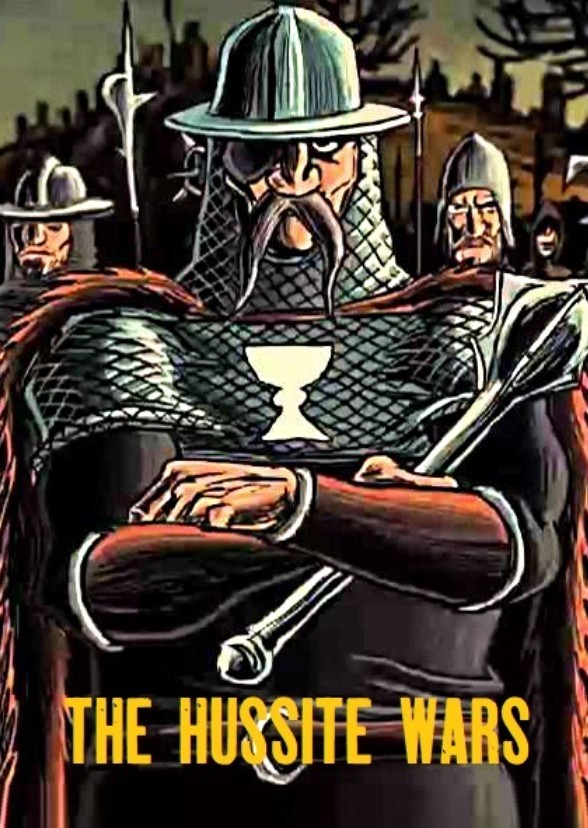
It is 1414 and the Czech priest and reformer Jan Hus goes to the Church Council in Constance to defend his revolutionary ideas. For the journey he receives a Glejt from King Sigismund of Luxembourg himself, who is to guarantee his safe journey. But upon arrival, Hus is arrested and put on trial. During this he is condemned as a heretic, and subsequently handed over to the secular authorities to be burned at the stake when he refused to recant his teachings. Jan Hus is burned at the stake on July 6, 1415. This news soon reaches the Bohemian Kingdom and causes a storm of resentment among the Bohemian nobility and common people. The result is the outbreak of the so-called Hussite Revolution, which culminates in the Prague Defenestration on 30 July 1419, when a mob of radical Hussites led by the preacher Jan Želivský throws the Catholic councillors out of the windows of Prague's New Town Hall. When the Czech King Wenceslas IV learns of these events, he suffers a massive stroke and soon dies from the effects. After the death of Wenceslas IV, the only rightful heir to the Czech throne was King Sigismund of Hungary and Rome, who decides to mount a crusade against the Hussites. Jan Žižka, a Hussite military leader, will lead the Hussite army. This is the beginning of the Hussite Wars.