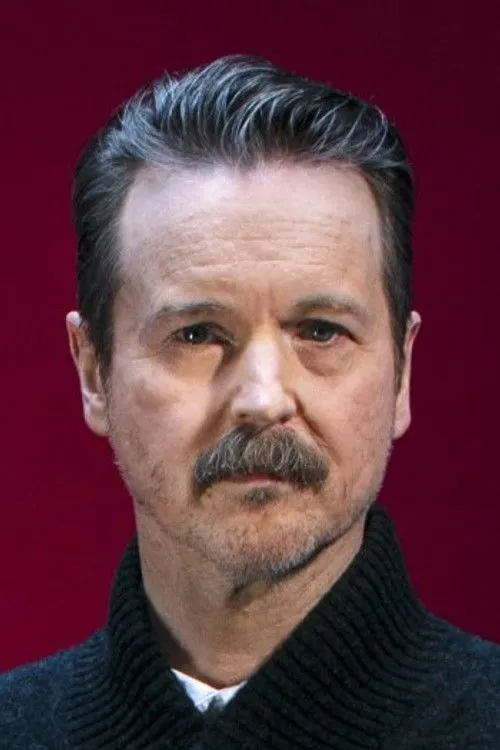
Age: 59
male
Denis Villeneuve (born October 3, 1967) is a Canadian filmmaker. He has received seven Canadian Screen Awards as well as nominations for three Academy Awards, five BAFTA Awards, and two Golden Globe Awards. Villeneuve's films have grossed more than $1.8 billion worldwide. Villeneuve began his career in his home country, directing four French-language dramas: August 32nd on Earth (1998); Maelström (2000); Polytechnique (2009), a dramatisation of the 1989 École Polytechnique massacre; and Incendies (2010). The last of these gained him international prominence and earned a nomination for the Academy Award for Best International Feature Film. He expanded to English-language films by directing the thrillers Prisoners (2013), Enemy (2013), and Sicario (2015). Villeneuve gained wider recognition for directing science fiction films. His work on Arrival (2016) earned him a nomination for the Academy Award for Best Director. This was followed by Blade Runner 2049 (2017), which was critically lauded but financially unsuccessful. His next projects were Dune (2021) and Dune: Part Two (2024), a two-part adaptation of Frank Herbert's novel of the same name. Both films were critically and commercially successful, with the former earning him Academy Award nominations for Best Adapted Screenplay and Best Picture.
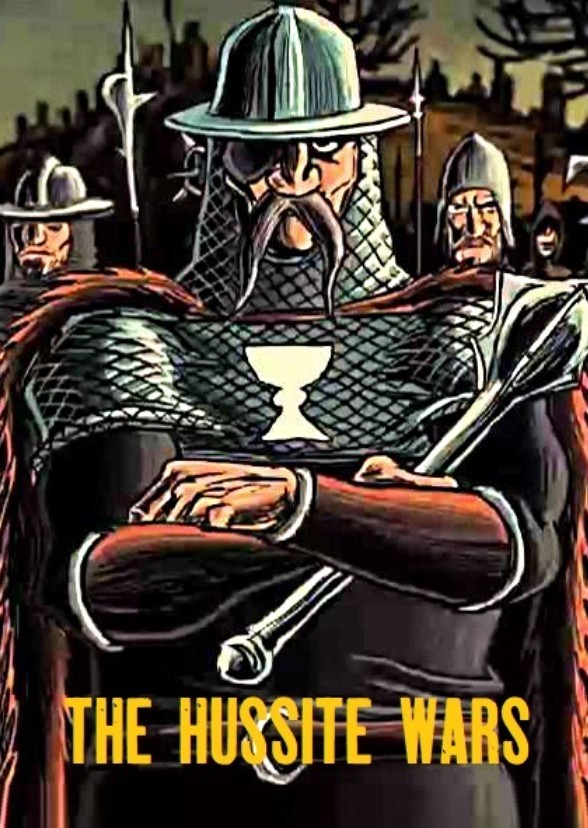
It is 1414 and the Czech priest and reformer Jan Hus goes to the Church Council in Constance to defend his revolutionary ideas. For the journey he receives a Glejt from King Sigismund of Luxembourg himself, who is to guarantee his safe journey. But upon arrival, Hus is arrested and put on trial. During this he is condemned as a heretic, and subsequently handed over to the secular authorities to be burned at the stake when he refused to recant his teachings. Jan Hus is burned at the stake on July 6, 1415. This news soon reaches the Bohemian Kingdom and causes a storm of resentment among the Bohemian nobility and common people. The result is the outbreak of the so-called Hussite Revolution, which culminates in the Prague Defenestration on 30 July 1419, when a mob of radical Hussites led by the preacher Jan Želivský throws the Catholic councillors out of the windows of Prague's New Town Hall. When the Czech King Wenceslas IV learns of these events, he suffers a massive stroke and soon dies from the effects. After the death of Wenceslas IV, the only rightful heir to the Czech throne was King Sigismund of Hungary and Rome, who decides to mount a crusade against the Hussites. Jan Žižka, a Hussite military leader, will lead the Hussite army. This is the beginning of the Hussite Wars.