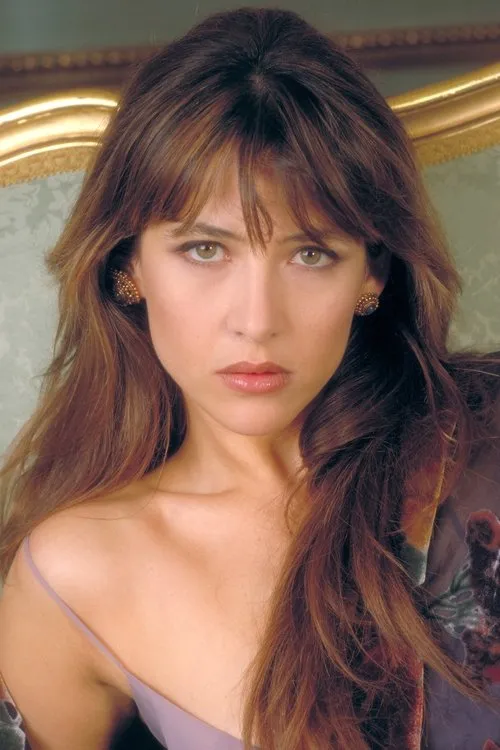
Age: 59
female
Sophie Marceau (born Sophie Danièle Sylvie Maupu, 17 November 1966) is a French actress. As a teenager, she achieved popularity with her debut films La Boum (1980) and La Boum 2 (1982), receiving a César Award for Most Promising Actress. She became a film star in Europe with a string of successful films, including L'Étudiante (1988), Pacific Palisades (1990), Fanfan (1993) and Revenge of the Musketeers (1994). She became an international film star with her performances in Braveheart (1995), Firelight (1997), Anna Karenina (1997) and as Elektra King in the 19th James Bond film The World Is Not Enough (1999). Some of her later films tackle critical social issues such as Arrêtez-moi (2013), Jailbirds (2015) and Everything Went Fine (2021). Marceau has appeared on more than 300 magazine covers worldwide and been the face of numerous luxury brands. She was made Officer (Officier) in the Ordre des Arts et des Lettres by the Minister of Culture of France in 2003, and in 2015 it was revealed that she had refused the Legion of Honour (Ordre national de la Légion d'honneur). She was born 17 November 1966 in Paris, the second child of Simone (née Morisset), who was a shop assistant, and Benoît Maupu, a truck driver. Her parents divorced when she was nine years old. In February 1980, Marceau and her mother came across a model agency looking for teenagers. Marceau had photos taken at the agency, but did not think anything would come of it. At the same time, Françoise Menidrey, the casting director for Claude Pinoteau's La Boum (1980), asked modeling agencies to recommend a new teenager for the project. After viewing the rushes, Alain Poiré, the director of the Gaumont, signed Marceau to a long-term contract. La Boum was a hit film, with 4,378,500 tickets sold in France. In 1981, Marceau made her singing debut with French singer François Valéry on record "Dream in Blue", written by Pierre Delanoë. She rejected the main role in a soon-to-be controversial film, Beau-père, in which she would have played as a teenage girl who seduces her step-father for a sexual relationship. The role was eventually played by Ariel Besse. In 1982, at age 16, Marceau bought back her contract with Gaumont for one million French francs. She borrowed most of the money. After starring in the sequel film La Boum 2 (1982), Marceau focused on more dramatic roles, including the historical drama Fort Saganne in 1984 with Gérard Depardieu and Catherine Deneuve, Joyeuses Pâques (Happy Easter) in 1984, L'amour braque and Police in 1985, and Descente aux enfers (Descent into Hell) in 1986. In 1988, she starred in L'Étudiante (The Student) and the historical adventure film Chouans!. That year, Marceau was named Best Romantic Actress at the International Festival of Romantic Movies for her role in Chouans! ... Source: Article "Sophie Marceau" from Wikipedia in English, licensed under CC-BY-SA.
Sophie Marceau

Billie Bee
for Billie Bee in The Guernsey Literary and Potato Peel Pie Society
Suggested by devahutiraichaliha

January 1946: London is emerging from the shadow of the Second World War, and writer Juliet Ashton is looking for her next book subject. Who could imagine that she would find it in a letter from a man she's never met, a native of the island of Guernsey, who has come across her name written inside a book by Charles Lamb... As Juliet and her new correspondent exchange letters, Juliet is drawn into the world of this man and his friends—and what a wonderfully eccentric world it is. The Guernsey Literary and Potato Peel Pie Society—born as a spur-of-the-moment alibi when its members were discovered breaking curfew by the Germans occupying their island—boasts a charming, funny, deeply human cast of characters, from pig farmers to phrenologists, literature lovers all. Juliet begins a remarkable correspondence with the society's members, learning about their island, their taste in books, and the impact the recent German occupation has had on their lives. Captivated by their stories, she sets sail for Guernsey, and what she finds will change her forever.

