
Age: 63
male
Christopher Heyerdahl (born September 18, 1963) is a Canadian actor who portrayed Alastair in Supernatural, the Wraith Todd in Stargate Atlantis, Sam in Van Helsing, "Swede" in Hell on Wheels, and Marcus in The Twilight Saga. Heyerdahl was born in British Columbia, and is of Norwegian and Scottish descent. His father emigrated from Norway to Canada in the 1950s. Thor Heyerdahl was his father's cousin. Heyerdahl also speaks Norwegian and studied at the University of Oslo. Heyerdahl is primarily known for his recurring role as the enigmatic and sinister "Swede" in AMC's Hell on Wheels. This post-American Civil War drama debuted as the second highest rated original series in AMC history. He is also known for his role as Leonid in the Are You Afraid of the Dark? episode "The Thirteenth Floor" and as Nosferatu in the episode "Midnight Madness". He played the characters Halling and Wraith commander Todd in Stargate Atlantis, and Pallan in the Stargate SG-1 episode "Revisions".He played H. P. Lovecraft in the film Out of Mind: The Stories of H. P. Lovecraft (1998) and a punk, new at drug dealing, in Cadavres (2009). He played the part of the demon Alastair in three episodes of Supernatural. He also played the part of Zor-El in the television series Smallville, as well as playing John Druitt and Bigfoot in the series Sanctuary. He played the part of Dieter Braun on True Blood during the show's 5th season. His most notable film role was in the feature film New Moon, an adaptation of Stephenie Meyer's second book in her Twilight Saga. In this film, he played a vampire, Marcus, who is part of a powerful Italian family called the Volturi. He reprised that role in both parts of Breaking Dawn, the two-part adaptation of the fourth book in the Twilight Saga. He has also performed on stage and was a member of the Young Company at the Stratford Festival in 1989 and 1990.
Christopher Heyerdahl

Uncle John
for Uncle John in The Grapes of Wrath
Suggested by anjalirenee
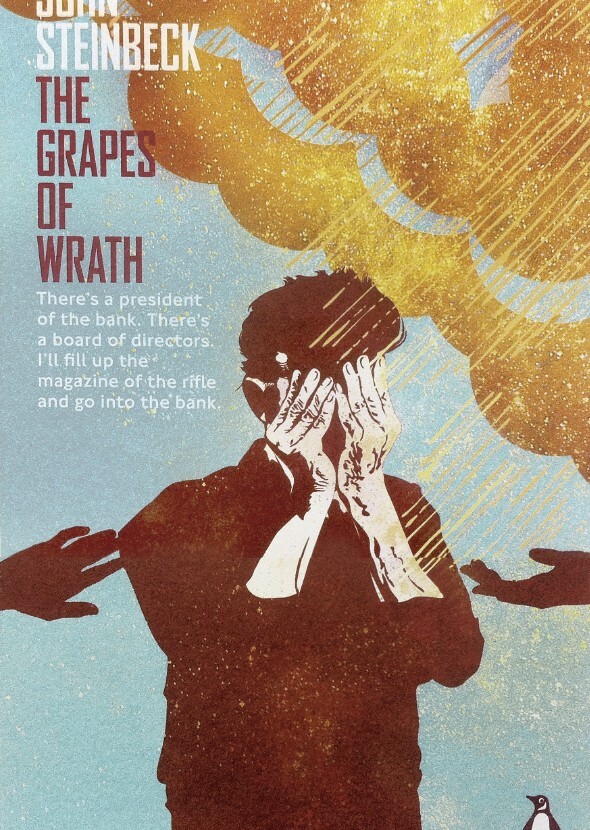
First published in 1939, Steinbeck’s Pulitzer Prize-winning epic of the Great Depression chronicles the Dust Bowl migration of the 1930s and tells the story of one Oklahoma farm family, the Joads—driven from their homestead and forced to travel west to the promised land of California. Out of their trials and their repeated collisions against the hard realities of an America divided into Haves and Have-Nots evolves a drama that is intensely human yet majestic in its scale and moral vision, elemental yet plainspoken, tragic but ultimately stirring in its human dignity. A portrait of the conflict between the powerful and the powerless, of one man’s fierce reaction to injustice, and of one woman’s stoical strength, the novel captures the horrors of the Great Depression and probes into the very nature of equality and justice in America. At once a naturalistic epic, captivity narrative, road novel, and transcendental gospel, Steinbeck’s powerful landmark novel is perhaps the most American of American Classics.

