Age: 47
male
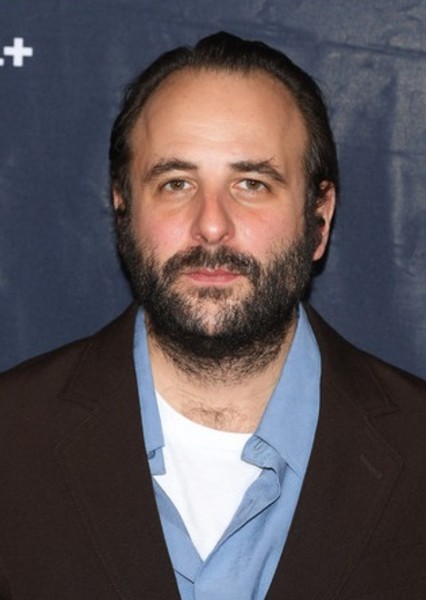
Vincent Macaigne (born 19 October 1978) is a French actor, theatre director and film director. He is also a screenwriter and playwright. Macaigne was raised in Paris, the son of a French businessman and an Iranian-born painter. He has an elder brother, who is a forensic doctor. He attended the CNSAD between 1999 and 2002, and staged his first play in 2004. Throughout the 2000s, he acted in several theatre productions and also wrote and staged a number of plays. He suffered two strokes at just thirty years old, one of which occurred after his 2009 staging of the theatrical adaptation of Fyodor Dostoyevsky's The Idiot. In an interview, he said the stroke has had no lasting consequences to his health. His short film What We'll Leave Behind (Ce qu'il restera de nous) won the Grand Prix at the Clermont-Ferrand International Short Film Festival, and was nominated for the César Award for Best Short Film. In 2014, he received nominations for the César Award for Most Promising Actor and the Lumières Award for Most Promising Actor for his role in La Fille du 14 juillet. His directorial feature film debut, Dom Juan, is an adaptation of the play of the same name by Molière. It was screened in the Cineasts of the Present section at the 2015 Locarno International Film Festival. Source: Article "Vincent Macaigne" from Wikipedia in English, licensed under CC-BY-SA 3.0.

It is 1789 and France is beset by a number of problems. The treasury is empty and the country is facing bankruptcy. While the majority of the common people live in unimaginable poverty, the nobility and the clergy do not have to pay taxes and are living in luxury. In this situation, King Louis XVI decides to convene the Estates-General at Versailles. The negotiations go nowhere, so the Third Estate decides to invite the other Estates to join it, and a National Assembly is proclaimed. Some of the nobility and clergy do indeed join. All involved swear not to disperse until a constitution is drawn up. On July 9, 1789, this assembly declared itself the Constituent National Assembly. In this situation, King Louis XVI decides to send troops to Versailles. In protest against this move, the Parisians storm the royal armoury. Here they seize thousands of rifles and form a militia. Early in the morning of 14 July 1789, they attack the Bastille, a symbol of royal oppression. After a five-hour battle, they succeed in taking the prison. Thus begins the Great French Revolution, which changed Europe forever. An event that brought many progressive ideas, but also a bloody terror that eventually brought not only King Louis XVI to the guillotine, but also most of the leaders of the revolution itself. P.S., In my opinion, it would be best to treat this topic in the form of a historical miniseries on HBO MAX or Amazon Prime, for example.