Age: 35
male
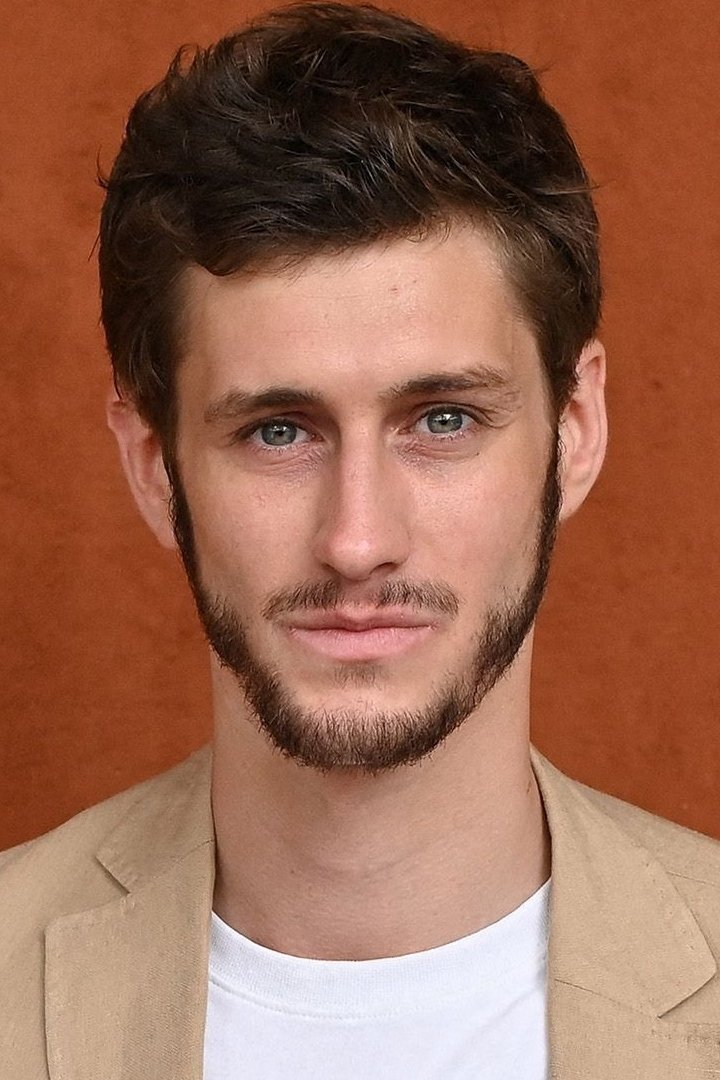
Jean-Baptiste Maunier (born December 22, 1990) is a French actor and singer. He is best known for his role in the 2004 French film Les Choristes. Jean-Baptiste Maunier was born to Thierry Maunier, a cameraman, and Muriel Maunier. He has a younger brother, Benjamin. His father sang in a well-known church choir (Les Petits Chanteurs de Saint Marc). Jean-Baptiste attended a Roman Catholic school in Lyon, France. He studied at the Lee Strasberg Institute in New York between 2008 and 2009 to perfect his acting and English, returning to France to sing in Les Enfoirés charity concerts. Maunier gained fame for his starring role in the 2004 French film Les Choristes, in which he plays Pierre Morhange, a delinquent with an exceptional singing voice at the correctional school Fond de L'Étang. Christophe Barratier, the director of Les Choristes, chose Maunier because "he had the right look" and a marvellous voice. He was also exceptionally appealing for the role. Following the release of the film, Maunier and the choir took part in numerous concerts all over the world, including Japan and Canada. In February 2005, he left the choir in order to devote more time to his studies and to his acting career. In April and August 2005, he took part in a four-episode television series for France 2, Le Cri, playing a young steelworker. The series was released in 2006. Maunier appears in Le Grand Meaulnes (2006) as Francois Seurel. In Piccolo, Saxo et compagnie (2006), an animated film, he lent his voice to the character "Saxo". In the summer of 2006, Maunier acted in Hellphone, a full-length film directed by James Huth. In this film, Maunier plays the role of Sid. The film was released in March 2007. In L'Auberge rouge, directed by Gérard Krawczyk (an adaptation of the 1951 version) Maunier stars as Octave. It opened in theaters in France on 5 December 2007. Jean-Baptiste spent a year studying at New York's Lee Strasberg Institute in 2008 to unleash his acting potentials. Staying in the USA allowed him to perfect his English. He returned to France in 2010, and performed in the Enfoirés charity concert of 2010. Upon entering collège (middle school), Maunier was asked to make a choice between various activities. He chose singing and became a member of Les Petits Chanteurs de Saint-Marc (full name is "La Chorale des Petits Enfants De Saint-Marc"). In the choir, he was tutored by Nicolas Porte. In Les Choristes, the film that made him widely famous for his singing skills, both Maunier's solo and the chorus of "Les Petits Chanteurs de Saint-Marc" are featured on the original soundtrack. In 2005, to keep a souvenir of his voice before it broke, Maunier decided to sing with Clemence Saint-Preux and had released the single, Concerto pour deux voix, which was in turn an adaptation of Concerto pour une Voix. Since 2005 he has participated in Les Enfoirés, an ensemble of notable singers and performers in France that periodically performs charity concerts. He contributed a song named "Le Monde Qui Est Le Mien" for the album "We Love Disney 2" and also released a single, "Je Reviens". Source: Article "Jean-Baptiste Maunier" from Wikipedia in English, licensed under CC-BY-SA 3.0.
Jean-Baptiste Maunier

Louis de Saint-Just
for Louis de Saint-Just in The French Revolution
Suggested by laure1108

It is 1789 and France is beset by a number of problems. The treasury is empty and the country is facing bankruptcy. While the majority of the common people live in unimaginable poverty, the nobility and the clergy do not have to pay taxes and are living in luxury. In this situation, King Louis XVI decides to convene the Estates-General at Versailles. The negotiations go nowhere, so the Third Estate decides to invite the other Estates to join it, and a National Assembly is proclaimed. Some of the nobility and clergy do indeed join. All involved swear not to disperse until a constitution is drawn up. On July 9, 1789, this assembly declared itself the Constituent National Assembly. In this situation, King Louis XVI decides to send troops to Versailles. In protest against this move, the Parisians storm the royal armoury. Here they seize thousands of rifles and form a militia. Early in the morning of 14 July 1789, they attack the Bastille, a symbol of royal oppression. After a five-hour battle, they succeed in taking the prison. Thus begins the Great French Revolution, which changed Europe forever. An event that brought many progressive ideas, but also a bloody terror that eventually brought not only King Louis XVI to the guillotine, but also most of the leaders of the revolution itself. P.S., In my opinion, it would be best to treat this topic in the form of a historical miniseries on HBO MAX or Amazon Prime, for example.