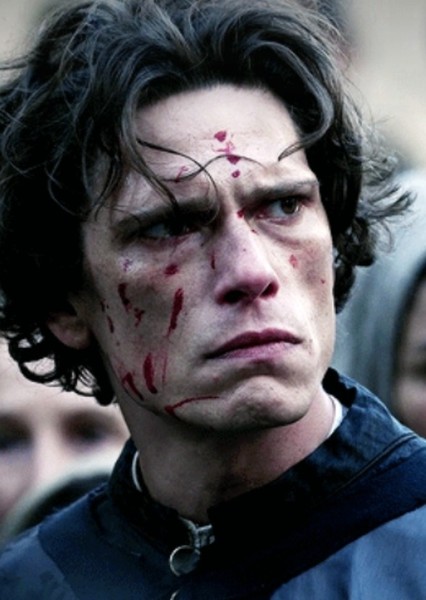
Age: 48
male
Matthew Goode (born 3 April 1978) is an English actor. He made his screen debut in 2002 with ABC's TV film feature Confessions of an Ugly Stepsister. His breakthrough role was in the romantic comedy Chasing Liberty (2004), for which he received a nomination at Teen Choice Awards for Choice Breakout Movie Star – Male. He then appeared in a string of supporting roles in films like Woody Allen's Match Point (2005), the German-British romantic comedy Imagine Me and You (2006), and the period drama Copying Beethoven (2006). He won praise for his performance as Charles Ryder in Julian Jarrold's adaptation of Evelyn Waugh's Brideshead Revisited (2008), and as Ozymandias in the American neo-noir superhero film Watchmen (2009), based on the comics by Alan Moore and Dave Gibbons. He then starred in romantic comedy Leap Year (2010) and Australian drama Burning Man (2011), the latter earning him a nomination for Best Actor at the Film Critics Circle of Australia Awards. Other notable film roles include The Lookout (2007), A Single Man (2009), Cemetery Junction (2010), Stoker (2013), Belle (2013), The Imitation Game (2014) and Self/less (2015). As well as appearing in films, Goode has appeared in numerous television shows. His most notable television roles include Henry Talbot in the final season of historical drama Downton Abbey, and Finley "Finn" Polmar in the CBS legal drama The Good Wife. He also had a lead role in the critically acclaimed British mini-serial Dancing on the Edge, as music journalist Stanley Mitchell. In 2017, Goode portrayed Antony Armstrong-Jones, 1st Earl of Snowdon in the Netflix biographical drama series The Crown, for which he received a Primetime Emmy Award nomination for Outstanding Guest Actor in a Drama Series. As of 2018, he stars in Sky One's fantasy-romance series, A Discovery of Witches, as Professor Matthew Clairmont.
Matthew Goode

Jean Paul Marat
for Jean Paul Marat in The French Revolution
Suggested by jediknight25

It is 1789 and France is beset by a number of problems. The treasury is empty and the country is facing bankruptcy. While the majority of the common people live in unimaginable poverty, the nobility and the clergy do not have to pay taxes and are living in luxury. In this situation, King Louis XVI decides to convene the Estates-General at Versailles. The negotiations go nowhere, so the Third Estate decides to invite the other Estates to join it, and a National Assembly is proclaimed. Some of the nobility and clergy do indeed join. All involved swear not to disperse until a constitution is drawn up. On July 9, 1789, this assembly declared itself the Constituent National Assembly. In this situation, King Louis XVI decides to send troops to Versailles. In protest against this move, the Parisians storm the royal armoury. Here they seize thousands of rifles and form a militia. Early in the morning of 14 July 1789, they attack the Bastille, a symbol of royal oppression. After a five-hour battle, they succeed in taking the prison. Thus begins the Great French Revolution, which changed Europe forever. An event that brought many progressive ideas, but also a bloody terror that eventually brought not only King Louis XVI to the guillotine, but also most of the leaders of the revolution itself. P.S., In my opinion, it would be best to treat this topic in the form of a historical miniseries on HBO MAX or Amazon Prime, for example.