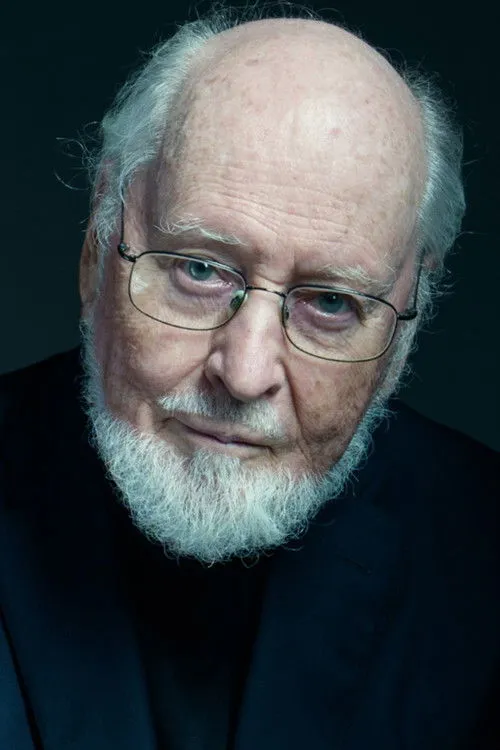
Died at 73
male
James Roy Horner (August 14, 1953–June 22, 2015) was an American film composer and conductor. He worked on more than 160 film and television productions between 1978 and 2015. He was known for the integration of choral and electronic elements alongside traditional orchestrations and for his use of motifs associated with Celtic music. Horner won two Academy Awards for his musical composition to James Cameron's Titanic (1997), which became the best-selling orchestral film soundtrack of all time. He also wrote the score for the highest-grossing film of all time, Cameron's Avatar (2009). Horner's other Oscar-nominated scores were for Aliens (1986), An American Tail (1986), Field of Dreams (1989), Apollo 13 (1995), Braveheart (1995), A Beautiful Mind (2001), and House of Sand and Fog (2003). Horner's other notable scores include Star Trek II: The Wrath of Khan (1982), Willow (1988), The Land Before Time (1988), Glory (1989), The Rocketeer (1991), Legends of the Fall (1994), Jumanji (1995), Casper (1995), Balto (1995), The Mask of Zorro (1998), Deep Impact (1998), The Perfect Storm (2000), How the Grinch Stole Christmas (2000), Troy (2004), The New World (2005), The Legend of Zorro (2005), Apocalypto (2006), The Karate Kid (2010), and The Amazing Spider-Man (2012). Horner collaborated on multiple projects with directors including James Cameron, Don Bluth, Ron Howard, Joe Johnston, Edward Zwick, Walter Hill, Mel Gibson, Vadim Perelman, Jean-Jacques Annaud, Nicholas Meyer, Wolfgang Petersen, Martin Campbell, Phil Nibbelink, and Simon Wells; producers including Steven Spielberg, George Lucas, David Kirschner, Brian Grazer, Jon Landau, and Lawrence Gordon; and songwriters including Will Jennings, Barry Mann, and Cynthia Weil. Adding to his two Academy Awards wins, Horner also won six Grammy Awards, two Golden Globes, and was nominated for three BAFTA Awards. Horner, who was an avid pilot, was killed in a single-fatality crash while flying his Short Tucano turboprop aircraft. He was 61 years old. The scores for his final three films, Southpaw (2015), The 33 (2015), and The Magnificent Seven (2016), were all completed and released posthumously. Description above from the Wikipedia article James Horner, licensed under CC-BY-SA, full list of contributors on Wikipedia.

It is 1789 and France is beset by a number of problems. The treasury is empty and the country is facing bankruptcy. While the majority of the common people live in unimaginable poverty, the nobility and the clergy do not have to pay taxes and are living in luxury. In this situation, King Louis XVI decides to convene the Estates-General at Versailles. The negotiations go nowhere, so the Third Estate decides to invite the other Estates to join it, and a National Assembly is proclaimed. Some of the nobility and clergy do indeed join. All involved swear not to disperse until a constitution is drawn up. On July 9, 1789, this assembly declared itself the Constituent National Assembly. In this situation, King Louis XVI decides to send troops to Versailles. In protest against this move, the Parisians storm the royal armoury. Here they seize thousands of rifles and form a militia. Early in the morning of 14 July 1789, they attack the Bastille, a symbol of royal oppression. After a five-hour battle, they succeed in taking the prison. Thus begins the Great French Revolution, which changed Europe forever. An event that brought many progressive ideas, but also a bloody terror that eventually brought not only King Louis XVI to the guillotine, but also most of the leaders of the revolution itself. P.S., In my opinion, it would be best to treat this topic in the form of a historical miniseries on HBO MAX or Amazon Prime, for example.