
Age: 41
male
Finn Wittrock (born October 28, 1984) is an American actor best known for his role as Damon Miller on three seasons of "All My Children" (ABC/Hulu/OWN, 1970-2013). Having grown up in a theater-obsessed family in Massachusetts and Los Angeles, Wittrock began studying acting on his own after high school, and enrolled in the drama program at New York's prestigious Juilliard School. It wasn't long before he began landing guest spots on shows like "Cold Case" (CBS, 2003-2010), "ER" (NBC, 1994-2009), and "CSI: Miami" (CBS, 2002-2012), all while honing his craft by acting in plays in and around New York and Los Angeles. His big break came in 2009 when he was cast as the young Casanova Damon Miller on "All My Children." Wittrock appeared as the Miller character for three seasons on the show, before returning to the stage in 2012. This time, however, he would be starring alongside Philip Seymour Hoffman in a Mike Leigh-directed revival of "Death of a Salesman." The revival received overwhelmingly positive reviews, with Wittrock receiving much of the praise for his performance as Harold "Happy" Loman. After the play wrapped up in the spring of 2012, Wittrock returned to screen acting, appearing in a recurring role as Dale in the 1950s period drama "Masters of Sex" (Showtime 2013- ), as well as supporting roles in the big-budget epic "Noah" (2014) and "Winter's Tale" (2014). 2014 was also the year Wittrock appeared in the HBO movie "The Normal Heart," as well as an episode of "American Horror Story" (FX, 2011- ), thus allowing him to work with writer/director/producer Ryan Murphy on two separate projects in the same year.
Finn Wittrock

Lieutenant George L. Fox
for Lieutenant George L. Fox in The Four Chaplains
Suggested by thecookieprincess
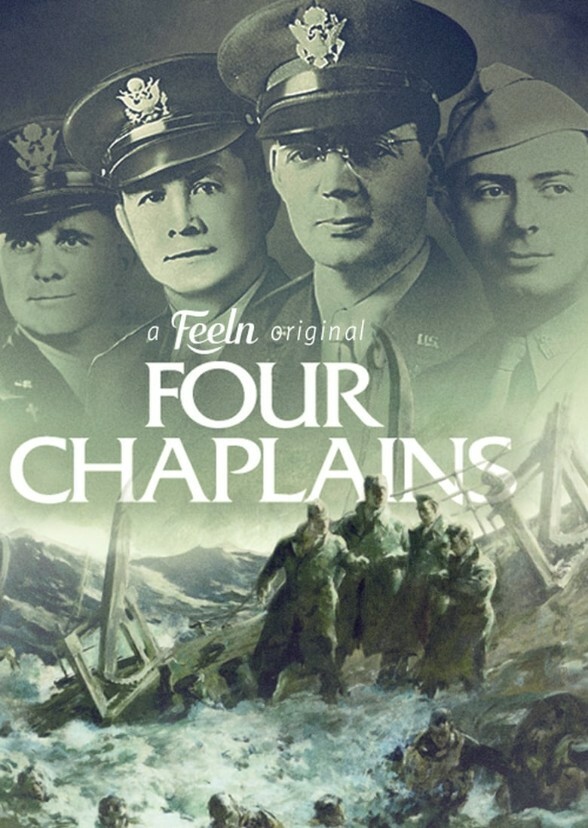
On February 3, 1943, the Dorchester was en route from Newfoundland to an American base in Greenland, carrying 902 soldiers, civilians, and crew members. The ship was part of a convoy of three vessels but was not adequately protected by military escorts. The ship was equipped with lifeboats and lifevests, but conditions were cold. 12:55 AM, a German submarine U-223 fired a torpedo that struck the Dorchester below the waterline, near the engine room. The explosion knocked out power, and the ship quickly began taking on water. Panic broke out as soldiers tried to escape. Many were trapped below decks, and the situation became desperate. Amidst the chaos, the 4 chaplains worked to calm the frightened men, guiding them toward the lifeboats and helping distribute life jackets. The chaplains moved among the men, offering prayers, words of encouragement, and urging them not to lose hope. When the supply of life jackets ran out, the four chaplains made a decision that would make them legendary. They removed their own life jackets and gave them to soldiers who had none, knowing full well that doing so meant certain death. In 20 minutes, the Dorchester sank into the icy Atlantic. Of the 902 men aboard, only 230 survived. The four chaplains, along with more than 600 others, perished in the frigid waters. They represented different faiths—Catholicism, Judaism, Methodism, and Dutch Reformed Church—but in death, they acted as one, embodying the highest ideals of their faiths.


