Died at 120
male
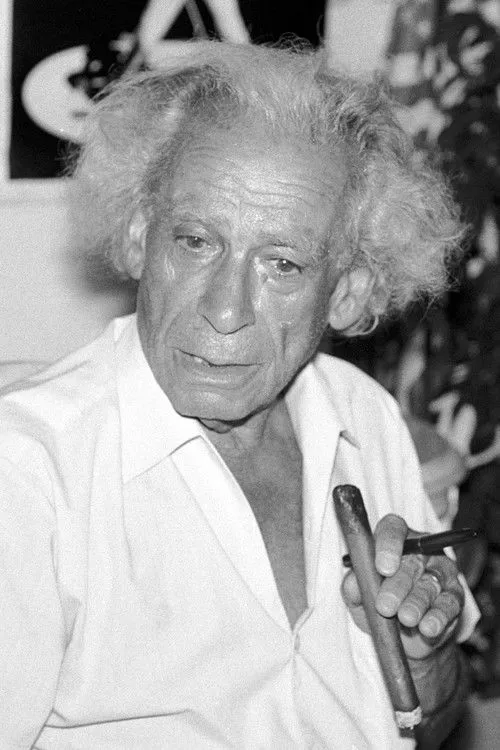
Billy Wilder, born Samuel Wilder; (22 June 1906 - 27 March 2002) was an Austrian-born director, screenwriter and producer who is regarded as one of the most successful filmmakers of Hollywood's golden age. Today he is best known for his comedies, although he also directed dramas and film noirs. Wilder is one of only five people who have won Academy Awards as producer, director, and writer for the same film (The Apartment). Wilder's career began in Germany, where he worked as a writer for comedy films from 1930. After the Nazis seized power in 1933, he emigrated to the United States, where he continued to write screenplays, including Ernst Lubitsch's Ninotchka (1939) and Howard Hawks' Ball of Fire (1941). From the early 1940s, Wilder was allowed to film his own screenplays and thus made a name for himself as a director. Initially, his greatest successes included predominantly dramatic film noirs such as Double Indemnity (1944), The Lost Weekend (1945), Sunset Boulevard (1950) and Ace in the Hole (1951). It was only then that he increasingly turned to comedy, including Stalag 17 (1953), Sabrina (1954) and The Seven Year Itch (1955), although he made a small detour to courtroom drama with Witness for the Prosecution (1957). With Some Like It Hot (1959) and The Apartment (1960) he made his most famous and probably most successful comedy films, the latter even receiving five Oscars. In One, Two, Three (1961), Wilder dealt with the conditions of the time in his former adopted country, Germany, and made the successful romantic comedy Irma la Douce (1963). In the two decades that followed, Wilder made seven more films, which were less well received by critics and audiences, although the German-French drama Fedora (1978) is viewed somewhat more favorably today by predominantly pretentious film experts. Some time later, Wilder was under discussion as director for Schindler's List, which he had wanted as the end of his long career, but ultimately had to turn it down due to his advanced age.

Ayn Rand's The Fountainhead is the controversial epic about one man's unwavering individuality and the profound effect it has on both his friends and enemies. The novel was adapted in 1949 but fell short of its visionary source material. Constrained by a short runtime and 1940s social norms, many of the novel’s most compelling scenes and character arcs were drastically shortened or omitted entirely. While still a good film by conventional standards, it was nevertheless a disappointment to the author and many fans of the original novel. I believe The Fountainhead was adapted one decade too early. By the 1950s, Hollywood was beginning to challenge conventional filmmaking just as the novel’s protagonist challenged the norms of popular architecture. A decade where films could be pulpy yet deep, entertaining yet intellectually moving. In short, it was the perfect decade for a Fountainhead adaptation. This page envisions the film that could have been. Poster by DecoEchoes