Died at 109
male
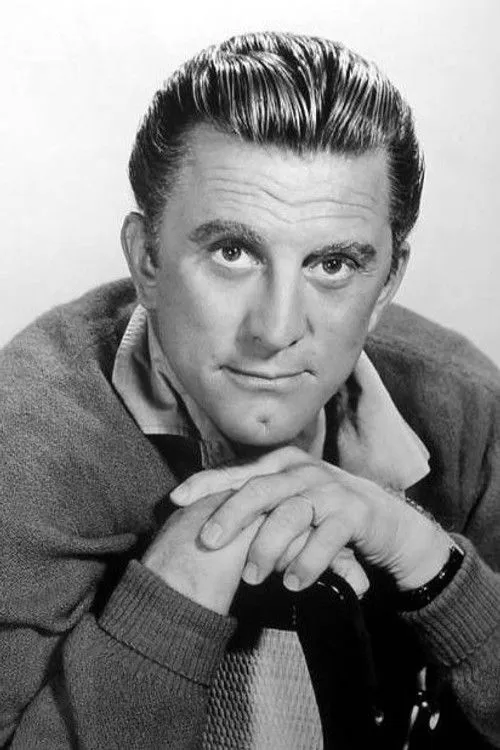
Kirk Douglas (born Issur Danielovitch; December 9, 1916 – February 5, 2020) was an American actor, producer, director and author. He grew up as Izzy Demsky and legally changed his name to Kirk Douglas before entering the United States Navy during World War II. During his career, Douglas appeared in more than 90 movies and was known for his explosive acting style. He became an international star for his leading role as an unscrupulous boxing hero in Champion (1949), which brought him his first nomination for the Academy Award for Best Actor. Other early films include Young Man with a Horn (1950), Ace in the Hole (1951), and Detective Story (1951), a film for which he received a Golden Globe nomination as Best Actor in a Drama. He received a second Oscar nomination for his role in The Bad and the Beautiful (1952), and his third nomination for portraying Vincent van Gogh in Lust for Life (1956), which landed him a second Golden Globe nomination. In 1955, Douglas established Bryna Productions, which produced films as varied as Paths of Glory (1957) and Spartacus (1960). He took the lead roles in both films. Douglas has been praised for helping to break the Hollywood blacklist by having Dalton Trumbo write Spartacus with an official on-screen credit. In 1963 Douglas starred in the Broadway play One Flew Over the Cuckoo's Nest, a story that he purchased and later gave to his son Michael Douglas, who turned it into an Oscar-winning film. As an actor and philanthropist, Douglas received an Oscar for Lifetime Achievement, and the Presidential Medal of Freedom. As an author, he wrote ten novels and memoirs. He is No. 17 on the American Film Institute's list of the greatest male screen legends of classic Hollywood cinema. Kirk Douglas died at age 103.
Kirk Douglas

Howard Roark
for Howard Roark in The Fountainhead (1957)
Suggested by leostales

Ayn Rand's The Fountainhead is the controversial epic about one man's unwavering individuality and the profound effect it has on both his friends and enemies. The novel was adapted in 1949 but fell short of its visionary source material. Constrained by a short runtime and 1940s social norms, many of the novel’s most compelling scenes and character arcs were drastically shortened or omitted entirely. While still a good film by conventional standards, it was nevertheless a disappointment to the author and many fans of the original novel. I believe The Fountainhead was adapted one decade too early. By the 1950s, Hollywood was beginning to challenge conventional filmmaking just as the novel’s protagonist challenged the norms of popular architecture. A decade where films could be pulpy yet deep, entertaining yet intellectually moving. In short, it was the perfect decade for a Fountainhead adaptation. This page envisions the film that could have been. Poster by DecoEchoes

