Died at 131
male
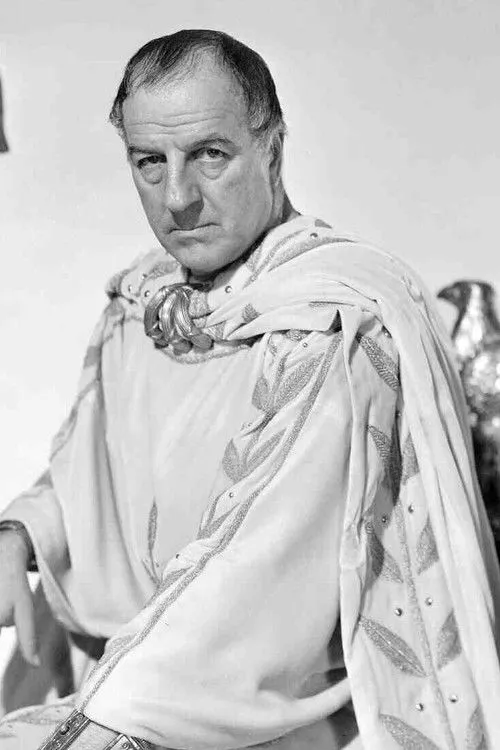
Carl Henry Vogt (February 19, 1895 – May 12, 1956), known professionally as Louis Calhern, was an American stage and screen actor. For portraying Oliver Wendell Holmes in the film The Magnificent Yankee (1950), he was nominated for an Academy Award for Best Actor. Calhern began working in silent films for director Lois Weber in the early 1920s; the most notable being The Blot in 1921. A 1921 newspaper article commented, "The new arrival in stardom is Louis Calhern, who, until Miss Weber engaged him to enact the leading male role in What's Worth While?, had been playing leads in the Morosco Stock company of Los Angeles." In 1923 Calhern left the movies, but would return to the screen eight years later after the advent of sound pictures. He was primarily cast as a character actor in films while he continued to play leading roles on the stage. He reached his peak in the 1950s as a Metro-Goldwyn-Mayer contract player. Among his many memorable screen roles were Ambassador Trentino in the Marx Brothers classic Duck Soup (1933) and three that he appeared in at MGM in 1950: a singing role as Buffalo Bill in the film version of the musical Annie Get Your Gun, the double-crossing lawyer and sugar-daddy to Marilyn Monroe in John Huston's film noir The Asphalt Jungle, and his Oscar-nominated performance as Oliver Wendell Holmes in The Magnificent Yankee (re-creating his role from the Broadway stage). He was also praised for his portrayal of the title role in the John Houseman production of Julius Caesar (adapted from the Shakespeare play) in 1953, directed by Joseph L. Mankiewicz. Calhern also played the role of the devious George Caswell, the manipulative board member of Tredway Corporation in the 1954 production of Executive Suite. Calhern's other film roles included the grandfather in The Red Pony (1949), adapted from the novel by John Steinbeck and starring Robert Mitchum, and the spy boss of Cary Grant in the Alfred Hitchcock suspense classic Notorious (1946). A performance as Uncle Willie in High Society (1956), a musical remake of The Philadelphia Story, turned out to be his final film. Description above from the Wikipedia article Louis Calhern, licensed under CC-BY-SA, full list of contributors on Wikipedia.
Louis Calhern

Guy Francon
for Guy Francon in The Fountainhead (1957)
Suggested by leostales

Ayn Rand's The Fountainhead is the controversial epic about one man's unwavering individuality and the profound effect it has on both his friends and enemies. The novel was adapted in 1949 but fell short of its visionary source material. Constrained by a short runtime and 1940s social norms, many of the novel’s most compelling scenes and character arcs were drastically shortened or omitted entirely. While still a good film by conventional standards, it was nevertheless a disappointment to the author and many fans of the original novel. I believe The Fountainhead was adapted one decade too early. By the 1950s, Hollywood was beginning to challenge conventional filmmaking just as the novel’s protagonist challenged the norms of popular architecture. A decade where films could be pulpy yet deep, entertaining yet intellectually moving. In short, it was the perfect decade for a Fountainhead adaptation. This page envisions the film that could have been. Poster by DecoEchoes

